
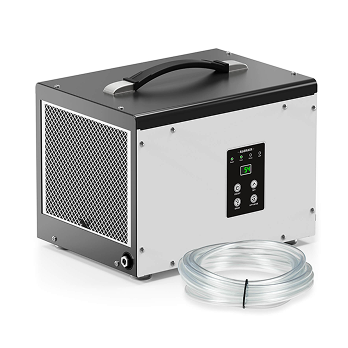
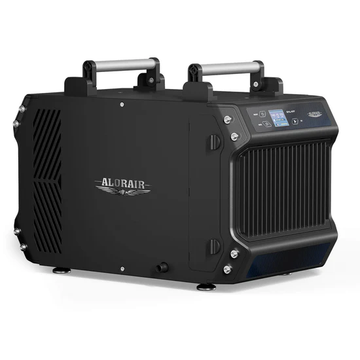
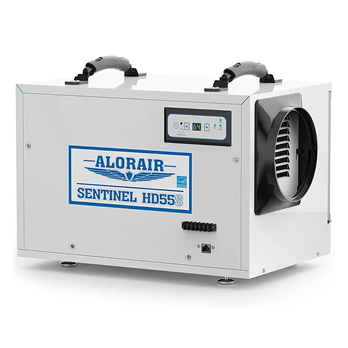
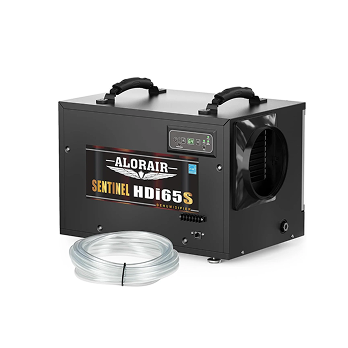



A crawl space dehumidifier cost usually runs $1,000 to $3,000 installed. The unit alone costs $430 to $1,600, and installation, electricity, and upkeep make up the rest. Easy jobs land near the bottom. Tight access, new wiring, or a pump pushes you toward the top. Here's the thing, though. The sticker price is just one piece. You also pay to install it, to run it all year, and to keep it maintained. This guide walks through every cost, so you know what your real total looks like before you spend a dollar.
Crawl Space Dehumidifier Cost at a Glance
Here's what to budget by category. These are typical 2026 U.S. ranges, and they vary by region, unit, and the shape of your crawl space.
|
Cost category |
Typical range |
|
Unit price (equipment only) |
$430 – $1,600 |
|
Professional installation |
$200 – $1,500 |
|
Annual operating (electricity) |
$100 – $400 |
|
Annual maintenance |
$30 – $150 |
|
Typical all-in installed cost |
$1,000 – $3,000 |
Equipment and installation hit once. Electricity and maintenance come back every year. A well-matched, efficient unit in a sealed space stays cheap to run.
How Much Does the Dehumidifier Itself Cost?
The unit is your biggest single expense, and capacity sets most of the price. Small units start near $430. Big duct-ready or whole-house models hit $1,600 or more. Features, build quality, and warranty fill in the gap.
Cost by Capacity and Crawl Space Size
Price climbs with pints-per-day (PPD) capacity, how much water the unit pulls in 24 hours. Read the table below as a price reference, not a sizing chart. What size you actually need comes in the next section.
|
Capacity tier (PPD) |
Space it typically fits |
Typical price |
|
~70 PPD |
Up to ~1,000 sq ft |
$430 – $530 |
|
~120 PPD |
Up to ~1,300–1,500 sq ft |
$560 – $700 |
|
~145–180 PPD |
Up to ~1,800–2,300 sq ft |
$700 – $900 |
|
~198–220 PPD |
Up to ~2,600–2,900 sq ft |
$870 – $1,600 |
These prices track real models we stock. If you're covering a small space and want to keep costs down, an ENERGY STAR unit in the entry tier does the job; the Sentinel HS35 (70 PPD) fits that bill.
Got a large or tall crawl space instead? A ducted model like the Sentinel HDi90 (198 pints) covers roughly 2,600 square feet. Browse the full crawl space and basement dehumidifier collection to compare tiers side by side.
Features and Construction That Affect Price
Beyond capacity, specific features raise the price. Each adds real function:
● Built-in condensate pump: Lets the unit push water upward and out when gravity drainage isn't possible. Pump models cost more than gravity-drain versions of the same capacity.
● WiFi and remote monitoring: Lets you track humidity and adjust setpoints from an app, useful in a space you rarely enter.
● Digital humidistat: Holds a target relative humidity (RH) automatically instead of running constantly.
● Corrosion-resistant housing: Stainless steel or coated components resist rust in a damp, ground-level environment.
Commercial-grade units cost more than home dehumidifiers stuffed into a crawl space. They're built to run around the clock in cold, wet conditions. A home unit run 24/7 down there dies early, and that wipes out whatever you saved up front.
Warranty and Support
Warranty length shapes your long-term cost, not just the price tag. A longer warranty on the compressor and parts means a big repair won't come out of your pocket during the covered years. Easy access to filters, parts, and real support matters too. A cheaper unit with no backup can cost you more the first time something breaks.
Why Square Footage Alone Won't Size Your Unit
Floor area is a starting point, not the whole story. Two crawl spaces the same size can need very different capacity. Size off square footage alone, and a damp or leaky space will leave your unit outmatched.
PPD Ratings and Testing Conditions
A PPD number only means something once you know how it was tested. Under the AHAM (Association of Home Appliance Manufacturers) standard, capacity gets measured at a set temperature and 60% relative humidity (RH).
A "saturation" rating uses far more extreme, near-100% humidity, so the same machine looks stronger on paper. Two units with matching PPD labels can perform differently in your space. Compare ratings tested the same way, and expect real output to dip below the label in a cool crawl space.
Ceiling Height and Air Volume
A dehumidifier dries a volume of air, not a floor. A crawl space with more headroom holds more air, so it needs more capacity to hit the same RH. A tall space you can stand in carries a bigger moisture load than a 24-inch crawl space of the same footprint.
Humidity and Climate
Your current RH, your climate, and the seasons all change what you need. A crawl space in a humid Gulf Coast summer works its unit much harder than the same space in a dry state. Don't go by how damp it feels.
Measure it with a hygrometer, a cheap gadget that reads RH , and size to real numbers. The EPA says to keep indoor humidity below 60%, ideally 30% to 50%, to hold back mold.
Air Leaks and Bare Soil
Vented spaces, dirt floors, and active leaks all add moisture no matter the square footage. Bare soil pumps ground moisture into the air nonstop. Open vents let humid outdoor air in, where it condenses on cool surfaces. Any of these can justify sizing up, or sealing the space first so a smaller unit keeps pace.
Capacity is only one piece of the decision, though — drainage type, build quality, and warranty all factor in too. For a full walkthrough of how to weigh these together, see how to choose the right crawl space dehumidifier.
Crawl Space Dehumidifier Installation Costs

Your crawl space dehumidifier installation cost rides on access, wiring, and drainage more than labor hours. A simple drop-in near an outlet might add $200. A job that needs a new circuit, a pump, and a long crawl to a tight corner can top $1,000. Here's what moves it.
Basic Standalone Installation
This is the cheapest path. It works when you've got easy entry, nearby power, and a workable gravity drain. The installer sets the unit, hooks up the drain hose, dials in the humidistat, and confirms it runs. Short labor keeps the installation cost near the bottom.
Electrical Requirements
Wiring is a big swing factor. Most crawl space units run on a standard 120-volt outlet. No outlet within reach? An electrician adds a circuit or outlet, which brings materials, labor, and sometimes a permit. That can add a few hundred dollars, depending on how far the panel sits.
Gravity Drainage vs. Condensate Pumps
Drainage changes both gear and labor cost. Gravity draining is cheapest; the unit runs downhill to a drain, with no moving parts. When the drain sits higher or too far away, you need a condensate pump to push water up and out.
A unit with a built-in pump skips the add-on and simplifies the install. The Sentinel HD55P handles this out of the box.
Access and Labor
Physical access drives labor. Low clearance forces the installer onto their back, and everything slows down. A tight hatch, a long haul from the entry, or piping in the way all add time, and time is money on the quote. Replacing an old unit costs a little more too, since someone has to pull and haul off the dead one.
Does Crawl Space Encapsulation Add to the Total?
Yes. Encapsulation is its own project, and pros often pair it with a dehumidifier. It seals the space with a heavy vapor barrier over the soil and walls and closes the vents. In 2026, a vapor barrier runs about $2 to $4 per square foot installed, and full encapsulation roughly $3 to $10.
Order matters here. Encapsulation cuts incoming moisture hard, which changes the load on your dehumidifier. If the budget allows, seal first, then size the unit to the sealed space. You'll often get away with a smaller, cheaper model.
How Much Does a Crawl Space Dehumidifier Cost to Run?
Electricity is your main ongoing cost. For most units, the crawl space dehumidifier cost to run lands around $100 to $400 a year. It hinges on the unit's wattage, its daily hours, and your local rate.
The Formula
Estimate it like this:
Daily cost = (wattage ÷ 1,000) × hours per day × rate per kWh
Grab the wattage off the spec sheet, guess your daily runtime, and multiply by your rate (it's on your utility bill). Multiply that by 365 for the year. Rates jump around by region, so use your own bill.
Illustrative example, not an engineered figure: a 500-watt unit running 8 hours a day burns about 4 kWh. Multiply by your rate for the daily cost.
What Drives Runtime
Runtime is the real lever on your crawl space dehumidifier cost to run. Humid climates and summer months stretch the run cycles. A lower humidity target makes the unit grind harder. A leaky, vented space with bare soil rarely lets it rest. Seal the space, and it cycles off far more often.
Efficiency and ENERGY STAR
For the same capacity, an efficient unit costs less to run. ENERGY STAR models meet federal efficiency rules, rated in pints removed per kilowatt-hour. A certified unit pulls more moisture per watt than a non-certified one, so it trims your yearly bill.
To spend less without losing control: set a sensible target near 50%, seal your air leaks, keep the filter clean, and use smart controls to catch a unit that's running long.
Maintenance and Repair Costs
Upkeep is cheap, usually $30 to $150 a year. Skip it, though, and you risk a pricey repair. A clogged filter or dirty coil makes the unit strain, run long, and wear out early.
● Filter care is the easy win. Most units use a washable filter you rinse every one to three months. Replacements run $15 to $40.
● Check the drain line now and then for clogs or kinks, and confirm your pump clears water fully.
● For bigger issues, most dehumidifier repairs run $150 to $500. A fan motor or control board climbs into the hundreds, and a dead compressor costs enough that replacing an older unit often beats fixing it.
● A solid warranty softens all of that; during the covered years, a major failure may cost you little or nothing.
DIY vs. Professional Installation Cost
When DIY May Be Practical
DIY can work for an experienced homeowner when the space has easy access, an existing nearby outlet, and workable gravity drainage. In that case, placing a standalone unit, connecting the drain hose, and setting the humidistat is straightforward.
When Professional Installation Is Recommended
Bring in a professional when the job involves new electrical work, ducting, or difficult access. Adding a dedicated circuit is an electrician's work. Running ducts, installing a condensate pump where drainage is tricky, or navigating a tight, low-clearance space all benefit from a pro who does it routinely and safely.
What an Installation Quote Should Include
A complete quote lets you compare bids accurately. It should specify:
1. Unit model and capacity (PPD)
2. Drainage method (gravity or pump)
3. Electrical work (new circuit or outlet, if any)
4. Labor and estimated time
5. Old-unit removal, if applicable
6. Permits, if required in your area

Final Checklist Before You Buy
Run through these cost-driving factors before requesting a quote:
● Measured size: square footage and ceiling height, not just floor area
● Moisture severity: current RH from a hygrometer, not a guess
● Sealing/venting status: vented, sealed, or encapsulated
● Drainage plan: gravity drain available, or is a pump needed
● Electrical access: outlet nearby, or a new circuit required
● Desired features: pump, WiFi, ducting, corrosion-resistant build
Stop Guessing, Get the Right Unit the First Time!
Your total comes down to three things: the unit, the install, and the years of running it. Buy the wrong size, and you'll pay for it every month. Measure your space, check the humidity, and match a unit to your real conditions, not a rough guess off square footage.
Ready to find your fit? Compare capacity, drainage, and features across every model in Alorair’s crawl space dehumidifier collection, and lock in the one built for your space.
FAQs
How much does a crawl space dehumidifier cost installed?
Most homeowners pay $1,000 to $3,000 all-in for the unit and pro installation. Easy jobs with gravity drainage sit low. New wiring, a pump, or tough access runs higher.
How much does a crawl space dehumidifier cost to run each year?
Around $100 to $400, based on wattage, daily runtime, and your local rate. Sealing the space and picking an ENERGY STAR model cut that down.
What size unit do I need?
More than square footage decides it, ceiling height, humidity, climate, and sealing all count. Measure the space and its RH first, then match capacity.
Should I encapsulate before installing?
If the budget allows, yes. Sealing cuts moisture, so you can size a smaller, cheaper unit. Seal first, then size to the sealed space.
Is a Crawl Space Dehumidifier Worth the Cost?
For homes with a moisture problem, usually. The cost is small next to $1,500–$4,000 mold remediation plus structural repairs. It cuts your risk, especially paired with sealing and drainage.


