
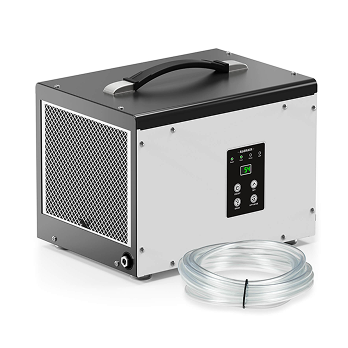
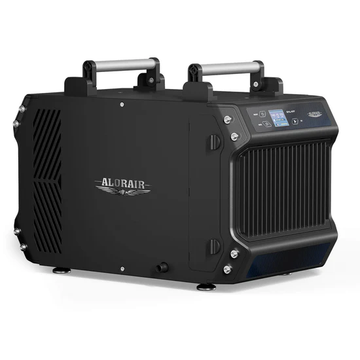
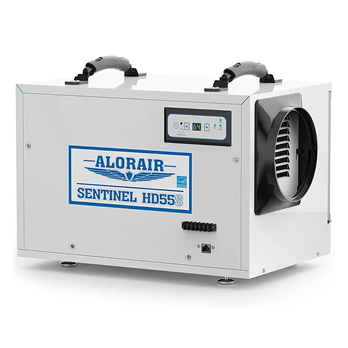
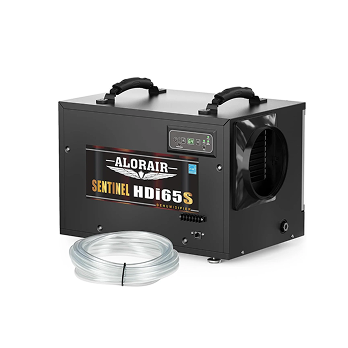
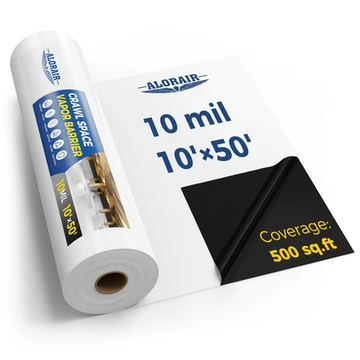



A damp garage rusts your tools, warps stored boxes, and never quite smells right. You can fix a lot of that without buying a dehumidifier by removing standing water and wet items, repairing leaks, improving exterior drainage, sealing air gaps, addressing moisture coming through the concrete slab, and ventilating only when outdoor air is genuinely drier than the air inside the garage. This guide explains how to reduce garage humidity without a dehumidifier by controlling moisture at its source.
Start by Measuring Humidity and Finding the Moisture Source
The fix depends on where the moisture is coming from: outdoor air, a leak, a wet car, or the slab itself. Guess wrong, and you'll waste a weekend on the wrong repair.
Measure Garage Humidity With a Hygrometer
Buy a cheap digital hygrometer and check it for a few days instead of trusting how the air feels. Take readings during dry weather, after rain, after parking a wet car, and right after opening the door; that tells you what's actually driving the numbers up.
The EPA recommends keeping indoor relative humidity (RH) below 60%, and ideally between 30% and 50% where practical. An unconditioned garage may experience larger short-term swings than a living space, especially after rain or after a wet vehicle is parked inside. However, readings that remain above 60% for extended periods usually point to a moisture source that needs attention.
Check for Visible Water and Air Leaks
Walk the garage looking for puddles, roof or plumbing leaks, daylight around the door frame, cracked weatherstripping, wet corners, white efflorescence on concrete, condensation on windows or pipes, musty smells, and rust. Any of these point to water intrusion, not just humid air, and that changes what you fix first.
Use a Plastic-Sheet Test as an Initial Slab Check
Tape an 18-inch square of clear plastic to a clean patch of concrete and check it after 24–48 hours. This is a simplified version of ASTM D4263, the standard plastic-sheet method for detecting moisture in concrete.
Water under the sheet points to moisture moving up through the slab. Water on top usually means condensation from garage air. Either way, this is a screening test, not a substitute for a lab moisture test before you coat the floor.
Remove Existing Water and Wet Items
Dry up what's already wet before touching ventilation or absorbers; those tools work on air, not puddles.
Dry Wet Vehicles Before Closing the Garage
Dry off rain or snow before pulling the car in when you can. A wet car sitting in a closed garage puts more moisture into the air than people expect.
Remove Wet Gear and Organic Debris
Move wet umbrellas, tarps, firewood, and camping gear somewhere they can actually dry. Sweep out wet leaves and mud; decaying debris holds water and causes that musty smell.
Remove Standing Water Promptly
Wipe, mop, or wet-vac puddles instead of letting them evaporate on their own. And don't point a fan at standing water to “to ‘dry it faster,’ unless that moist air is getting exhausted outside; you've just moved the water from the floor into the air.
Repair Leaks and Improve Exterior Drainage
Stopping water at the source beats any ventilation trick, because nothing passive keeps up with an active leak.
Repair Roof, Plumbing, and Wall Leaks
Check the roof, plumbing lines, exterior walls, window frames, and the joint where the wall meets the slab. Water stains, peeling paint, damp drywall, or puddles that return after rain can help narrow down the entry point. Repair the source before spending time on ventilation, insulation, or moisture absorbers.
Clean Gutters and Extend Downspouts
Keep gutters clear and route downspout water away from the foundation. How far depends on your lot and grading; a drainage contractor can size it correctly if runoff is a recurring problem.
Correct Ground Sloping Toward the Garage
Soil, mulch beds, or paving that slope toward the garage instead of away from it can drive water against the foundation and slab edge every time it rains. Over time, this raises the moisture load the slab and walls have to deal with. If you notice water repeatedly pooling against the garage after rain, regrading the area or adding a drainage swale may help. If persistent pooling doesn't respond to simple grading fixes, it's worth a professional drainage assessment.
Keep Floor Drains and Channels Clear
Clean out floor drains, trench drains, and any exterior drainage channels near garage entrances so water has somewhere to go besides evaporating indoors. A clogged floor drain effectively turns a drainage feature into a shallow basin that keeps adding humidity to the air.
Seal Gaps That Let Humid Air and Rain Enter
Air carries moisture with it, so gaps around doors and windows quietly undo everything else you're doing.
Replace Worn Garage-Door Seals
Check the bottom seal and side weatherstripping for cracks or flattening, and replace them; it's a cheap, easy fix. A threshold seal helps with wind-driven rain, but don't block the door's normal drainage path.
Seal Windows, Doors, and Wall Penetrations
Apply an exterior-rated sealant around window frames, the pedestrian door, and any wall penetrations for wiring, plumbing, or dryer vents. These small gaps add up, especially on a garage that catches wind-driven rain or sits on the weather side of the house. Don't seal over vents, weep holes, or drainage openings that are part of the garage's design or required by local building code.
Distinguish Air Sealing From Waterproofing
Caulk and weatherstripping reduce humid-air infiltration and stop small points of rain entry, but they're not a substitute for waterproofing. They won't do anything against hydrostatic pressure pushing water through a foundation wall, a major structural crack, or groundwater rising through the slab.
If sealing gaps doesn't meaningfully improve your hygrometer readings, and you're still seeing wet walls or slab moisture, the problem is likely a water-intrusion issue that needs repair, not an air-sealing gap.
Ventilate the Garage Only When Outdoor Air Is Drier
Open the door when outdoor air is actually drier than garage air, not just because it's sunny out.
Compare Dew Point, Not RH Alone
RH is a ratio, and warm air can hold more moisture before hitting 100%. That's why 85°F air at 50% RH can carry more actual water vapor (dew point around 65°F) than 55°F air at 100% RH (dew point around 55°F). Check the outdoor dew point against your garage's before you open up.
Create Short Cross-Ventilation
Open the overhead door and a window on the opposite wall for ten or twenty minutes rather than cracking one vent all day. Weigh that against security, pests, and the chance of rain rolling in.

Use an Exhaust Fan to Remove Damp Air
An exhaust fan only helps if it's pulling in drier replacement air from somewhere else. Run one in a sealed-up garage with no fresh-air source, and it's just moving the same moist air in a circle.
Avoid Ventilation During Hot, Humid, or Rainy Weather
Skip it on muggy or rainy days; you'll likely pull in air with a higher dew point than what's already inside. In humid, coastal climates, this problem can stretch across most of the summer, which is exactly the situation covered in our breakdown of dehumidifier options for Florida garages.
What About a Mini-Split or Window AC Unit?
Cooling pulls moisture out of the air as a side effect, and that can help in a Florida summer. But short cooling cycles in milder weather won't remove much water, so it's a bonus, not a real substitute for moisture-focused equipment.
Reduce Moisture Coming Through the Concrete Floor
Treat the slab as its own moisture source; concrete is porous, and ground moisture can migrate up through it.
Correct Drainage Before Sealing the Slab
Fix exterior water accumulation and poor grading around the garage before applying any sealer or coating to the floor. A coating applied over a slab that's still under significant moisture pressure from outside is more likely to blister, peel, or fail, since the water has to go somewhere and a surface coating blocks its usual exit path.
Repair Appropriate Cracks and Joints
Have a professional or an experienced eye evaluate cracks before sealing them, since minor hairline, nonstructural cracks are often fine to repair yourself, while widening, displaced, or repetitive cracks may point to a settling or structural issue that needs assessment first. Sealing over a crack that's still moving typically doesn't hold. Also, don't seal indiscriminately. Leave expansion and control joints alone; they're designed to move.
Choose a Floor Treatment for the Actual Moisture Condition
Penetrating sealers cut surface absorption but don't stop real vapor movement. Moisture-mitigation coatings and professional vapor-control systems handle higher moisture readings. However, not every epoxy product is rated as a vapor barrier, so check the spec sheet before you buy.
Recognize Signs That Require Professional Assessment
Repeated coating failure, heavy efflorescence, heaving, major cracks, or water at the slab-wall joint all call for a professional, not another coat of sealer.
Reduce Condensation on Cold Garage Surfaces
Condensation is a surface-temperature problem, not a total-humidity problem; the water vapor was already there.
Insulate the Garage Door
Insulating a metal door raises its surface temperature so it's less likely to sweat during seasonal swings. It won't touch the air's actual moisture content, though.
Insulate Cold Pipes and Other Metal Surfaces
Foam pipe insulation keeps cold lines closer to room temperature. Check first that what's dripping is condensation and not a leaking fitting.
Stabilize Large Temperature Swings
Fast overnight temperature drops push cold surfaces below the dew point even when humidity hasn't changed. Insulation and mild heating help, but heating only lowers the RH reading temporarily. It bounces back once things cool down.
Use Fans for Surface Drying, Not Whole-Garage Dehumidification
A circulation fan can speed surface drying on a damp floor or wet vehicle, which is genuinely useful. But it does not remove water vapor from the garage; the evaporated moisture stays in the air unless it is exhausted outdoors. If airflow alone is no longer enough, use our garage dehumidifier sizing guide to estimate the capacity your space may need.
Use Passive Moisture Absorbers in Small or Enclosed Areas
These work in tight spaces, not open rooms.
Calcium Chloride for Damp Cabinets and Corners
Calcium chloride pulls moisture into a liquid brine reservoir, good for a closed cabinet, bad for anywhere near skin, tools, or pets, since the brine is corrosive. Follow the label for disposal.
Silica Gel for Toolboxes and Sealed Storage Bins
Rechargeable silica gel handles toolboxes, cases, and sealed bins without the liquid mess. It just doesn't hold much moisture compared to calcium chloride.
Understand the Limits of Rock Salt, Charcoal, and Baking Soda
Rock salt absorbs slowly. Charcoal and baking soda mostly handle odor, not water. None of them will move the needle on an open garage's RH.
Check and Replace Absorbers Regularly
A saturated absorber stops working and can even become a spill risk. Check them on a schedule and swap them out per the label.
Store Tools and Belongings to Limit Moisture Damage
These steps protect your stuff; they don't lower the room's humidity.
Replace Cardboard With Sealed Plastic Bins
Exchange cardboard boxes for plastic storage bins with secure, gasket-sealed lids for anything stored long-term in the garage. Cardboard absorbs surrounding moisture readily and can develop musty odors or support mold growth even in a garage that isn't dramatically humid.
Plastic bins with tight lids protect fabrics, papers, and seasonal items from both moisture and pests.
Keep Belongings Off the Floor and Away From Walls
Shelving keeps items off the slab, where moisture concentrates. Leave a gap behind stored boxes so air can actually move.
Protect Metal Tools Locally
Store tools clean and dry in closed cabinets with a silica gel pack, and add a rust-inhibiting coating if corrosion's been an issue.
Move Highly Sensitive Items Elsewhere
Documents, electronics, and anything that can't handle temperature swings belong in conditioned space inside the house, not the garage.
Which Methods Actually Lower Garage Humidity?
|
Method |
Removes/Blocks Moisture? |
Best For |
Limitation |
|
Clearing standing water |
Yes |
Immediate cleanup |
Repeats after every wet event |
|
Leak repair & drainage |
Yes |
Long-term control |
May need contractor work |
|
Air sealing |
Reduces entry |
Drafty garages |
Doesn't remove existing moisture |
|
Dew-point ventilation |
Yes, conditionally |
Dry outdoor spells |
Backfires in humid weather |
|
Exhaust fan |
Yes, with fresh air |
Short-term spikes |
Useless without drier makeup air |
|
Circulation fan |
No |
Surface drying |
No real humidity drop |
|
Slab treatment |
Reduces vapor |
Confirmed slab issues |
Needs correct diagnosis |
|
Insulation |
No |
Condensation control |
Doesn't lower moisture content |
|
Calcium chloride |
Small amount |
Cabinets |
Corrosive brine |
|
Silica gel |
Small amount |
Sealed containers |
Very limited capacity |
|
Heating |
No |
Temporary RH drop |
Rebounds once it cools |
When Non-Dehumidifier Methods May Not Be Enough
● Humidity Remains Above 60%: If RH still won't drop after you handle leaks, drainage, and sealing, you've hit the ceiling of what passive fixes can do.
● Outdoor Air Is Humid for Long Periods: Coastal and humid climates can go weeks without a single day dry enough to ventilate with.
● Valuable Tools or Materials Need Stable Humidity: Workshops, collector cars, and sensitive gear usually need tighter control than passive methods deliver.
● There Is Recurring Water Intrusion or Structural Damage: Repeated flooding, major cracks, or heavy mold call for a professional, not another round of caulk.
If you have worked through these steps and the garage still stays damp, layering on more passive workarounds probably will not solve the underlying problem. The next step is to determine whether the space needs mechanical humidity control. Our garage dehumidifier solutions explain how garage size, temperature, moisture load, and drainage conditions affect equipment selection.
Frequently Asked Questions
How Can I Reduce Humidity in My Garage Naturally?
Remove standing water, repair leaks, improve exterior drainage, seal unwanted gaps, and ventilate only when the outdoor air has a lower dew point. Start with the moisture source, because ventilation or absorbers alone cannot keep up with an active leak.
Will a Fan Reduce Humidity in a Garage?
A circulation fan just moves air and speeds surface drying. An exhaust fan can lower humidity, but only if it's pulling in genuinely drier air from outside.
Will Opening the Garage Door Lower Humidity?
Depends on the dew point outside. If it's lower than the garage's, it helps. Higher, and it makes things worse.
Does Heating a Garage Reduce Humidity?
It lowers the RH reading, not the actual water vapor. RH climbs back up once the garage cools.
How Do I Stop Moisture From Coming Through a Concrete Garage Floor?
Fix drainage first, run a plastic-sheet check, then match a sealer or coating to what you find. Repeated coating failure means it's time for a professional moisture test.
How Can I Keep Tools From Rusting in a Humid Garage?
Fix the source first, then store tools clean and dry in closed cabinets with silica gel, and add a protective coating to exposed metal.
Conclusion
Passive fixes go a long way; most damp garages improve noticeably once leaks are sealed, drainage works, and ventilation happens on the right days instead of the wrong ones. But some garages, especially in humid climates or with recurring moisture problems, need more than caulk and a fan.
If you have addressed leaks, drainage, air gaps, and ventilation but the garage still remains above 60% RH, do not keep guessing. First, learn whether a dehumidifier is suitable for your garage. You can then compare AlorAir’s garage humidity control solutions based on the size, temperature, moisture load, and drainage conditions of your space.


