
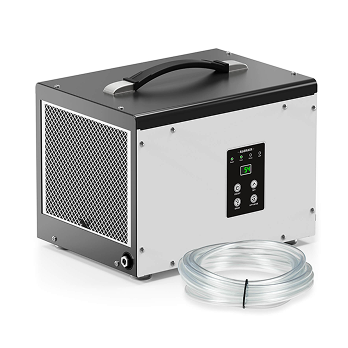
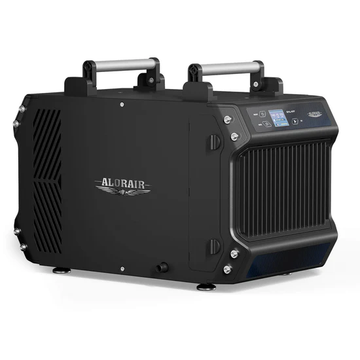
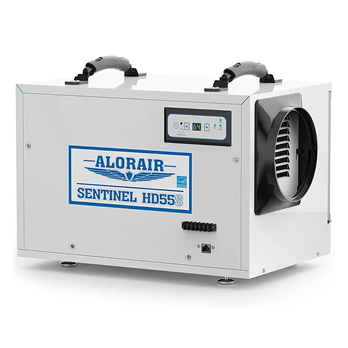
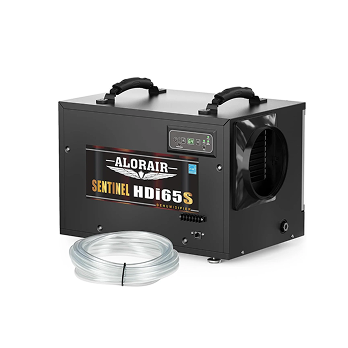




Yes, you can put a dehumidifier in your garage when excess humidity is actually present, and the space's temperature, airflow, and drainage match what the unit is designed to handle. A properly placed dehumidifier can reduce condensation on tools and vehicles, cut down on musty odors, and lower the moisture exposure that damages stored belongings. However, a cold garage, an open door, or an active leak can all throw off how well it performs. This guide covers whether to use a dehumidifier in a garage, where to put it, how to run it, and which unit fits your space.
Can You Put a Dehumidifier in a Garage?
Yes, a garage isn't off-limits for a dehumidifier. What matters is the humidity level, the temperature, how much outside air gets in, any active leaks, and where the unit drains.
The Short Answer
A dehumidifier works in a garage when humidity stays high, the temperature sits within the unit's rated range, and the space stays reasonably closed. Fix leaks and standing water first; the machine can't outrun an active water source.
Conditions the Garage Should Meet
● RH stays elevated for days, not hours
● The garage can stay closed while it runs
● Temperature falls within the unit's rated range
● Roof, plumbing, and foundation leaks are fixed
● Standing water is gone
● Airflow and drainage both work

How Do You Know Whether Your Garage Needs a Dehumidifier?
One damp afternoon doesn't mean much. A pattern does; RH that stays high for days, no matter the weather, points to a real problem.
Measure Relative Humidity
Grab a separate hygrometer (the readout on the dehumidifier itself doesn't count) and log readings for a week, through different weather and after parking a wet car. The EPA recommends keeping indoor RH below 60%, ideally 30–50%. Above 60% for days at a stretch is your signal; a practical garage target sits around 50–55%.
Look for Signs of Excess Moisture
● Condensation on windows, tools, or the car
● A musty smell that won't air out
● Rust forming on metal
● Soft, damp cardboard
● Peeling paint or warped wood
● Mold on walls or stored items
Any of these means it's time to track down the source, not just the number on the hygrometer.

Separate Temporary Moisture From a Chronic Problem
A wet car raises RH for an hour or two, then it drops back down; that's normal. A reading that stays high between events, or never fully drops, is the real problem. Trust several days of data over one damp feeling.
Why Do Garages Become Humid?
Moisture gets in from more directions than most people expect, and a dehumidifier only handles what's already in the air.
Humid Outdoor Air Enters Through Doors and Gaps
Big overhead doors, worn weatherstripping, gaps in the walls, and open windows all let humid air in. A unit can't keep up if the garage stays open most of the day.
Wet Vehicles and Equipment Bring Water Inside
Rain, melting snow, wet lawn gear, and hosing down the car all add liquid water. Mop or wipe it up; don't leave it for the air to absorb and the machine to chase.
Moisture Can Move Through Concrete
Soil under a slab sits near saturation, and that moisture pushes toward the interior where drainage or vapor barriers are missing. Not every damp floor needs a dehumidifier; a well-sealed, well-graded slab often stays dry on its own.
Leaks and Poor Drainage Add Bulk Water
Roof leaks, plumbing leaks, bad door seals, and poor grading dump actual water, not just humidity. Fix these first; a dehumidifier removes vapor from air, not water from a leak.
Condensation Forms on Cold Surfaces
Warm, humid air condenses the moment it touches something cold: metal, concrete, glass, an uninsulated door. Lower humidity helps, but insulation and sealing carry real weight too.
When Does a Dehumidifier Make Sense in a Garage?
Some garages get real value from one. Others don't need it at all; it depends on how the space gets used and how often humidity actually climbs.
Garages in Humid or Coastal Climates
Coastal air stays sticky for months, not days, especially in an attached, insulated, or daily-use garage. Keep the door shut and seals tight; the unit can't dry an endless supply of outside air. A humid Florida summer calls for different equipment than a mild inland garage needs.
Garages Used as Workshops
Controlling humidity protects metal tools, wood stock, and electronics from sustained high RH. It won't stop rust or damage on its own; wipe down tools and store metal parts properly too.
Garages Used for Storage
Storage garages holding cardboard boxes, furniture, paper documents, and seasonal decorations are especially vulnerable. Cardboard and untreated wood readily absorb moisture from the surrounding air. Sealed plastic storage containers, used alongside humidity control, offer better protection for paper and fabric items than cardboard boxes in a humid garage.
Attached or Insulated Garages
These stay more stable in temperature and see less outside air leak in, so a dehumidifier reaches its setpoint faster and holds it longer.
Temporary Drying After a Moisture Problem Is Corrected
Once a leak's stopped and standing water's gone, a dehumidifier speeds up drying, different from running one nonstop against a leak that's still active.
Will a Dehumidifier Work in an Unheated Garage?
Yes, if the temperature stays inside the unit's rated range. Two unheated garages in different climates behave nothing alike.
Check the Actual Garage Temperature
Measure the coldest point the garage hits while you'd want the unit running. Don't assume it matches the forecast or the house next door; an unheated garage runs colder than both.
How Low Temperatures Affect Refrigerant Dehumidifiers
Refrigerant units pull less moisture as air gets colder. Below freezing, water forms frost on the coil instead of draining as liquid, and capacity drops fast as that frost builds; the compressor then pauses for a defrost cycle while the fan keeps running.
There's no single cutoff temperature; check your model's rated range. The AlorAir Sentinel HD35P, for example, is rated for a functioning temperature range of 33–105°F, with an automatic defrost cycle built in for lower-temperature operation.
Using a Garage Dehumidifier in Winter
Winter use comes down to temperature and humidity together, not temperature alone; cold air holds less moisture even when the RH reading looks high.
Check both numbers, pick equipment rated for what you actually measured, use auto-defrost, keep drain hoses from freezing, and shut the unit off if temperature drops below its range.
When Another Moisture-Control Method May Be Better
If your garage runs colder than any unit can handle, seal gaps, fix drainage, add insulation, and air the space out on drier days instead; you can knock down a lot of humidity before you ever plug a dehumidifier in.
Where Should You Place a Dehumidifier in a Garage?
Placement affects airflow, drainage, and safety just as much as the unit itself.
Choose an Open and Stable Location
Set it on level, stable ground with clear space around the intake and discharge. Skip corners, cabinets, crowded shelves, and anywhere a car could clip it while parking.
Follow the Manufacturer's Clearance Requirements
There's no single wall-clearance figure that applies to every dehumidifier, since required clearance depends on how the intake and discharge are positioned on that particular model. Check the product manual for the exact clearance your unit needs rather than relying on a generic rule of thumb.
Keep the Unit Away From Water
Keep it out of standing water and away from rain blowing through an open door, roof drips, hose spray, or melting snow off the car.
Position It Near a Practical Drainage Route
A floor drain, sink, or condensate-pump route nearby cuts down on drainage hassle , but don't crowd the intake just to shorten the hose.
Protect the Unit From Garage Activity
Choose a spot where vehicles, power tools, stored items, and normal foot traffic won't damage the machine or block its airflow over time. A dehumidifier tucked safely along a side wall, away from the vehicle's swing path and any workbench overspray, tends to hold up better than one placed in the middle of active floor space.
How to Use a Dehumidifier in a Garage
Running one well is a sequence, not a single step.
Step 1: Correct Leaks and Remove Standing Water
Repair the source of any moisture problem, a roof leak, a plumbing issue, a failed door seal, and physically remove any standing water before turning the unit on. A dehumidifier addresses humidity in the air; it isn't a substitute for stopping an active water source.
Step 2: Measure Temperature and Humidity
Record a baseline temperature and RH reading with a separate hygrometer. Confirm both fall within the operating limits listed for your specific dehumidifier model before running it.
Step 3: Close the Garage
Close the garage door, windows, and any other exterior openings that aren't needed while the unit operates. Repair damaged weatherstripping where practical, since gaps around the door undermine the whole effort.
Step 4: Position the Machine Correctly
Place the dehumidifier on a stable, level surface with clear airflow at the intake and discharge, following the placement guidance covered above. Keep it protected from water exposure and out of the path of parked or moving vehicles.
Step 5: Set a Reasonable Humidity Target
A starting point of roughly 50–55% RH works for many garages, where conditions allow. Setting the humidistat unnecessarily low, say, aiming for 35% in a space that doesn't need it, can increase runtime and energy use without providing better protection for stored items or tools.
Step 6: Arrange Drainage
Garage dehumidifiers typically offer a few drainage options:
● A manual tank works for occasional use.
● A gravity hose or built-in condensate pump handles long-term operation better, since neither needs regular emptying.
● A separate pump handles drainage when the built-in option isn't available or sufficient.
Step 7: Monitor the Results
Check RH with a hygrometer kept away from the unit itself, and watch for less condensation, fewer odors, and drier storage, not just a lower number on the display.
How Long Should a Dehumidifier Run in a Garage?
There's no fixed daily number; runtime depends on temperature, starting humidity, garage size, and how often the door opens.
● Use the Humidistat Instead of a Fixed Schedule: Set a target and let the unit cycle on its own. Continuous mode makes sense right after a leak, not for everyday control.
● Expect Longer Runtime After Moisture Events: A wet car, a humid stretch, or a door left open all mean longer runtime; that's normal, not a malfunction.
● Continuous Operation Can Reveal a Problem: A unit that never reaches its setpoint might be undersized, running too cold, blocked, fighting a leaky garage, or stuck with a clogged filter or drain.
What Type of Dehumidifier Works Best in a Garage?
The right unit matches your actual temperature and humidity readings, not the biggest square-footage number on the box.
Match the Unit to Temperature and Humidity
Rated operating range, moisture-removal capacity, and defrost ability matter more than a generic room-size claim.
Look for Practical Garage Features
Automatic defrost, a built-in humidistat, continuous drainage, an optional condensate pump, auto restart, an accessible filter, durable housing, and electrical needs that match your outlets.
Residential vs. Commercial Garage Dehumidifier
A residential unit covers a small, enclosed garage with moderate humidity just fine. A commercial garage dehumidifier fits a bigger workshop, high ceilings, heavy moisture, or a door that stays open all day; not every two-car garage needs commercial-grade gear.
The Sentinel HD35P and Sentinel HD55P show that range in one lineup:
|
Spec |
Sentinel HD35P |
Sentinel HD55P |
|
AHAM rating |
35 pints/day |
55 pints/day |
|
At saturation |
70 pints/day |
120 pints/day |
|
Coverage |
Up to 1,000 sq. ft. |
Up to 1,300 sq. ft. |
|
Drainage |
Pump, up to 19.6 ft |
Pump, up to 19.6 ft |
Both run R32 refrigerant and include automatic defrost, so the HD35P suits a smaller, enclosed garage while the HD55P steps up for bigger spaces or heavier moisture.
Choose Capacity Separately
Square footage alone doesn't set the right capacity; ceiling height, humidity, temperature, and air leaks matter too. Match pint-per-day output to your actual garage with the sizing math built for garages before you buy.
Is Putting a Dehumidifier in the Garage Worth It?
The value depends on your specific garage, not garages as a category.
It May Be Worth It When
A dehumidifier is more likely to deliver noticeable value when:
● Recorded RH consistently sits above 60% for multiple days, not just after occasional weather events
● The garage is used as a workshop, storage area, or living-adjacent space where moisture-sensitive items are kept
● The space can be reasonably closed off and isn't left wide open most of the day
● Existing leaks and standing-water issues have already been addressed
● Temperatures stay within a range the available equipment can actually handle
It May Not Be Worth It When
A dehumidifier may provide limited value when:
● The garage door stays open for extended periods during the day, letting outdoor humidity in continuously
● An active leak or unresolved drainage problem is still adding bulk water
● Winter temperatures regularly fall well below the equipment's rated operating range
● RH readings only rise briefly after specific events and return to normal on their own
● The garage is rarely used for anything moisture-sensitive, making the cost and maintenance hard to justify
How to Evaluate the Result
Compare temperature, RH, and runtime before and after installing the unit. If humidity stays high despite good placement, look again at air leaks, moisture entry, and equipment size.
Frequently Asked Questions
Can I Put a Regular Dehumidifier in My Garage?
Yes, if temperature, humidity, drainage, and electrical setup all match what the unit calls for. Not every household model is built for a cold or heavily humid garage.
Will a Dehumidifier Work in an Unheated Garage?
It can, as long as temperature stays inside the model's rated range. Performance drops as air gets colder, and units without auto-defrost ice up faster.
What Humidity Should I Keep My Garage At?
Below 60% is the general target, with 50–55% a good starting point. EPA guidance points to 30–50% for indoor spaces overall, though the right number shifts with climate and what's stored there.
Can a Dehumidifier Prevent Mold in a Garage?
It makes new mold growth less likely by cutting the moisture mold needs. It won't remove mold that's already there or dry out materials that already got wet.
Can I Drain a Garage Dehumidifier Outside?
Usually, if the manufacturer's instructions, hose slope, and freezing risk all check out. Just don't let the discharge pool near the foundation.
Conclusion
So, can I put a dehumidifier in my garage? In most cases, yes: confirm real, sustained humidity, check that your temperature fits the unit's range, and fix any active leaks first. Placement and drainage handle the rest.
Ready to stop guessing and start drying the space out? Browse AlorAir's full lineup of crawl space and garage dehumidifiers to find the right capacity, drainage setup, and defrost rating for your space. Every model ships built for real-world moisture, not just a spec sheet number.


