
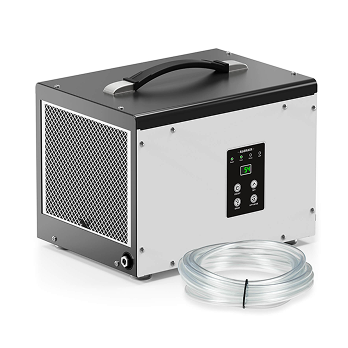
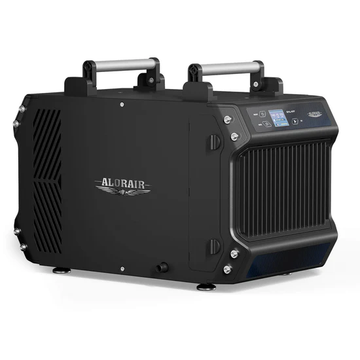
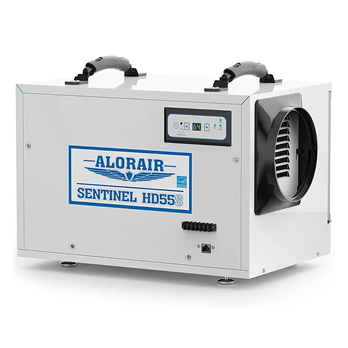
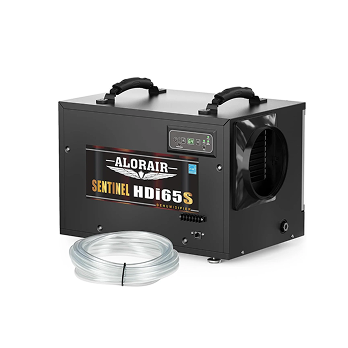



Florida garages fight a losing battle against moisture most of the year. The short answer to “What is a good dehumidifier for a garage in Florida?” look for a compressor model with continuous drainage, an adjustable humidistat, auto-restart, and a heat range built for a hot garage, not a cool basement. Most one- and two-car garages do well starting around 35–55 pints per day (PPD) at AHAM conditions (80°F, 60% relative humidity, or RH), the standard testing body for household appliances. A bigger, leakier, or frequently opened garage may need more. In some cases, a higher-capacity commercial garage dehumidifier may be necessary. This guide explains which dehumidifier types work best, how to choose the right capacity, which features matter, and how to install the unit correctly.
Why Florida Garages Are Harder to Dehumidify
Heat, air leaks, open doors, and outdoor moisture build up fast here. A standard room dehumidifier often can't keep pace, which is why a dehumidifier for Florida garage use needs its own set of rules.
Humid Outdoor Air Continually Enters the Garage
Florida summer air runs a dew point near 70°F most days, sometimes 65 to 75. Every time the overhead door opens, that humid air rushes in and replaces whatever you just dried out. Worn seals, side doors, and wall gaps let more in around the clock.
The Garage May Have Additional Moisture Sources
Wet cars, rain blown in around the door, roof or plumbing leaks, and moisture rising through a bare slab all add water on top of the air itself. A dehumidifier pulls vapor from the air; it won't fix an active leak. Repair the source first.
High Temperatures Can Limit Dehumidifier Operation
An uninsulated garage runs hotter than the house next door, especially behind a sun-baked overhead door. Heat alone doesn't add moisture, but heat plus a high dew point pushes equipment hard. Check the maximum operating temperature, not just the low end; running past it can trip a shutdown or wear out the compressor early.
Persistent Humidity Can Damage Stored Property
Musty smells, mold on boxes and fabric, rust on tools, and warped wood all trace back to sustained humidity. The EPA recommends keeping indoor RH below 60%, ideally 30–50%. A dehumidifier won't guarantee mold or rust never shows up; it just cuts the odds.
What Type of Dehumidifier Works Best in a Florida Garage?
Picking the right dehumidifier for Florida garage use starts with the compressor type. Commercial-grade gear steps in for bigger or tougher spaces. Desiccant models rarely make sense in Florida heat.
Compressor Dehumidifiers Are Usually the Best Starting Point
Compressor (refrigerant) units pull air across a cold coil and actually work better as it gets warmer, up to their rated limit. That makes them the practical pick for a garage dehumidifier for hot, humid climate use. Check both ends of the temperature range before buying, not just how low it can go.
When a Commercial-Grade Unit Makes More Sense
A commercial dehumidifier for garage use makes sense for a large, leaky, or workshop-style space, or one holding equipment that can't handle humidity swings. Expect:
-
Rugged housing built for job-site use
-
Higher CFM (airflow) that clears a room faster
-
Continuous-duty parts for long runtimes
-
Built-in pump options where there's no floor drain
-
Corrosion-resistant components for coastal air
Why a Desiccant Model Is Usually Not the First Choice
Desiccant units shine in cold spaces, where a compressor's capacity drops off. They also release heat and pull more power to remove the same water in warm air. A correctly sized compressor unit does the job for less in Florida's climate.
What Size Dehumidifier Do You Need for a Florida Garage?
Square footage alone won't get you there. Ceiling height, leaks, and moisture load change the math.
Start With Garage Size, but Include Ceiling Height
A 12-foot ceiling holds a lot more air than an 8-foot one over the same floor plan; floor area alone can undersize the unit. Note whether the garage is attached or detached, insulated, or split into bays.
Measure the Actual Humidity
Track RH with a standalone hygrometer over several days, including a rainy stretch and right after the door's been opened a few times. A garage sitting above 65–70% RH points to a bigger moisture problem than one that just drifts a little humid.
Adjust Capacity for Garage Conditions
|
Garage Type |
Typical Floor Area |
Starting Capacity |
|
Small, well-sealed, attached |
200–300 sq. ft. |
~25–35 PPD (AHAM) |
|
Standard 1–2 car Florida garage |
300–600 sq. ft. |
~35–55 PPD (AHAM) |
|
Large, leaky, or frequently opened |
600–800 + sq. ft. |
55+ PPD (AHAM) or commercial-grade |
|
Workshop / heavy moisture load |
Varies |
Size from RH, volume, and load |
Treat this as a starting range, then confirm it against your own hygrometer readings.
Understand AHAM, DOE, and Saturation Ratings
Not all PPD numbers mean the same thing. AHAM tests at 80°F/60% RH; current Department of Energy (DOE) tests for room dehumidifiers run cooler, which lowers the printed rating on the same machine.
"Saturation" numbers come from hot, near-max-humidity conditions and run much higher; a unit rated 70 PPD at saturation might hit only 35 PPD at AHAM. Never compare the two side by side without labeling which is which.
Features That Matter Most in a Florida Garage Dehumidifier
Some specs matter more than others once real Florida heat gets involved.
A Suitable Maximum Operating Temperature
This is the number most buyers skip. Confirm the garage's actual summer temperature falls inside the unit's approved range before you buy; insulation and shade help, but they don't replace checking the spec sheet.
Continuous Gravity Drainage or a Condensate Pump
A bucket fills fast in Florida humidity. Run a gravity hose downhill to a drain when you can. Use a pump when water needs to travel up or sideways to reach one.
Adjustable Humidistat and Automatic Restart
A humidistat cycles the compressor around your target RH instead of running it nonstop. Auto-restart picks up right where it left off after a storm knocks the power out, a near-daily event during Florida's wet season.
Washable Filtration and Easy Maintenance
Garage air carries more dust and debris than a bedroom. A washable filter you'll actually clean keeps airflow and capacity where it should be.
Corrosion Protection and Durable Construction
Protected coils and a solid housing hold up better against salt air and humidity swings. They reduce risk; they don't make a unit immune to neglect or chemical fumes.
Energy Efficiency and Operating Cost
A garage unit can run for hours a day for months at a time. Compare AHAM capacity, power draw, and COP (liters of water removed per kilowatt-hour) rather than shopping by coverage claims alone.
Recommended AlorAir Dehumidifiers for Florida Garages
There's no single best dehumidifier for garage use in Florida. It depends on your space.
For a Smaller or Better-Sealed Garage: Sentinel HD35P WiFi
The Sentinel HD35P WiFi is a reasonable fit for a smaller, better-sealed garage or one with a moderate moisture load rather than a constant heavy load. It's built as a compact residential/light-commercial unit rather than a full commercial-grade machine, which suits a typical single-car garage without a workshop or major air-sealing issues.
The specs are:
-
35 PPD AHAM / 70 PPD saturation
-
Covers up to 1,000 sq. ft.
-
33°F–105°F operating range
-
Gravity and pump drainage
-
Wi-Fi monitoring with automatic humidity control
That 105°F ceiling covers most summer afternoons, but measure your own garage's peak temperature before buying; a sun-baked door can push it higher than the outdoor reading.
For a Typical Two-Car Garage or Higher Moisture Load: Sentinel Pro 55X
The Sentinel Pro 55X steps up in capacity for a larger garage, a heavier humidity load, or a garage doubling as a workshop. It's built on AlorAir's commercial-grade platform, which means sturdier construction intended for more demanding daily use than a residential-style unit.
The specs are:
-
55 PPD AHAM / 120 PPD saturation
-
Covers up to 1,500 sq. ft.
-
37.4°F–100.4°F operating range
-
Gravity drainage plus a built-in pump
-
Auto defrost and internal corrosion protection
Its 100.4°F ceiling runs lower than the HD35P's, so a detached, sun-exposed garage should get checked against that number before you commit.
When to Consider a Larger Commercial Dehumidifier
Multi-bay garages, dedicated workshops, or spaces that have fought severe humidity for years may need a commercial dehumidifier for garage use beyond a standard residential unit.
A properly sized machine holds steady RH without daily babysitting; you don't need restoration-grade capacity or heavy-duty portability unless you're actually running a job site out of your garage.
How to Set Up a Dehumidifier in a Florida Garage
Installing a garage dehumidifier correctly determines whether it can keep up with Florida’s moisture load.
Correct Leaks and Standing Water First
Fix roof leaks, plumbing issues, and water blowing in around doors before anything else. A dehumidifier can't outpace an active leak. Once the source is handled, sizing the unit to your actual square footage and ceiling height, not a guess, determines how well it performs from there.
Improve the Garage Envelope
Check the overhead-door seal, weatherstripping, and wall gaps. Small envelope fixes like these can knock humidity down before you even plug anything in, and they cost less than upsizing the machine to compensate.
Choose a Location With Clear Airflow
Keep the intake and discharge clear on all sides. Boxes, parked cars, and tight corners choke airflow and quietly cut capacity, no matter what the unit's rated for.
Plan the Drainage Route Before Installation
Run a gravity hose continuously downhill, no kinks, no loops, no low spots that trap water. A pump instead means staying within its rated lift and hose length. Route discharge away from the foundation and check local rules on where it can go.
Follow Electrical and Storage Safety Requirements
Use the connection specified in the manual and confirm it meets local code; some commercial units need a dedicated circuit. Keep the unit clear of standing water, flammable liquids, and anywhere a car or tool could hit it. Garages aren't off-limits for a dehumidifier by any means; most units handle the temperature swings and dust just fine once they're placed and wired correctly.
What Humidity Should a Florida Garage Maintain?
Getting the target right keeps a garage dehumidifier for hot, humid climate use efficient instead of overworked.
Start Around 50%–55% RH
For most garages, 50%–55% RH is a practical starting point. Storing bare metal tools or sensitive gear may call for a tighter setting, as long as the unit can hold it without straining.
Avoid Chasing the Lowest Possible Setting
Moving the humidistat down as far as it goes adds runtime, power use, and wear without much extra payoff. Stable and dry beats chasing the lowest number on the display.
Use a Separate Hygrometer to Verify Garage Humidity
Place it away from the unit's intake and discharge; readings right next to the machine reflect treated air, not the room. Use more than one sensor in a large or divided garage.
Maintaining a Garage Dehumidifier in Florida
Florida's humid season runs most of the year, not just summer, so maintenance matters more here than in drier climates. A few basics keep the unit running at its rated capacity:
-
Wash or replace the filter regularly: check more often if the garage sees dust from vehicles, woodworking, or yard tools. A clogged filter cuts airflow and capacity well before it looks visibly dirty.
-
Flush or inspect the drain line periodically. Warm, humid conditions breed algae and slime inside the tubing, which can slow or block drainage over time.
-
Wipe down the coil and housing when dust builds up to keep heat transfer efficient.
-
Recheck the humidistat setting each season. A setting that made sense in a dry spring may need adjusting once rainy season raises the moisture load.
-
Test auto-restart before hurricane season. It's what keeps the unit running through short power outages without someone resetting it by hand.
Frequently Asked Questions
Do I Need a Dehumidifier in My Garage in Florida?
If RH sits above 60%, you notice musty smells or condensation, or you store anything moisture-sensitive, it's worth adding one. Measure first; a garage that only spikes after rain may need better sealing more than new equipment.
What Size Dehumidifier Do I Need for a Two-Car Garage in Florida?
Roughly 35–55 PPD at AHAM conditions covers most standard two-car garages. Ceiling height, leaks, and door-opening frequency can push that higher.
What Features Should a Garage Dehumidifier Have in a Hot, Humid State?
A garage dehumidifier for hot, humid climate use needs a heat range built for summer, continuous drainage, an adjustable humidistat, and auto-restart. A serviceable filter and corrosion-resistant parts help too. Compare AHAM or DOE numbers, not coverage claims.
What Humidity Should a Garage Be in Florida?
Around 50–55% RH works for most garages. Adjust down slightly for sensitive stored items, provided the unit holds it without running constantly.
What Are the Best Dehumidifiers for a Garage in a Humid Climate Like Florida?
It depends on your garage. The Sentinel HD35P WiFi suits smaller, well-sealed spaces at 35 PPD AHAM with a 33°F–105°F range. The Sentinel Pro 55X handles bigger garages and heavier loads at 55 PPD AHAM with a 37.4°F–100.4°F range. Larger, leakier garages may need commercial-grade equipment instead.
Conclusion
The right answer to what is a good dehumidifier for a garage in Florida comes down to your actual conditions: heat, humidity, air leaks, and how much moisture gets in—not floor area or vehicle count alone Fix leaks first, seal what you can, then size the unit to match.
Ready to stop guessing? The Sentinel Pro 55X may be a suitable option for a two-car garage or workshop with a heavier moisture load, provided the garage temperature stays within its rated operating range. Browse AlorAir's garage dehumidifier lineup and get your garage dry before the next rainy stretch hits.


