
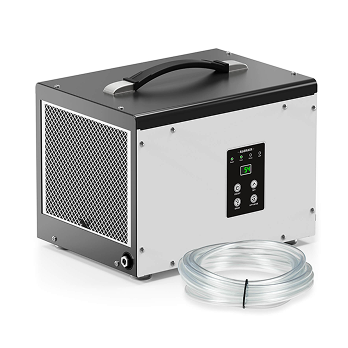
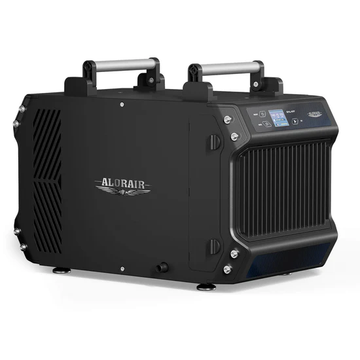
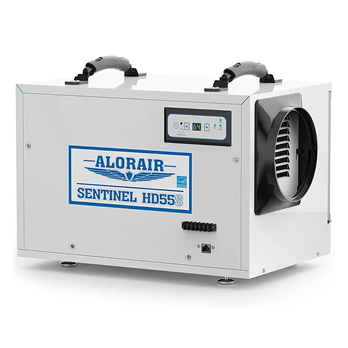
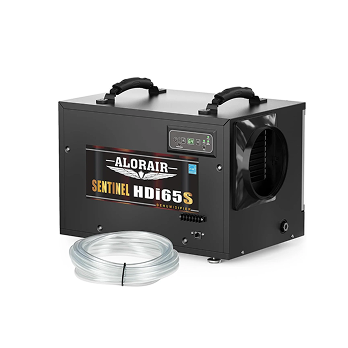



If you're researching crawl space dehumidifiers, you're already ahead of the curve. Most homeowners wait until they're dealing with visible mold, wood rot, or structural damage before taking action. By investing in the right dehumidifier now, you'll prevent costly repairs and protect your home's foundation, air quality, and overall value.
The challenge? With dozens of brands and models available—from big-box retailers like Lowe's and Home Depot to specialized manufacturers like AlorAir, Aprilaire, and Santa Fe—choosing the best crawl space dehumidifier can feel overwhelming. This guide will help you cut through the noise and select a reliable, long-lasting unit that matches your specific needs.
Why a Crawl Space Dehumidifier Is Worth the Investment
Before diving into specific models, let's address the core question: Is a crawl space dehumidifier really necessary?
The Hidden Dangers of Crawl Space Moisture
Even if you don't see mold yet, persistent dampness creates conditions that lead to:
- Mold and mildew growth that spreads throughout your home's air system
- Wood rot and structural damage to floor joists, support beams, and subfloors
- Increased energy costs as humid air is harder to heat and cool
- Pest infestations from termites, carpenter ants, and other moisture-loving insects
- Musty odors that permeate into living spaces above
- Health problems including respiratory issues, allergies, and asthma triggers
- Reduced home value when moisture damage becomes visible during inspections
Key Features to Look For in a Crawl Space Dehumidifier
Not all dehumidifiers are designed for the same environment. Whether a regular dehumidifier works in a crawl space depends on factors such as operating temperature, drainage capability, construction quality, and resistance to continuous humidity. Purpose-built crawl space models generally offer features that portable residential units lack, including low-temperature operation, durable metal housings, continuous drainage, and automatic defrost.
Adequate Capacity for Your Space
Crawl space dehumidifier capacity is measured in pints per day (PPD) at specific temperature and humidity conditions. Here's what you need based on square footage:
|
Crawl Space Size |
Recommended Capacity |
Example AlorAir Model |
|
Up to 1,000 sq ft |
70-90 PPD |
|
|
1,200-1,500 sq ft |
110-130 PPD |
|
|
1,800-2,000 sq ft |
140-160 PPD |
|
|
2,300-2,600 sq ft |
180-200 PPD |
Galaxy 85P (180 PPD) / Sentinel HDi90 (198 PPD) |
|
2,900-3,300 sq ft |
220-235 PPD |
Sentinel HDi100 (220 PPD) / HDi120 (235 PPD) |
Pro tip: It's better to slightly oversize than undersize. A more powerful unit will reach target humidity faster and won't run constantly.
2. Built-In Condensate Pump vs. Gravity Drainage
This is one of the most important decisions you'll make.
Gravity Drainage:
- Requires drain point to be lower than the dehumidifier
- Simple, reliable operation with no moving pump parts
- Ideal if you have a sump pump, floor drain, or can route hose outside
- Lower upfront cost
- Examples: AlorAir Sentinel HD55, HD90
Crawl Space Dehumidifier with Pump:
- Can pump water vertically up to 19.6 feet (AlorAir models)
- Essential when drain point is higher than the unit
- More installation flexibility
- Slightly higher cost but worth it for convenience
- Examples: AlorAir Sentinel HD55P, Galaxy 60P, Galaxy 85P, HDi90
Our recommendation: Unless you have an obvious gravity drainage solution, choose a model with a pump. The extra $100-150 investment eliminates drainage headaches.
Energy Efficiency Rating
Crawl space dehumidifiers run year-round in most climates. Energy efficiency directly impacts your monthly operating costs.
Look for:
- Energy Star certification (saves approximately 20% on energy costs)
- High energy factor measured in Liters per kWh (L/kWh)
- Auto-shutoff when target humidity is reached
All AlorAir crawl space dehumidifiers are Energy Star certified with energy factors ranging from 2.0 to 2.7 L/kWh—among the highest in the industry.
Durability and Construction Quality
Your crawl space is a harsh environment—hot, humid, potentially dusty, and difficult to access for repairs. You need a unit built to last.
Essential durability features:
- Metal housing instead of plastic (resists corrosion and impact damage)
- Washable, reusable filters that don't need frequent replacement
- Automatic defrost system for operation in cooler temperatures (down to 41°F)
- cETL or ETL safety certification ensuring the unit meets North American safety standards
- Corrosion-resistant evaporator coils (rare earth alloy construction)
Comparing Top Crawl Space Dehumidifier Brands

Let's compare the leading brands you'll encounter during your research.
AlorAir Crawl Space Dehumidifiers
Strengths:
- Excellent price-to-performance ratio
- Comprehensive model range covering 1,000-3,300 sq ft
- Energy Star certified across entire line
- Rugged metal construction built for harsh environments
- Available with or without pumps
- WiFi-enabled models with app control
- Strong warranty coverage (up to 5 years)
- Designed specifically for crawl spaces and basements
- Made in facilities with strict quality control
Popular models:
- Sentinel HD35P (70 PPD, 1,000 sq ft, with pump)
- Sentinel HD55P (120 PPD, 1,500 sq ft, with pump)
- Galaxy 60P (145 PPD, 1,800 sq ft, with pump)
- Sentinel HDi90 (198 PPD, 2,600 sq ft, with pump)
Best for: Homeowners seeking professional-grade performance at competitive prices with strong warranties.
Aprilaire Crawl Space Dehumidifiers
Strengths:
- Well-established HVAC brand with good reputation
- Professional installation network
- Integration with whole-home HVAC systems
Considerations:
- Generally higher price point for similar capacity
- Limited model selection compared to specialized brands
- Often require professional installation
- Replacement parts can be expensive
Santa Fe Dehumidifiers
Strengths:
- High-quality construction
- Excellent performance in extreme conditions
- Good warranty support
Considerations:
- May offer more capacity than needed for average homes
- Less flexibility in model selection
- Higher replacement part costs
Determining the Right Size for Your Crawl Space
Choosing the correct capacity is critical. Properly sizing a crawl space dehumidifier requires considering square footage, moisture severity, ceiling height, air leakage, and existing water intrusion. An undersized unit may run continuously without reaching the target humidity, while an unnecessarily large model can increase the purchase price without providing a meaningful benefit.
How to Calculate Your Needs
Step 1: Measure your crawl space
- Length × Width = Square footage
- Example: 30 ft × 50 ft = 1,500 sq ft
Step 2: Assess moisture conditions
|
Condition |
Description |
Capacity Multiplier |
|
Moderately damp |
Visible moisture on surfaces only during humid weather |
1.0x base capacity |
|
Very damp |
Visible moisture on surfaces year-round, musty odor |
1.2x base capacity |
|
Wet |
Seepage on walls/floor, standing water occasionally |
1.5x base capacity |
|
Extremely wet |
Standing water frequently, significant structural moisture |
2.0x base capacity + address water intrusion |
Step 3: Apply the formula
- Base capacity: 10 PPD per 100 sq ft
- 1,500 sq ft ÷ 100 = 15
- 15 × 10 PPD = 150 PPD base requirement
- If "very damp": 150 × 1.2 = 180 PPD recommended
Step 4: Select appropriate model For 1,500 sq ft "very damp" crawl space, choose between:
- Sentinel HD55P (120 PPD) if conditions improve with encapsulation
- Galaxy 60P (145 PPD) for moderate-to-heavy moisture
- Galaxy 85P (180 PPD) for heavy moisture conditions
Special Considerations for Large Spaces
For crawl spaces over 2,000 sq ft, consider:
- Single high-capacity unit (simpler, lower cost)
- Multiple smaller units (better coverage, redundancy if one fails)
- Ducted system (AlorAir HDi90 offers ductable option for air distribution)
Installation Considerations: DIY vs. Professional

After selecting the appropriate unit, installing a crawl space dehumidifier involves more than simply connecting it to an outlet. Proper placement, adequate airflow clearance, a reliable drainage route, level support, and access to a grounded GFCI-protected receptacle all affect safety and performance. The complexity of these requirements will help determine whether DIY or professional installation is more appropriate.
DIY Installation
What's involved:
- Installing vapor barrier (if not already present)
- Positioning the dehumidifier on level surface
- Connecting drain hose to pump or gravity drain
- Plugging into grounded outlet
- Setting humidity controls
Estimated time: 4-8 hours including encapsulation, 1-2 hours for dehumidifier only
Best for: Homeowners comfortable working in confined spaces with basic DIY skills
Professional Installation
What's included:
- Crawl space inspection and moisture assessment
- Vapor barrier installation (if needed)
- Proper dehumidifier placement
- Drainage system setup
- Electrical connection (may require electrician)
- Testing and humidity optimization
Best for: Homeowners uncomfortable in crawl spaces, those requiring electrical work, or situations with complex moisture issues
AlorAir Installation Support
AlorAir dehumidifiers are designed for straightforward DIY installation with:
- Detailed user manuals with step-by-step instructions
- Pre-attached drain hoses
- Adjustable leveling feet
- Simple compression fittings (no special tools)
- 24/7 U.S.-based customer support
- Video installation tutorials
Most customers successfully install AlorAir units themselves, saving $300-600 in labor costs.
Making Your Final Decision: A Step-by-Step Framework
Follow this decision framework to choose the best crawl space dehumidifier for your situation:
Step 1: Determine Your Square Footage
- Measure crawl space: _____ sq ft
Step 2: Assess Moisture Level
- Moderately damp
- Very damp
- Wet
- Extremely wet
Step 3: Calculate Required Capacity
- Base capacity (sq ft ÷ 100 × 10 PPD): _____ PPD
- Adjusted for conditions: _____ PPD
Step 4: Evaluate Drainage Options
- I have a drain point lower than where unit will sit → Gravity drainage OK
- My drain point is higher → Need pump model
- I'm not sure → Choose pump model for flexibility
Step 5: Select Key Features
- WiFi control (add ~$80-100 to base model)
- Ductable design for air distribution
- Extended warranty coverage
- Integration with HVAC system
Step 6: Verify Specifications
Before purchasing, confirm:
- Capacity matches or exceeds your calculated need
- Coverage area matches your square footage
- Energy Star certified
- Operates at low temperatures (41°F minimum)
- Includes drain hose and necessary fittings
- Warranty meets your expectations (3-5 years ideal)
Why AlorAir Stands Out for Long-Term Reliability
After comparing features, prices, and user experiences across all major brands, AlorAir consistently delivers the best value for crawl space applications.
The AlorAir Advantage
Purpose-Built for Crawl Spaces Unlike residential dehumidifiers adapted for basement use, AlorAir units are engineered specifically for the demanding crawl space environment.
Professional-Grade Construction
- Rugged metal housing resists corrosion and impact
- Rare earth alloy evaporator coils outlast standard copper
- Commercial-grade components designed for 24/7 operation
- cETL safety certified to North American standards
Complete Model Range From 70 PPD to 235 PPD, AlorAir offers the right size for any crawl space—no compromising with an undersized or oversized unit.
Energy Efficiency Leadership All models Energy Star certified with industry-leading energy factors (2.0-2.7 L/kWh), saving $200-400 annually vs. non-certified models.
Smart Technology Integration WiFi-enabled models provide smartphone control, monitoring, and alerts—eliminating crawl space visits.
Comprehensive Support
- 24/7 U.S.-based customer service
- Detailed installation guides and video tutorials
- Network of authorized service centers
- Responsive technical support team
- Up to 5-year warranty coverage
7. Competitive Pricing AlorAir delivers professional-grade performance at prices 20-40% below comparable Aprilaire and Santa Fe models.
Conclusion
Choosing the best crawl space dehumidifier doesn't have to be overwhelming. By focusing on key factors—proper capacity, pump vs. gravity drainage, energy efficiency, durability, and smart controls—you can confidently select a unit that protects your home for years to come.
For most homeowners, AlorAir offers the ideal combination of:
- Professional-grade performance and durability
- Comprehensive model selection for any crawl space size
- Energy-efficient operation that minimizes monthly costs
- Smart technology for convenient remote monitoring
- Competitive pricing with strong warranty support
- Straightforward DIY installation
Frequently Asked Questions
What's the best dehumidifier for a 2000 sq ft crawl space?
For a 2,000 sq ft crawl space, choose between the AlorAir Galaxy 60P (145 PPD) for moderate moisture or the AlorAir Galaxy 85P (180 PPD) for heavier moisture conditions. Both models include built-in pumps for drainage flexibility and cover spaces up to 1,800-2,300 sq ft respectively. The Galaxy 85P provides extra capacity for peace of mind and faster humidity reduction.
Should I buy a crawl space dehumidifier from Lowe's or Home Depot?
Big-box retailers typically stock residential basement dehumidifiers (50-70 PPD) with plastic housings not designed for harsh crawl space conditions. These units often lack low-temperature operation, built-in pumps, and durability for 24/7 use. While cheaper upfront ($200-400), they typically need replacement every 3-5 years. Purpose-built crawl space dehumidifiers like AlorAir models cost more initially but last 10+ years and perform better, making them more cost-effective long-term.
Is the Aprilaire E070 crawl space dehumidifier worth the extra cost?
The Aprilaire E070 is a quality 70 PPD unit typically priced at $600-800. However, the AlorAir Sentinel HD35P offers comparable 70 PPD capacity with similar features (built-in pump, low-temp operation, metal housing) for around $373—nearly half the price. Unless you specifically need Aprilaire's HVAC integration or have an existing Aprilaire system, AlorAir provides better value with equivalent performance and longer warranty coverage.
How much does it cost to run a crawl space dehumidifier?
Total crawl space dehumidifier costs include the equipment purchase, installation, drainage setup, routine maintenance, and electricity. Energy-efficient units may cost approximately $30-60 per month to operate, although the actual amount varies based on:
- Unit size and efficiency: Energy Star models save 20% vs. standard units
- Crawl space conditions: Damper spaces require more runtime
- Local electricity rates: Average $0.12-0.15 per kWh
- Seasonal factors: Higher usage in humid summer months
Annual operating costs range from $360-720. Proper vapor barrier installation can reduce costs by 30-50% by preventing constant moisture intrusion.
Can I install a crawl space dehumidifier myself?
Yes, most homeowners with basic DIY skills can successfully install a crawl space dehumidifier. The process involves:
- Installing vapor barrier (if not present)
- Positioning unit on level surface
- Connecting drain hose
- Plugging into grounded outlet
- Setting humidity controls
AlorAir dehumidifiers are specifically designed for easy DIY installation with pre-attached hoses, compression fittings, and detailed instructions. Total installation time is typically 1-2 hours for the dehumidifier only, or 4-8 hours including vapor barrier encapsulation. Professional installation costs $300-600 for labor if you prefer expert setup.
Do I need a dehumidifier with a pump or is gravity drainage enough?
Choose a crawl space dehumidifier with pump if:
- Your drain point (sump pump, floor drain, exterior) is higher than the dehumidifier
- You want maximum installation flexibility
- You may relocate the unit in the future
- You don't have an obvious gravity drainage solution
Gravity drainage works if you have a drain point consistently lower than the dehumidifier with a clear path for the hose. However, pump models (like AlorAir's HD55P, Galaxy 60P, Galaxy 85P) cost only $50-100 more and eliminate drainage limitations. The AlorAir condensate pump lifts water up to 19.6 feet vertically, solving most drainage challenges.
What humidity level should I maintain in my crawl space?
The ideal crawl space humidity range is 45-55% relative humidity, with 50% being optimal. This range:
- Prevents mold growth (requires 60%+ humidity)
- Protects wood structures from rot and deterioration
- Avoids over-drying that can crack wood (below 40%)
- Minimizes energy costs by not running excessively
- Ensures comfort in living spaces above
Set your dehumidifier to 50% initially, then adjust based on conditions. Never allow humidity to exceed 60% for extended periods. Seasonal adjustments may be needed—slightly lower (47-48%) in humid summer months, slightly higher (52-53%) in dry winter months.


