



Your crawl space sits between the ground and your living area, bare soil, wood framing, insulation, and ductwork packed into a narrow gap that most homeowners never look at. That's exactly how moisture problems advance so far before anyone notices. Joists soften over months. Floors start to cup. Insulation soaks through and loses its R-value. A musty smell works its way upstairs through gaps in the subfloor, and by the time you catch it, humidity has usually been sitting elevated for weeks.
For most sealed or moisture-controlled spaces, 45%–55% RH (relative humidity) is the ideal crawl space humidity target. Readings that stay persistently above 60% mean moisture is entering faster than the space can dry out. One spike after a storm matters far less than whether levels recover within a day or two. The crawl space humidity chart below helps you interpret what your readings actually mean.
Crawl Space Humidity Chart
This crawl space humidity chart covers the full range of readings you're likely to encounter. Use it alongside temperature data and a physical inspection, not as a standalone pass/fail test.

|
Crawl Space RH |
What It Generally Means |
Risk Level |
Suggested Action |
|
Below 40% |
Unusually dry; may reflect winter conditions or a low-reading sensor |
Low |
Verify sensor accuracy; avoid over-drying |
|
40%–45% |
Dry, generally acceptable |
Low |
Continue monitoring |
|
45%–55% |
Practical target for most moisture-controlled crawl spaces |
Preferred |
Maintain current moisture controls |
|
55%–60% |
Elevated; not automatically a failure |
Monitor |
Check for seasonal patterns or localized moisture sources |
|
60%–70% |
Persistent moisture problem likely |
High |
Inspect for ground vapor, leaks and humid-air entry |
|
Above 70% |
Risk of condensation, mold, and material damage rises significantly |
Urgent |
Find the moisture source and act |
Chart notes:
● Practical guidance, not universal code limits.
● Duration matters; a brief spike differs from several weeks above 60%.
● Read RH alongside physical signs: condensation, damp insulation, wood condition.
● Low air RH doesn't confirm previously wet materials have dried.
What Happens When Crawl Space Humidity Is Too High?
High humidity doesn't damage a home all at once. The harm is slow and increasing. Staying within the ideal crawl space humidity range protects four things in particular.
● Wood rot and structural damage. Wood framing and joists absorb moisture from surrounding air. Above roughly 20% moisture content, wood-decay fungi become active. Joists can soften long before a subfloor feels spongy.
● Hardwood floor cupping and buckling. The underside of hardwood flooring absorbs moisture faster than the surface. Boards cup, then buckle. Floors that don't recover after summer usually signal persistent moisture below, not a one-time weather event.
● Energy efficiency. Wet fiberglass insulation loses R-value. The HVAC system compensates by running harder, raising both heating and cooling loads.
● Mold and indoor air quality. The EPA recommends keeping indoor RH below 60%, ideally 30%–50%. Mold also needs surface moisture, temperature, and time; elevated air RH is one condition, not the whole picture. Air migrates upward through gaps in the subfloor (the stack effect), carrying crawl space odors and particles into living areas above.
Why There Is No Single Perfect Crawl Space Humidity Number
Search "what should crawl space humidity be," and results return 30%–50%, 40%–55%, and "below 60%", all from credible sources. These ranges reflect how differently crawl spaces behave based on construction type, climate, and season.
Relative Humidity Changes With Temperature
RH is a ratio, not a fixed water quantity. The same amount of vapor produces a higher reading at 55°F than at 70°F. A crawl space that cools overnight can show higher RH even when no new moisture has entered. Always note temperature alongside the reading.
Sealed and Vented Crawl Spaces Behave Differently
Encapsulated crawl spaces are isolated from outdoor air and easier to hold at a stable crawl space humidity level. Vented spaces exchange air through foundation vents constantly; in humid climates, that outdoor air carries a steady moisture load all summer. Running a dehumidifier in a vented space without full encapsulation is achievable, though equipment works harder than in a sealed space.
Climate and Season Affect the Reading
Crawl space humidity in summer climbs because warm outdoor air holds far more moisture. Crawl space humidity in winter tends to run lower, but seasonal groundwater movement and cold-surface condensation can still push levels higher than expected. The same space can read 52% in January and 72% in August with identical ventilation.
Duration Matters More Than a Single Spike
A spike that clears within 48 hours is not the same problem as RH sitting above 60% for three weeks. Trend and duration tell you more than any single measurement.
Why Lower Isn't Always Better: Wood and Equilibrium Moisture
Wood reaches an equilibrium moisture content (EMC) based on surrounding RH. Below about 35%–40%, it can dry to the point of cracking. Forcing the crawl space below 40% adds dehumidifier runtime without adding meaningful protection.
How to Measure Crawl Space Humidity Correctly
A sensor in the wrong location misrepresents conditions throughout the space.
Use an Independent Digital Hygrometer
A dehumidifier's built-in sensor reads at the air intake; it controls the compressor cycle, not conditions elsewhere. A standalone digital hygrometer gives you an independent reading.
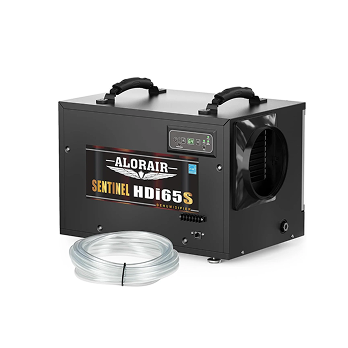
The AlorAir Sentinel HDi90 WiFi (198 PPD, 2,600 sq.ft.) tracks the crawl space humidity level remotely through the AlorAir-C app, useful for watching how readings shift across weather events without repeated crawl space entries.
Place the Sensor Away From Misleading Locations
Avoid:
● Directly beside or in front of the dehumidifier outlet
● Against a wet or condensation-prone foundation wall
● Next to a foundation vent
● On or directly above bare soil
● Adjacent to a cold HVAC duct or leaking pipe
Position it at mid-height in the center of the space, clear of walls and active moisture sources. Divided crawl spaces need a sensor in each section.
Monitor for at Least Several Days
One reading is a snapshot. Record RH and temperature twice daily for several days, covering at least one rain event. Crawl space humidity in summer peaks after warm, humid days. Crawl space humidity in winter may look lower on average but can spike from groundwater movement or condensation on cold surfaces.
Measurement Checklist
● Record both RH and temperature at the same time daily
● Check morning and evening
● Compare dry-weather and post-rain readings
● Note whether the dehumidifier is running
● Check each section of divided crawl spaces independently
What High Crawl Space Humidity Is Telling You
Elevated RH is a symptom. The pattern, when and where it rises, points to the source.
|
Humidity Pattern |
Possible Explanation |
Suggested Next Step |
|
Rises consistently after rain |
Drainage, grading, or groundwater intrusion |
Inspect grading, downspouts, and foundation |
|
Rises mainly in warm months |
Outdoor air entering through vents or gaps |
Evaluate foundation vents and air sealing |
|
Stays elevated year-round |
Ground vapor, plumbing leaks, or insufficient moisture control |
Inspect soil, plumbing and foundation walls |
|
One area reads higher than others |
Localized leak, poor airflow, or sensor placement |
Compare multiple locations; investigate locally |
|
High while dehumidifier runs continuously |
Excess moisture entry or capacity mismatch |
Address the source before upsizing |
|
Normal RH but wood feels damp |
Materials haven't dried despite improved air RH |
Check wood moisture with a pin-type meter |
Condensation Is a More Urgent Signal Than RH Alone
Condensation on pipes, ducts, or framing means a surface has reached the dew point, even when overall RH looks moderate. Treat visible condensation as a priority regardless of what the hygrometer shows.
Musty Odors and Mold Require Source Investigation
A musty smell doesn't mean the current air RH is the only problem. Previously saturated insulation, a slow plumbing leak, or thin vapor barrier coverage can sustain mold even when air RH appears acceptable.
What to Do When Humidity Is Outside the Ideal Range
If Humidity Is Between 55% and 60%
Monitor for one to two weeks before acting. If readings don't return to the ideal humidity level for crawl space air within 24–48 hours of rain, start looking for a moisture source before adding equipment.
If Humidity Remains Above 60%
Moisture is entering faster than it can leave. Inspect for:
● Plumbing leaks at joints, supply lines, or drain connections
● Standing water from rain infiltration or HVAC condensate
● Poor grading or misdirected downspouts
● Exposed soil without a vapor barrier
● Open or uncontrolled foundation vents
Fix the source first. A dehumidifier placed in a space with active water intrusion runs continuously without reaching setpoint. Once the source is under control, matching pint-per-day capacity to your crawl space area and moisture load prevents underperformance from day one.
If Humidity Remains Above 70%
Treat this as an active problem. Condensation on structural surfaces is likely. Check for saturated insulation, water staining on joists, and foundation drainage failures. Significant intrusion may warrant professional assessment before proceeding.
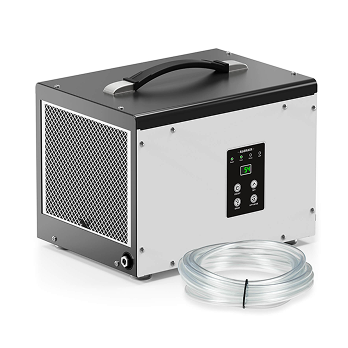
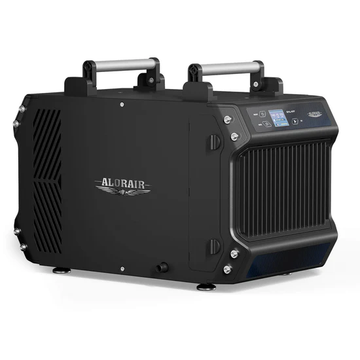
Once bulk water is controlled, units like the AlorAir Galaxy 60P (145 PPD, 1,800 sq.ft.) or the Sentinel HDi90 (198 PPD, 2,600 sq.ft.) handle high moisture loads reliably; both include built-in condensate pumps for spaces without a floor drain. Drainage placement and airflow positioning from day one prevent most early performance issues.
If Humidity Is Consistently Below 40%
Verify the sensor first. There's no benefit to pushing the crawl space humidity level below 40%, consistently low RH dries and shrinks structural wood. Raise the setpoint and recheck.
Quick Decision Guide
● Fix active leaks and bulk water first.
● Control ground vapor and humid outdoor air entry second.
● Use a properly sized dehumidifier for the remaining airborne moisture third.
What Should You Set a Crawl Space Dehumidifier To?
● Start at 50%–55% RH. This sits within the ideal crawl space humidity range for most controlled spaces and gives the unit headroom to cycle efficiently.
● Don't reach for the lowest setting. Forcing RH to 35%–40% when conditions don't require it adds runtime without adding protection.
● Verify with an independent hygrometer. The built-in sensor reads at the intake. A separate sensor confirms the ideal humidity level for crawl space conditions is being maintained across the full space, not just at the machine.
● Continuous operation without reaching setpoint signals an unresolved moisture source, not an undersized unit. Investigate before upsizing.
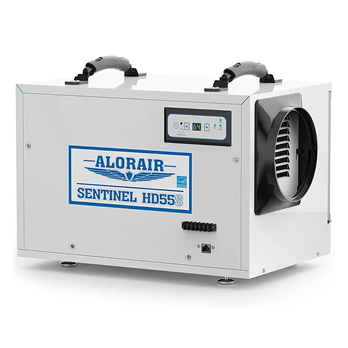
AlorAir's crawl space lineup runs from 70 to 235 PPD, covering spaces from 1,000 to 3,300 sq.ft. The Sentinel HD35P (70 PPD, 1,000 sq.ft.) suits smaller or moderately damp spaces. The Sentinel HD55S (120 PPD, 1,300 sq.ft.) adds Energy Star certification and automatic defrost for reliable year-round use. The Sentinel HDi90 WiFi (198 PPD, 2,600 sq.ft.) adjusts setpoints remotely through the AlorAir-C app.
Frequently Asked Questions
What should crawl space humidity be?
For most controlled crawl spaces, 45%–55% RH is the target. Persistent readings above 60% are a warning sign. Use the crawl space humidity chart above to match your reading to a recommended action.
Is 60% humidity too high for a crawl space?
A brief reading at 60% right after rain isn't a crisis. If RH holds at or above 60% for days or weeks, investigate the moisture source before conditions worsen.
Is 70% humidity too high for a crawl space?
Yes. Sustained RH above 70% creates real conditions for condensation, wood decay, and active mold growth. Find the source and act without delay.
Is 40% humidity too low for a crawl space?
Rarely immediately harmful, but no benefit to pushing the crawl space humidity level below 40%. Consistently low RH dries structural wood. Verify the sensor and raise the setpoint.
What should crawl space humidity be in summer?
The 45%–55% target is the ideal humidity level for crawl space air year-round. Crawl space humidity in summer is simply harder to maintain because warm outdoor air carries far more moisture.
What should crawl space humidity be in winter?
Crawl space humidity in winter tends to run lower, but don't stop monitoring. Seasonal groundwater and cold-surface condensation can push readings up even when outdoor conditions seem mild.
Does crawl space humidity cause mold?
Elevated humidity creates favorable conditions, but mold also needs surface moisture, temperature, and time. A moderate air RH reading doesn't rule out active mold if structural materials remain wet from a prior event or ongoing leak.
Where should I place a hygrometer in a crawl space?
At mid-height in a central area, away from the dehumidifier outlet, foundation vents, wet walls, and cold HVAC ducts. Each of those spots reflects a local condition, not overall crawl space air.
Does crawl space humidity affect the rest of my home?
Yes. Air migrates upward through gaps in the subfloor (the stack effect). Crawl space moisture, odors, and particles can reach living areas above, affecting air quality and hardwood floors.
Is crawl space humidity different from indoor humidity?
They're connected, not separate. A vented or unsealed crawl space often reads significantly higher RH than the thermostat upstairs, especially in summer. What happens below the floor affects the whole house.
Conclusion
Crawl space moisture doesn't need extreme conditions to cause structural damage; it needs time. The ideal crawl space humidity for most controlled spaces is 45%–55% RH. Readings that stay persistently above 60% signal that moisture is entering faster than it can leave. The crawl space humidity chart at the top of this page shows what each range means and when to act. Fix bulk water and vapor entry first. Then use a properly sized dehumidifier to manage what remains.
If Your Readings Point to a Dehumidifier, Here's Where to Start!
AlorAir crawl space dehumidifiers are built for the conditions most homeowners actually deal with: tight clearances, seasonal humidity spikes, and no floor drain in sight. Every unit ships with a drain hose, carries a 6-year limited warranty (first 2 years full coverage) and is ETL safety certified. Energy Star certified models are available across the lineup.


