



A crawl space dehumidifier without encapsulation can work, and in plenty of homes it already does. What decides the outcome is how much moisture the machine has to fight, not the label on your crawl space. "Encapsulated" and "unencapsulated" describe a setup, not a guaranteed result. What actually determines performance is how much moisture keeps entering the space and if the unit can keep up. This guide explains when a dehumidifier alone is enough, what improvements to make first, and when full encapsulation becomes the more practical long-term move.
Can You Use a Dehumidifier Without Encapsulating the Crawl Space?
You don't have to encapsulate before running a crawl space dehumidifier. The real question is how much moisture enters the space, and whether the machine can hold your target relative humidity (RH) without running nonstop.
The Short Answer
Yes, you can use a dehumidifier in a crawl space without encapsulation. It may provide effective humidity control on its own, but reducing ground moisture and uncontrolled air entry will substantially improve its performance.
A unit that reaches its setpoint and cycles off periodically is doing its job. A unit that never catches up is usually being overwhelmed by a moisture source that needs to be addressed directly.
What "Without Encapsulation" Can Mean
"Without encapsulation" is not a single condition, and that is why a blanket yes-or-no answer is misleading. An unencapsulated crawl space can still have meaningful moisture control in place.
● Partial improvements present: The space may have a ground vapor barrier over the soil, some drainage correction, or partial air sealing at vents and gaps, just without the full continuous liner up the walls and piers that defines encapsulation.
● No improvements at all: The space has bare exposed soil, open foundation vents, and no moisture-control measures of any kind.
The first is a fine place to run a dehumidifier. The second forces it to battle soil vapor and outdoor humidity simultaneously. Keep that distinction in mind as you read on.
How Well Will the Dehumidifier Work?
Effectiveness runs on a spectrum, not a yes-or-no switch. The same model holds one crawl space steady and struggles in another. Four things move the needle: how much soil is covered, whether bulk water gets in, how much outdoor air leaks through, and the season. Here are the three setups you'll usually see, best to worst.
Covered Soil, No Full Encapsulation
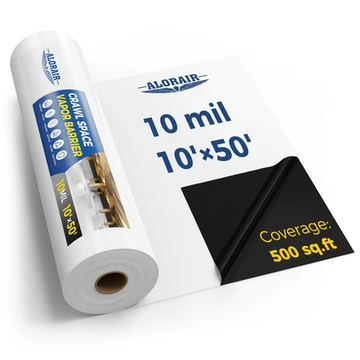
This is the best non-encapsulated setup. Soil is one of the biggest moisture sources under a house. A continuous barrier over the dirt blocks most of that vapor before it hits the air. Leave the walls bare if you must, but cover the ground and you strip away a load the machine would otherwise carry.
A right-sized unit here cycles normally instead of grinding away all day. If you can only do one thing before you buy equipment, cover the soil; getting the material thickness and seam overlap right is what determines how much of that soil vapor actually gets blocked.
Vented Crawl Space With Covered Soil
Results here are less predictable. The ground cover handles soil vapor. But open vents let outdoor air flow in and out, and in warm, humid weather that air drags moisture right back in.
Climate decides a lot. In a hot, humid region, the unit runs longer and readings still bounce between areas. In a drier climate, the same setup may hold humidity steady with far less effort. Managing the vents, covered below, often tips the balance.
Bare Soil and Open Vents
This is the hardest, least efficient setup, full stop. Two moisture sources feed the space at once: vapor rising off exposed dirt and humid air pouring through the vents. The machine can run flat out and still miss its setpoint, because the space adds moisture as fast as the unit pulls it.
Don't reach for a bigger machine first. Cover the soil and manage the air, and you'll get more from that than from oversized equipment doing an impossible job.
Why Unencapsulated Crawl Spaces Are Harder to Dehumidify

Unencapsulated crawl spaces are harder to dry because more moisture gets in, not because the gear is different. Four loads do the damage.
Bare soil releases moisture. Bare dirt releases vapor even with no puddles in sight. It's steady and constant. A ground barrier cuts that load before the machine ever sees it.
Humid air sneaks in. Warm outdoor air enters through vents and gaps, then hits cool piers, ducts, and subfloor. Water condenses on those surfaces even when the air reading looks fine. Leaky air also causes the unit to chase a moving target rather than a stable pocket.
Bulk water floods it. Foundation seepage, plumbing leaks, bad grading, standing water. A dehumidifier handles airborne moisture, not active water. Fix the water first with grading, gutters, drainage, or a sump. Then let the unit manage what's left.
Cold coils slow down. Refrigerant dehumidifiers pull less water as temperatures drop, and coils can frost over. That's physics, not a defect. A cool crawl space needs a unit rated for its temperature range with automatic defrost. AlorAir units include automatic defrost for exactly this, so they keep working when it gets cold down there.
When a Dehumidifier Alone Can Still Be Practical
A dehumidifier before full encapsulation can deliver useful, measurable results when the moisture load is limited. Tie the decision to actual RH readings, not assumptions. It tends to work well in three situations:
● Mild or seasonal humidity: No standing water, the soil is covered, and humidity climbs mainly during part of the year. Monitoring shows whether the unit holds your target without excessive runtime.
● Encapsulation planned in stages: You correct drainage, add a ground vapor barrier, and begin dehumidifying now, then complete wall sealing and insulation later. This is reasonable when each phase removes a specific moisture source.
● Temporary drying after repairs: After a leak is fixed or minor water intrusion is corrected, a dehumidifier speeds drying. The EPA and CDC both note that drying wet materials within 24–48 hours helps prevent mold. Temporary drying is different from permanently controlling an unresolved water source.
When a Dehumidifier Alone Is Not Enough
Adding or upsizing equipment will not fix an underlying moisture problem. Put drainage, material removal, air sealing, or professional assessment first when you see any of the following:
● Standing water or recurring seepage: Stop or drain the water before relying on dehumidification. Persistent water may need grading, gutters, foundation drainage, or a sump system.
● Humidity stays high despite continuous operation: A unit that never reaches its setpoint may be undersized, poorly placed, or overwhelmed by moisture entry. Compare readings from several spots before blaming capacity.
● Insulation and wood stay wet: Porous materials hold moisture after the air dries. Wet insulation, soft wood, or structural decay needs separate evaluation.
● Mold or musty odors persist: A dehumidifier reduces conditions that support new mold growth, but it does not remove existing contamination or odor-holding materials. Those require cleanup or removal.
Best Setup Without Full Encapsulation
The most effective approach is to reduce the moisture load before reaching for a bigger machine. A practical minimum setup looks like this:
1. Correct bulk water first. Address leaks, standing water, gutters, downspouts, grading, and drainage before installing the unit. This cuts both moisture risk and unnecessary runtime.
2. Add a ground vapor barrier. Covering exposed soil is the single most useful improvement short of full encapsulation. Keep it continuous enough to meaningfully reduce soil-vapor entry.
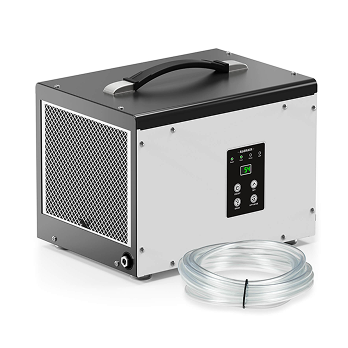
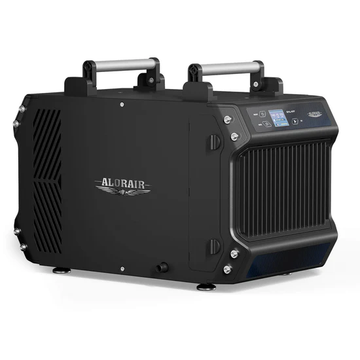
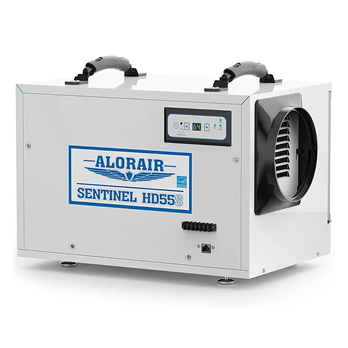
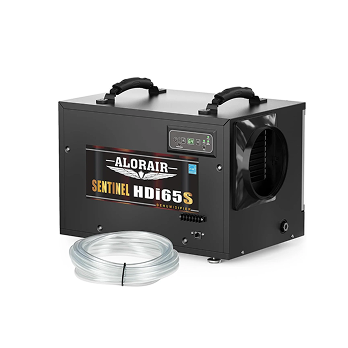
3. Choose equipment for the actual conditions. Crawl-space area, layout, current RH, temperature, and moisture load all affect the capacity you need; sizing the unit to the actual space is what separates one that cycles normally from one that runs flat out and still can't catch up. AlorAir's basement and crawl space dehumidifiers range from 70 to 235 pints per day (PPD), with ETL and Energy Star–certified models built for low-clearance spaces.
4. Use continuous drainage. Gravity drainage or a condensate pump beats manual bucket emptying in a low-access space. The right choice depends on drain position, hose routing, and how much lift is required.
5. Allow air to circulate. Place the unit with unobstructed intake and discharge, service clearance, and drainage access. Divided crawl spaces may need ducting or a fan to move air between sections.
6. Monitor more than one location. Use a separate hygrometer away from the unit, plus sensors in divided areas, so you know the whole space is controlled rather than just the air near the machine.
What Humidity Should an Unencapsulated Crawl Space Maintain?
Keep RH consistently below 60%, the level the EPA identifies as the point above which mold can grow on organic surfaces. A common operating target is roughly 45–55%, where conditions and equipment allow.
The CDC advises keeping humidity no higher than 50% throughout the day. Aim for stable readings and dry materials rather than pushing the machine toward the lowest possible setting.
Use RH as a performance check. The unit is doing its job only if it holds the target across the space without excessive runtime. Seasonal readings tell you if more source control is needed.
Read RH alongside surface conditions, too: a normal air reading does not mean damp insulation or previously wet wood has actually dried, so check for condensation and lingering moisture in materials.
Dehumidifier vs. Encapsulation
They do different but complementary jobs. Encapsulation cuts moisture coming in from soil and outside air by building a more continuous barrier. It won't repair leaks or bail out standing water. A dehumidifier removes what's left in the air and holds RH as things shift, but its energy use climbs the more moisture keeps pouring in.
When they are used together, the overall moisture-control system is usually more efficient. Cut the load, and the dehumidifier cycles normally instead of fighting a constant leak. Full encapsulation isn't always required. Some ground-vapor and bulk-water control almost always is.
Is a Dehumidifier Worth It Without Encapsulation?![]()

It may be worth it when standing water has been corrected, the soil is covered, and the unit can hold your target RH without running constantly. It also makes sense as one phase of a staged moisture-control plan.
It may not be worth it when bare soil, open humid-air pathways, recurring seepage, or widespread wet materials overwhelm the machine; in those cases, spending first on source control delivers a better long-term result.
To evaluate honestly, record RH, temperature, and runtime before and after installation. If conditions do not improve after reasonable operation and basic moisture sources are controlled, reassess the equipment or the overall strategy.
Conclusion
A crawl space dehumidifier without encapsulation can absolutely work, but its success depends on the moisture it has to fight, not the label on the space. Control bulk water, cover the soil, size the unit for real conditions, and monitor RH in more than one spot, and a dehumidifier can hold a safe humidity level without running nonstop. Where bare soil, open vents, and active water intrusion stack up, source control has to come first. Full encapsulation is often the stronger long-term answer, but it rarely has to come before you start managing moisture.
Ready to match a unit to your space? Explore AlorAir's crawl space and basement dehumidifiers, or start with the sizing guide to find the right capacity.
FAQs - Crawl Space Dehumidifier Without Encapsulation
Can I put a dehumidifier in a crawl space without encapsulation?
Yes. Results are best when bulk water and ground vapor are controlled first.
Does a dehumidifier work in a vented crawl space?
It may lower humidity locally, but humid outdoor-air exchange can reduce efficiency and prevent stable control.
Can I run a dehumidifier over a dirt crawl space?
It can operate, but exposed soil produces a continuous moisture load. Adding a ground vapor barrier generally makes the setup far more effective.
Is a dehumidifier worth using without a vapor barrier?
It may provide temporary or partial drying, but long-term performance is usually much better once the soil is covered.
Should crawl space vents stay open when using a dehumidifier?
In humid weather, open vents can work against mechanical dehumidification. Vent treatment should fit your crawl-space design, local code, and any combustion or indoor-air considerations.
Do I need full encapsulation before installing a dehumidifier?
No. Drainage correction, ground coverage, and partial air sealing can be done before or alongside installation.
What is the best humidity level for a crawl space?
Keep RH consistently below 60%, with a common target around 45–55% depending on season and site.


