




You walk in the door, and there it is: that damp, stale smell. You open a window, light a candle, and an hour later it’s back. Masking it won’t work, because the smell comes from something physical. Common culprits include damp materials, microbial growth, or a dirty appliance or HVAC (heating, ventilation, and air conditioning) part. Where and when the smell is strongest tells you what to inspect first. That is why you locate a pattern before choosing a fix.
Lasting improvement usually comes from correcting the source, not covering the smell. Air fresheners and scented sprays can hide an odor for a while, but they do nothing about the moisture or material behind it. Today’s guide explains what causes the odor, how to trace it by location and timing, which fixes work, and when a dehumidifier or a professional makes sense.
Does a Musty Smell Always Mean Mold?
No. A musty smell tells you to investigate. It doesn’t diagnose anything. Mold can cause it, but so can damp belongings, appliances, and HVAC parts. Your nose can’t tell them apart.
What Can Cause a Musty Odor?
Some molds release gases called microbial volatile organic compounds (mVOCs). The U.S. Environmental Protection Agency (EPA) says many mVOCs smell strong or unpleasant, and they often cause the musty odor linked to mold. A moldy smell suggests growth and deserves a look.
Other sources smell similar:
- Damp belongings: Cardboard, books, and clothes stored against damp surfaces.
- Appliance residue: Water, debris, or film trapped in washers, refrigerators, and dehumidifiers.
- HVAC components: Cooling coils, drain pans, and condensate lines that stay wet.
Why a Clean-Looking Wall Does Not Rule Out Moisture
Moisture can hide behind wall finishes, under flooring, or around a slow leak. Mold gases travel, so the smell can show up far from its source. A wall that looks clean and feels dry may still be damp inside.
What Odor Can and Cannot Tell You
Odor is a clue. It can’t name the organism, pinpoint the source, or size the problem. It isn’t a health measure either. The EPA says the health effects of breathing mVOCs are largely unknown.
Where and When Does Your House Smell Musty?
Location and timing are your best clues. Match your pattern in the table, then check the listed spots before you change anything.
| Odor pattern | Possible source | What to check next |
|---|---|---|
| Strongest downstairs or near floor openings | Basement or crawl-space moisture, with air rising through openings | Inspect the lower space if it’s safe. Check pipe and wire openings. |
| Appears after rain | Water entering through the roof, windows, or foundation, or poor drainage | Look for newly damp surfaces. Note the delay after rain. |
| Appears when the AC starts | Damp or dirty cooling parts, a clogged drain, or air pulled from elsewhere | Check the filter and the indoor unit. Book service if it persists. |
| Concentrated in the laundry area | Washer residue, debris, or a slow drain | Inspect the door gasket and pump filter. Follow the manual. |
| Concentrated near the refrigerator | Spills, debris, or a blocked defrost drain | Read the manual, then check accessible areas around it. |
| Strongest in closets or behind furniture | Damp stored items or condensation on a cold exterior wall | Pull items from the wall. Check both for dampness. |
| Noticeable when you return home | Your nose has adjusted, or conditions changed while you were away | Compare humidity and equipment settings with your usual ones. |
These patterns point you somewhere. They don’t confirm a cause. If you keep asking why your house smells musty only at certain times, that timing is your lead.
Can Basement or Crawl-Space Odors Reach Living Areas?
Yes. Air slips through floor gaps, plumbing and wiring openings, and access hatches. A smell in a first-floor room may start in the space below it.
In cold weather, warm indoor air rises and leaves near the top of the house. Replacement air gets pulled in low, sometimes from a basement or crawl space. People call this the stack effect.
In field testing of new homes by Oak Ridge National Laboratory, the share of crawl-space air reaching the living area depended heavily on how the crawl space was built and vented. No single number fits every home.
If the lower level is the likely culprit, start by drying that space. Getting rid of the musty smell in the crawl space itself won’t seal air leaks or fix contaminated materials.
How to Find the Source of a Musty Smell
Work through these steps in order. Skip to equipment, and you may treat the wrong problem.
1. Start Where the Odor Is Strongest
Close the house up for a few hours. Then find the strongest spot and check the accessible areas nearby: under sinks, around windows and exterior doors, along basement walls, inside closets, behind furniture, and in any accessible crawl space.
Look for dampness, stains, condensation, and peeling paint. Don’t pull off finishes, disturb suspected growth, or enter an unsafe space.

2. Compare Humidity and Material Conditions
A hygrometer reads air temperature and relative humidity (RH), the share of moisture the air holds compared with its maximum at that temperature. A moisture meter checks suspect wood or drywall. Follow the instructions for both.
Normal room humidity doesn’t prove a wall cavity or a once-soaked material is dry. Compare several spots, repeat readings over days, and never trust one reading.
3. Record Timing and Changes
A short record helps you trace on-and-off odors. Note where you smell it, the weather, HVAC and appliance use, humidity readings, and what changed after each repair.
How to Get Rid of a Musty Smell in Your House
Match the fix to the source you identified. Cleaning, drying, repair, and humidity control each address a different part of the problem, and doing only one often leaves the smell in place.
Fix Leaks and Other Moisture Sources
Stop the water first. Check for plumbing, roof, and window leaks, drainage problems, foundation seepage, condensation, and HVAC or appliance drain faults. A dehumidifier can’t fix a leak. Foundation, roofing, and drainage repairs belong to specialists.
Clean and Dry Affected Belongings and Materials
Clean washable surfaces and belongings, and dry everything thoroughly. Judge carpet, padding, and cardboard one piece at a time.
Leftover odor, ongoing dampness, microbial contamination, and physical damage are four different problems. A material that only holds odor isn’t necessarily ruined. Wiping a surface won’t reach contamination behind it.
Address Visible or Suspected Mold Appropriately
Humidity control doesn’t remove established mold. Cleanup depends on the material, the area size, access, and the water source. Painting over growth isn’t cleanup.
The EPA puts it simply: the key to mold control is moisture control. Larger patches or hidden growth call for a qualified professional, and the process behind crawl space mold remediation shows what proper removal involves.
Check Overlooked HVAC and Appliance Sources
Three appliance sources get missed.
- AC evaporator coil, drain pan, and condensate drain. If they stay wet or dirty, they may smell at startup. Technicians call a sour, sweaty-sock AC smell “dirty sock syndrome.”
- Front-load washer gasket and pump filter. Residue and debris build up here. Follow your model’s cleaning steps. Residue isn’t automatically mold.
- Refrigerator defrost drip pan. This pan catches defrost water, which normally evaporates. Check the manual first, because some pans are fixed in place. If the odor is strongest near the pan and you can reach it safely, check for residue or debris. Don’t force parts open.

Will a Dehumidifier, Ventilation, or an Air Purifier Help?
It depends on the cause. Will a dehumidifier help with musty smell? It can when excess humidity is the problem. It won’t repair a leak, remove mold, or filter odor gases.
| Option | Main function | When it may help | Main limitation |
|---|---|---|---|
| Dehumidifier | Pulls moisture out of the air | Humidity stays high after leaks are fixed | Doesn’t fix leaks, remove mold, or remove odor gases |
| Ventilation | Exchanges indoor air for outdoor air | Dilutes odors or helps drying when outdoor air is drier | Humid outdoor air can add moisture |
| HEPA filtration | Traps airborne particles | Reduces dust and mold spores passing through | Doesn’t capture odor gases |
| Activated carbon or other gas-removal media | Adsorbs certain gases | May reduce odor as a supplement | Depends on the media, amount, and upkeep |
A thin carbon layer doesn’t guarantee odor control. Clean Air Delivery Rate (CADR) ratings cover particles only. Air cleaning won’t fix the moisture source behind a musty odor.
When Is a Dehumidifier a Practical Next Step?
A dehumidifier makes sense once the water sources are handled and you’ve confirmed excess humidity in a defined space, like a damp basement or crawl space.
The EPA recommends keeping indoor RH below 60 percent, ideally between 30 and 50 percent. Many homeowners aim for around 45–50% in practice. Treat that as a working target. It doesn’t prove every material is dry.
If your crawl space is already vented or encapsulated, do you still need one? The way encapsulation and ventilation change the need for a crawl space dehumidifier depends on how much moisture is left once those measures are in place.
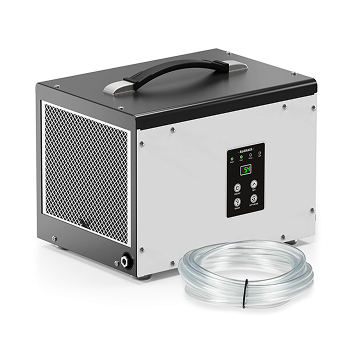
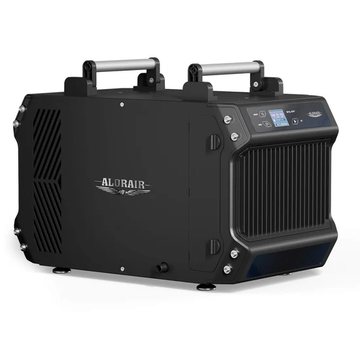
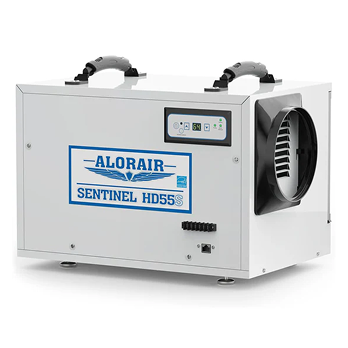
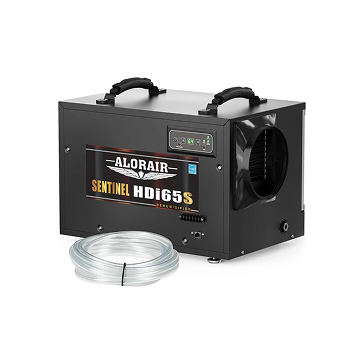
If readings still run high, choose a unit by the problem, not square footage. Check the temperature range, compare capacity at the same test conditions, and plan for drainage and filter changes. AlorAir’s basement and crawl space dehumidifiers run from 70 to 235 PPD (pints per day). Two examples show how drainage shapes the choice:
- Sentinel HD55S: 120 PPD at saturation and 55 PPD at AHAM (Association of Home Appliance Manufacturers) conditions. It runs from 33.8°F to 104°F and 36% to 90% RH. It drains by gravity through an included hose, so it fits a spot above a floor drain.
- Sentinel HDi65S: The same ratings and limits, plus a built-in pump with a 19.6 ft lift. It suits spaces with no lower drain.
The real difference is drainage. Watch the 33.8°F lower limit in an unheated crawl space. Neither unit fixes a leak.
Why Does the Musty Smell Come Back After Cleaning?
Usually something got missed. The moisture source may still be active. You may have cleaned only the surface. Hidden materials may still be damp. Odor may enter from another space. An appliance or HVAC source may be untreated. A returning odor doesn’t prove new mold. It tells you to recheck the source.
When Should You Get Professional Help?
Call a pro if you can’t find the source, or it keeps coming back. A musty smell in your home air that survives the steps above deserves a closer look. Other signs include:
- Repeated leaks or significant water damage
- Suspected hidden contamination
- HVAC odors that persist after basic maintenance
- Unsafe access or deteriorated materials
- Sewage or other contaminated water
- Health concerns that affect investigation or cleanup decisions
Match the specialist to the source: a plumber for leaks, an HVAC technician for system odors, a roofer for water entry, a drainage or foundation specialist for seepage, and a qualified remediation professional for suspected contamination.
How to Keep Musty Odors From Returning
Prevention means watching conditions after the repair, not repeating the cleanup:
- Monitor humidity in spaces that were previously affected.
- Maintain appliance seals, filters, and drains.
- Recheck repaired areas after heavy rain or other weather events.
- Store belongings dry and away from damp surfaces.
- Keep ventilation and humidity-control systems working as intended.
- Investigate recurring condensation promptly.
Keep photos, readings, and repair records. They make it easier to spot a pattern or to brief a contractor later.
Frequently Asked Questions
Why does my house smell musty when I cannot see mold?
Moisture can sit behind finishes, under flooring, or around a hidden leak. Damp belongings, appliances, and HVAC parts can smell similar too. Smell alone can’t confirm the cause, so compare locations, timing, and moisture readings.
Why does my house smell musty after rain?
Rain can reveal water entering through a roof, windows, or foundation, and it can raise humidity in lower spaces. Note how soon the smell appears and where it’s strongest. That helps you prioritize.
Why does my house smell musty when the AC turns on?
A damp or dirty evaporator coil, drain pan, or condensate line can release odor when the system runs. It may also pull air from a basement or crawl space. Replace the filter if it’s due. If the smell stays, call an HVAC technician.
Why does my house smell musty after vacation?
Your nose adapts to a familiar odor so that it can stand out again after days away. Temperature, humidity control, or ventilation may also have changed. Compare current readings with your normal ones.
How long does it take to get rid of a musty smell?
There’s no reliable timeline. It depends on how completely you fix the source, how fully materials dry, and how much odor they hold. Don’t judge success by fading odor alone. Confirm the source is fixed, and humidity stays stable.
Conclusion: Stop Chasing the Smell, Fix Its Source
A musty smell in the air is a clue to follow, not a verdict. Start with where and when it is strongest, check for moisture sources you can reach safely, and fix leaks before you reach for equipment. Cleaning, drying, repairs, and humidity control each solve a different part of the problem, and none replaces the others. If your basement or crawl space readings stay high after repairs, don’t wait for the smell to return. Pick a dehumidifier built for your basement or crawl space that matches your drainage setup and temperature range, and start drying the space today. If you can’t find the source, call the right professional.


