



Crawl spaces are easy to overlook, but moisture below your home can affect floor framing, insulation, stored materials, and the air that moves into the living space above. If your crawl space feels damp or smells musty, you may be wondering whether you need a ventilation fan, a dehumidifier, or both.
Here’s the short answer: a ventilation fan exchanges crawl space air with outdoor air, while a dehumidifier removes water from the air already inside the space. A fan may help when outdoor air is consistently drier, but it can make the problem worse in a hot, humid climate. A properly sized dehumidifier usually provides more predictable humidity control in a sealed or encapsulated crawl space.
Before choosing either one, check for plumbing leaks, standing water, drainage problems, exposed soil, and open foundation vents. A fan or dehumidifier can manage airborne moisture, but neither should be used as a substitute for fixing an active water source.
Crawl Space Fan vs. Dehumidifier: Quick Comparison
| Factor | Crawl Space Ventilation Fan | Crawl Space Dehumidifier |
|---|---|---|
| Main function | Exchanges crawl space air with outdoor air | Removes moisture directly from indoor air |
| Best suited for | Situations where outdoor air is drier and controlled ventilation is appropriate | Sealed or encapsulated crawl spaces with persistent high humidity |
| Humidity control | Depends heavily on outdoor temperature and humidity | Uses a humidistat to maintain a selected RH level |
| Main limitation | Can introduce more moisture when outdoor air is humid | Uses more electricity and requires drainage |
| Installation considerations | Vent location, airflow direction, outdoor conditions, and pressure effects | Capacity, placement, drainage, operating temperature, and airflow |
| Can it remove standing water? | No | No |
| Can both be used? | Sometimes, but only with a planned control strategy | Sometimes, but uncontrolled ventilation can increase its workload |
If the crawl space is sealed and humidity remains elevated, a dehumidifier is usually the more reliable choice. If the space is vented and outdoor air is regularly drier than crawl space air, controlled ventilation may help. The right answer depends on climate, crawl space construction, moisture source, and actual humidity readings.
How a Crawl Space Ventilation Fan Works
A crawl space ventilation fan moves air through or out of the space. This can reduce stagnant air and may help lower humidity when the incoming outdoor air is drier than the air inside the crawl space. Humidistat-controlled models can switch on when the measured humidity reaches a selected level.
The limitation is that ventilation does not remove moisture independently—it replaces one air mass with another. During a hot, humid summer, an exhaust fan may pull damp outdoor air through foundation vents and gaps. When that air reaches cooler pipes, ducts, walls, or framing, condensation can form.
Before installing a fan, consider the outdoor climate, crawl space layout, vent locations, combustion equipment, and the source of the moisture. The detailed differences between airflow ratings, humidistats, thermostats, and installation options are covered in this crawl space ventilation fan buyer’s guide.
How a Crawl Space Dehumidifier Works
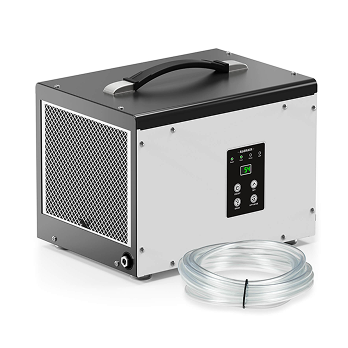
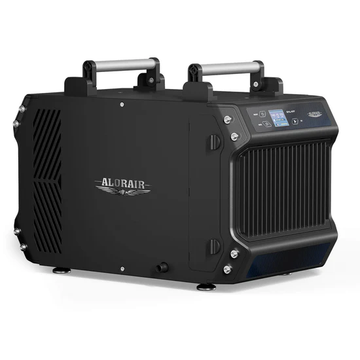
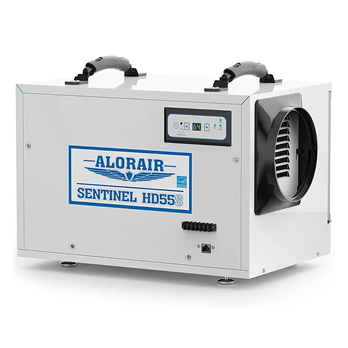
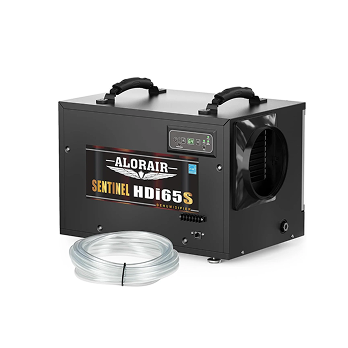
A crawl space dehumidifier draws in damp air, condenses the moisture, and sends drier air back into the space. A built-in humidistat allows the unit to cycle on and off as needed, giving it more direct and consistent control over relative humidity than ventilation alone.
By lowering humidity, a dehumidifier can reduce the conditions that support condensation, musty odors, mold growth, and moisture-related damage. It does not remove existing mold, repair leaks, or eliminate standing water.
Capacity, airflow, drainage, operating temperature, and energy efficiency all matter when choosing a unit. Matching the right dehumidifier size to the crawl space is especially important because an undersized model may run continuously without reaching the target humidity.
Which Controls Crawl Space Humidity More Effectively?
A dehumidifier usually provides more predictable humidity control because it removes water directly from the air and operates according to a selected RH setting. This makes it a better fit for many sealed crawl spaces and humid climates.
A ventilation fan usually uses less power while it is running, but lower wattage does not automatically mean better moisture control. If the fan brings humid outdoor air into the crawl space, the apparent energy savings may come with higher humidity, more condensation, or additional dehumidifier runtime.
Both systems require correct installation. A ventilation fan needs suitable intake and exhaust locations, while a dehumidifier needs adequate airflow and reliable drainage. Filters, grilles, drain lines, sensors, and surrounding openings should also be inspected regularly.
For most moisture-controlled crawl spaces, a practical target is approximately 45%–55% RH. Persistent readings above 60% usually indicate that moisture is entering faster than the system can remove it. The crawl space humidity levels and RH chart can help you interpret readings before deciding which equipment to install.
Factors to Consider Before Choosing
1. Is the Crawl Space Vented or Sealed?
A vented crawl space exchanges air with the outdoors, so local climate has a major effect on humidity. A sealed or encapsulated crawl space limits uncontrolled outdoor air and is usually easier to manage with a dehumidifier. If you are considering closing the vents, understanding how crawl space encapsulation works will help you plan the vapor barrier, air sealing, drainage, and humidity control as one system.
2. Where Is the Moisture Coming From?
Look for plumbing leaks, groundwater, poor grading, short downspouts, HVAC condensate, exposed soil, and humid outdoor air. If the crawl space has standing water, remove the water and correct the source before relying on either a fan or a dehumidifier. The process for drying out a crawl space after water damage starts with safety and bulk-water removal.
3. Is the Outdoor Air Actually Drier?
A ventilation fan is most useful when outdoor air can help dry the space. In a humid climate, bringing in outside air may add moisture instead. Compare indoor and outdoor humidity together with temperature rather than relying on RH alone.
4. How Large and Compartmentalized Is the Space?
Square footage matters, but so do ceiling height, foundation walls, piers, ductwork, and restricted airflow. A divided crawl space may need ducting, multiple airflow paths, or more than one monitoring point.
5. Can the System Drain Reliably?
A dehumidifier needs a suitable gravity drain, condensate pump, or sump connection. A ventilation fan does not produce condensate, but it still requires a safe electrical supply and correctly positioned vents.
6. What Will the System Cost to Operate?
Compare purchase price, installation, wattage, expected runtime, filters, and maintenance. A fan may cost less to operate, but it is not a bargain if it brings additional moisture into the crawl space. The best value is the system that controls the actual moisture source with the least unnecessary runtime.
A fan typically uses less electricity while running, but wattage alone does not tell you which option will cost less to manage. If outdoor air adds moisture, the fan may increase the work a dehumidifier has to do.
Compare the equipment price, installation, expected runtime, drainage needs, and maintenance. Most importantly, fix leaks and ground moisture before spending more on either device.
Which One Should You Buy?
Choose a crawl space dehumidifier when:
-
The crawl space is sealed or encapsulated.
-
Humidity stays above the target level for days or weeks.
-
You live in a hot or humid climate.
-
You need automatic, set-point-based humidity control.
-
Outdoor air would add more moisture than it removes.
Consider a crawl space ventilation fan when:
-
The crawl space is designed to remain vented.
-
Outdoor air is regularly drier than crawl space air.
-
The main problem is stagnant air rather than a persistent moisture load.
-
The fan can be installed without creating unwanted pressure or airflow problems.
-
Local building requirements support the ventilation strategy.
If you have active leaks or standing water, choose neither as the first step—fix the water source first. If the crawl space is vented and persistently humid, sealing or encapsulating it may be more effective than installing a larger fan.
Once the right approach is clear, compare crawl space dehumidifiers by capacity and drainage method, or compare crawl space ventilation fans with humidistats by airflow and control features.
Can You Use a Crawl Space Fan and Dehumidifier Together?
Yes, if the fan has a clear purpose. A circulation fan can help move air through a large or divided sealed crawl space, especially where the dehumidifier’s airflow does not reach every area.
An exhaust or intake fan works differently: it exchanges air with the outdoors. Running one alongside a dehumidifier may add moisture when outdoor air is humid. Check the crawl space design and outdoor conditions before using both as one system.
Bottom Line
The right choice depends on where the moisture is coming from and how the crawl space is built. A dehumidifier usually offers steadier humidity control in a sealed space. Controlled ventilation may help a vented space when the incoming air is actually drier.
If you find standing water or an active leak, address that first. Then monitor humidity to see whether you need a dehumidifier, a suitable ventilation strategy, or better air circulation within the space.
Frequently Asked Questions
Is a Crawl Space Dehumidifier Better Than Ventilation?
For consistent humidity control, a dehumidifier is usually more effective because it removes water from the air and drains it out of the crawl space. Ventilation only exchanges indoor and outdoor air, so its effectiveness depends on whether the incoming air is actually drier.
A dehumidifier is often the better choice for a sealed or encapsulated crawl space in a humid climate. Ventilation may help a properly designed vented crawl space when outdoor conditions are dry enough.
Do Crawl Space Vents Reduce Humidity?
Crawl space vents may reduce humidity when the outdoor air is drier than the air inside the crawl space. However, they can make humidity worse during hot, humid weather by allowing moisture-laden outdoor air to enter.
When warm outdoor air reaches cooler pipes, ducts, walls, or framing, its relative humidity rises and condensation may form. Whether vents help depends on climate, temperature, outdoor dew point, and crawl space design.
Should I Close Crawl Space Vents If I Use a Dehumidifier?
A dehumidifier generally works more efficiently in a controlled crawl space where open vents are not continually introducing outdoor moisture. However, vents should not be closed without first addressing standing water, drainage, plumbing leaks, exposed soil, combustion equipment, and local building requirements.
Closing vents is normally part of a broader moisture-control system. Understanding how crawl space encapsulation works can help you evaluate air sealing, ground vapor control, drainage, and dehumidification together.
Can I Use a Crawl Space Fan and Dehumidifier Together?
Yes, but they should not automatically run at the same time. If a ventilation fan brings humid outdoor air into the crawl space while the dehumidifier is operating, the two systems may work against each other and increase energy use.
Using both can make sense when the fan has a separate purpose or operates only when outdoor conditions are suitable. The control strategy should consider indoor and outdoor temperature, humidity, airflow, and crawl space pressure.
Do I Need a Dehumidifier in an Encapsulated Crawl Space?
Not every encapsulated crawl space needs a dehumidifier, but encapsulation does not guarantee that humidity will remain under control. Groundwater, plumbing leaks, incomplete air sealing, damp building materials, and HVAC condensation can still create a moisture load.
Monitor the space with an independent hygrometer after encapsulation. If humidity remains persistently elevated, a properly sized dehumidifier or another approved conditioning strategy may be necessary.


