
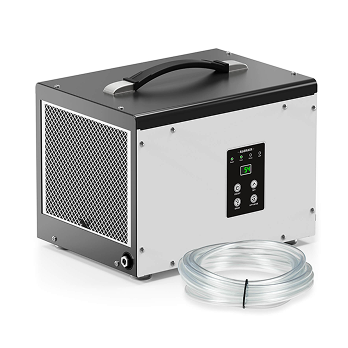
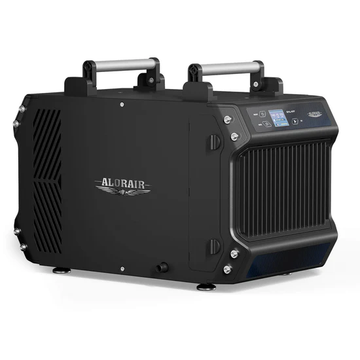
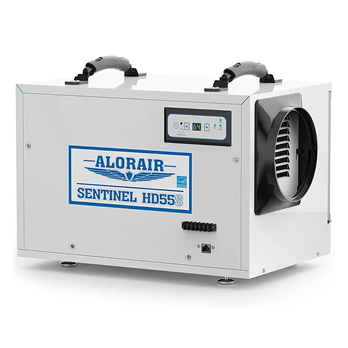
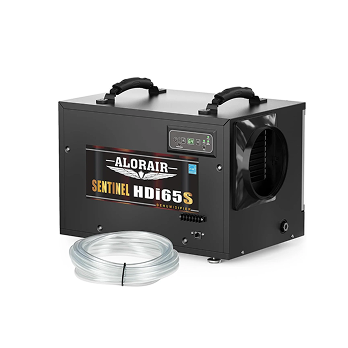



Quick Answer: A regular dehumidifier can work in some crawl spaces, but it is not always a reliable long-term solution. It may be suitable if the space stays within the unit’s rated temperature range, the machine has enough moisture-removal capacity, and continuous drainage can be installed safely. In a cold, persistently damp, dusty, or difficult-to-access crawl space, a purpose-built unit is usually the better choice.
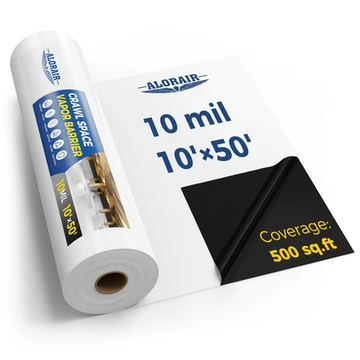
Before installing either type, repair plumbing leaks, address standing water, and reduce ground moisture with an appropriate vapor barrier. A dehumidifier controls moisture in the air, but it cannot correct ongoing water intrusion. Drain the collected water to an appropriate location, such as a suitable floor drain or sump, rather than discharging it beside the foundation.
 Regular vs. Crawl Space Dehumidifiers
| Feature | Regular portable unit | Crawl space unit |
|---|---|---|
| Intended environment | Conditioned rooms | Confined, humid service areas |
| Low-temperature operation | Varies by model | Often designed for cooler conditions |
| Drainage | Bucket or gravity hose | Usually designed for continuous drainage; some include pumps |
| Form factor | Often upright | Commonly low-profile |
| Maintenance access | Assumes frequent access | Better suited to less accessible spaces |
| Durability | Depends on model | Generally designed for demanding environments |
These are general differences, not universal rules. Check the operating temperature, drainage requirements, dimensions, warranty, and installation instructions for the specific model you are considering.
When Can a Regular Dehumidifier Work in a Crawl Space?
A regular portable dehumidifier may be adequate when the crawl space is relatively clean, enclosed, easy to access, and consistently within the unit’s rated operating temperature. The unit must also have enough moisture-removal capacity for the actual conditions rather than the floor area alone.
Continuous drainage is particularly important. A bucket-based unit may shut off as soon as the container fills, leaving the crawl space uncontrolled until someone empties it. A gravity-drain hose may solve this problem when a suitable drain is available below the unit. If water must be lifted upward, a compatible condensate pump may be required.
Before using an existing household unit, check the following:
- The crawl space temperature remains within the manufacturer’s operating range.
- The rated capacity is sufficient for the moisture load.
- The intake and outlet will have adequate clearance.
- Continuous drainage can be installed safely.
- The unit can be inspected and maintained regularly.
- The manufacturer permits operation in this type of environment.
A regular dehumidifier that meets all these conditions may be a reasonable short-term or budget-conscious option. However, its performance should be verified with a separate hygrometer rather than assumed from the amount of water in the bucket.
Why Regular Dehumidifiers Often Struggle in Crawl Spaces
The main limitation is not simply that one unit is labeled “regular” and another is labeled “crawl space.” The important differences are operating temperature, drainage, capacity, dimensions, durability, and service access.
Portable room dehumidifiers are generally designed for accessible, conditioned spaces. If the crawl space temperature falls below the unit’s rated range, frost may form on the coils and reduce moisture removal. ENERGY STAR recommends checking for a model rated for lower-temperature operation when the space regularly falls below 65°F.
Drainage is another practical concern. A unit that depends on a removable bucket may stop frequently, while a long or improperly sloped gravity hose may fail to drain reliably. Dust, limited clearance, and difficult maintenance access can also make a household unit less practical beneath a home.
A purpose-built crawl space model does not automatically solve every moisture problem, but it is more likely to offer the low-profile design, continuous drainage, automatic defrost, service access, and controls needed for this environment.
Signs a Regular Dehumidifier Is Not Enough
A purpose-built unit is usually the better long-term choice when:
- The crawl space frequently falls below the portable unit’s rated temperature.
- The unit develops frost or spends excessive time in defrost mode.
- Humidity remains high even though the compressor runs continuously.
- The bucket fills too quickly or continuous drainage is unreliable.
- Limited clearance restricts airflow or prevents proper placement.
- The unit is difficult to inspect, maintain, or control.
- Dust and damp conditions exceed the manufacturer’s intended environment.
- You need a built-in pump, duct connections, or remote monitoring.
Do not judge performance only by how much water the machine collects. Use a hygrometer to confirm whether relative humidity is falling and remaining under control. If the reading stays high, the unit may be undersized, operating outside its rated conditions, or dealing with an unresolved moisture source.

What Should You Fix Before Installing Either Type?
A dehumidifier should not be the first response to standing water or an active leak. Repair plumbing leaks, improve exterior drainage where necessary, and address water entering through the foundation before relying on dehumidification.
For a dirt-floor crawl space, an appropriate ground vapor barrier can reduce the amount of moisture entering the air. Sealing or ventilation decisions depend on the crawl space design, climate, HVAC arrangement, and applicable building requirements, so avoid opening or sealing foundation vents solely because a dehumidifier has been installed.
After liquid water and ground moisture are addressed, a dehumidifier can manage the remaining airborne moisture more efficiently.
Make Sure the Unit Has Enough Capacity
A regular dehumidifier must still have enough capacity for the crawl space. Do not select it by square footage alone, because temperature, crawl space height, air leakage, ground moisture, and the condition of the vapor barrier all affect the moisture load.
If the existing unit runs continuously without reaching the selected humidity level, it may be undersized or operating outside its intended conditions. For a more detailed calculation, see how to approach sizing a crawl space dehumidifier.
Basic Setup Requirements
Place the dehumidifier on a stable, level surface where it is protected from standing water, and leave the manufacturer-required clearance around the intake and outlet. If using gravity drainage, route the hose continuously downhill to an appropriate discharge point without kinks or low spots. Use a compatible condensate pump if the water must travel upward.
Follow the manufacturer’s electrical requirements and applicable local codes. Avoid unapproved extension cords and protect electrical connections from water. For detailed placement, drainage, electrical, and maintenance instructions, see how to approach installing a crawl space dehumidifier.
Final Verdict
A regular dehumidifier can work in a relatively clean, enclosed, and accessible crawl space when its temperature range, capacity, and drainage setup match the actual conditions. Verify its performance with a hygrometer rather than relying only on how much water appears in the bucket.
If the space is cold, persistently damp, dusty, difficult to access, or too confined for an upright portable unit, a purpose-built model is usually the more reliable long-term option. Compare low-temperature performance, drainage, dimensions, energy efficiency, and maintenance access when choosing a crawl space dehumidifier.


