



Something tipped you off: a musty smell through the floors, a soft spot underfoot, or an HVAC system running harder than usual. Most people reach for a dehumidifier first. But if the real issue is standing water, bare soil, or a plumbing leak, a dehumidifier won't fix it.

Table of Contents
What Humidity Level Should a Crawl Space Be?
Before troubleshooting, you need a reference number. Without a target, you can't tell what you're managing toward.
The Practical Target: 45–55% RH
For a sealed or partially controlled crawl space, 45–55% RH is the stable working range. Below that threshold, wood stays dry, and mold risk stays low. Climate and configuration affect what's achievable, but it's the right setpoint to aim for.
Why 60%+ RH Is a Warning Sign
The EPA identifies 60% as the level above which mold growth becomes likely on organic surfaces (EPA). One high reading on a hot afternoon isn't a crisis. Readings that stay above 60% for days or weeks—that's when you act.
One Reading Isn't Enough
A crawl space that reads 72% RH in July may read 44% the following November. That seasonal swing points to air entry or condensation, not a constant moisture load. A space that reads 75% in February and August has a deeper problem, likely soil vapor or poor drainage. The distinction changes what you fix first.
Why Crawl Space Humidity Is Worse in Summer (and What That Means by Climate)
In summer, warm outdoor air enters the crawl space and contacts cooler surfaces below the dew point, the temperature at which air releases water as liquid. Open vents don't help; they deliver humid air directly to the problem.
In hot-humid climate zones, the Southeast, Gulf Coast, and coastal Mid-Atlantic, high humidity in a crawl space is a year-round management challenge. In cold or semi-arid climates, soil vapor and plumbing leaks tend to dominate instead.
Why Crawl Space Humidity Affects Your Whole Home
When crawl space humidity stays too high for long enough, the damage extends well beyond the space itself.
Structural and Mold Consequences
Sustained RH above 60% softens wood framing, feeds decay fungi, and gives mold the conditions it needs to spread. Damage builds gradually and stays hidden; by the time floor joists start to sag, the problem has usually been active for months. Catching high humidity in a crawl space early is considerably cheaper than replacing structural lumber afterward.
The Stack Effect and Energy Impact
Warm air rises and exits through the top of a house, pulling replacement air in from below, including from the crawl space. Humid crawl space air continuously migrates into living areas, adding moisture load to the HVAC system. Wet insulation loses thermal resistance over time, making heating and cooling equipment work harder to compensate.
Diagnose the Cause Before You Fix Anything
Excessive crawl space humidity is the symptom; the cause could be any one of several problems, each needing a different fix. Picking the wrong first step is the most common reason efforts to reduce humidity in a crawl space stall: a dehumidifier running over standing water just cycles continuously without improving readings.
Use the table below to identify the cause, then confirm it before committing to a repair sequence.
| Symptom | Likely Cause | Primary Fix |
|---|---|---|
| Standing water after rain | Grading, downspout, or groundwater issue | Exterior drainage, sump pump |
| Damp bare soil, no standing water | Ground vapor evaporation | Vapor barrier |
| Condensation on pipes or ducts | Humid air hitting surfaces below dew point | Air sealing, insulate cold surfaces |
| Localized wet spot or drip | Active plumbing leak | Repair the leak |
| RH spikes only in summer | Humid outdoor air through foundation vents | Vent management; evaluate sealing |
| Musty smell, no visible water | Elevated RH on organic materials |
Vapor barrier + dehumidifier; monitor RH |
How to Confirm It: Hygrometer Placement and Monitoring
Place a hygrometer near the center of the space, not next to a vent or against a wet wall. Record readings daily for one to two weeks, including during and after rain events. One dry-afternoon reading tells you almost nothing. A pattern across different conditions reveals what you're actually managing.
A Simple Plastic-Sheet Test for Soil Moisture
Tape a 12-by-12-inch piece of clear plastic flat against bare soil, sealing all four edges. Leave it for 24 to 48 hours. Moisture on the underside confirms soil vapor is active; move a vapor barrier up your priority list. This test identifies upward evaporation only; it won't catch wall seepage or air infiltration.
Fix the Water First
Stopping liquid water entry is the first concrete step toward removing moisture from a crawl space. Drainage and leak repairs are the best way to reduce crawl space moisture when water is the primary driver; no dehumidifier substitutes for them.
Repair Leaks and Remove Standing Water
A dehumidifier manages residual air moisture; it can't compensate for a running plumbing leak or standing water on the floor. Fix the source, remove the water, then move on.
Clean Gutters and Extend Downspouts
Clogged gutters discharge directly against the foundation. Clean them at least twice a year and extend downspouts at least 4–6 feet from the wall, discharging onto a surface that slopes away from the house.
Improve Grading Around the Foundation
Soil should drop roughly 6 inches over the first 10 horizontal feet away from the foundation (IRC Section R401.3; verify your local code). Flat or inward-sloping soil channels rainwater toward the crawl space perimeter rather than away from it.
Add Drainage or a Sump Pump for Recurring Water
If water returns after every rain despite corrected grading and downspouts, a perimeter drain collects it at the footings and channels it to a sump, where the pump evacuates it from the space entirely.
Control Vapor and Air Entry
Soil vapor and outdoor air are what keep a crawl space humid after drainage is fixed, two pathways that drive elevated RH in most homes without active flooding or plumbing problems.
Cover the Soil With a Vapor Barrier
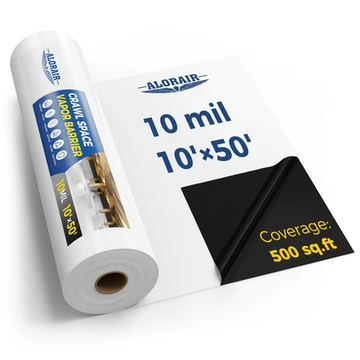
Bare soil releases water vapor continuously, even when the surface looks dry. A polyethylene barrier over the crawl space floor breaks that cycle. Coverage must be continuous: seams overlapping 6–12 inches and taped, edges running up foundation walls and around piers, all penetrations sealed.
Thicker material holds up better under foot traffic. Vapor barriers come in different sizing options; which thickness to use, how to handle seams, and full wall coverage specs make a bigger practical difference than most people expect before installation.
Seal Air Leaks and Insulate Cold Surfaces
Target rim joists, pipe penetrations, and duct connections through the floor assembly. Spray foam or rigid foam board work well at rim joists; hydraulic cement handles masonry gaps at the wall-to-footer joint.
Cold pipe and duct condensation happens when warm humid air hits a surface at or below the dew point. Insulating those surfaces raises them above that threshold; condensation stops on those specific surfaces without changing the crawl space's overall RH.
Decide Whether Vents Should Stay Open or Be Sealed
In hot-humid climates, open summer vents deliver more moisture than they remove. In drier climates, they can provide useful passive drying. Gas-fired appliances in the space require combustion air; sealed vents can create backdrafting risks. IRC Section R408.3 permits sealed crawl spaces, but local amendments vary. Check your local code before sealing anything permanently.
Add a Dehumidifier if Humidity Is Still High
A dehumidifier handles residual air moisture after source control is in place, not instead of it. Once soil is covered and water is managed, a correctly sized unit can hold 45–55% RH with far less energy than running against an active moisture load.
Matching the unit to actual conditions is how to lower humidity in a crawl space reliably, not just ordering the most powerful model. Moisture load, ceiling height, and climate zone all drive the right capacity, and undersizing is the most common mistake. If budget is a factor, this lays out what a unit and installation actually cost by space type before you commit.
Is a Dehumidifier Enough, or Do You Need More?
When Source Control Plus a Dehumidifier Is Enough
No standing water, soil fully covered, and humidity spikes are seasonal rather than constant—a dehumidifier with good source control is typically all it takes. This is the most practical way to control crawl space humidity without encapsulation, especially where the space already has solid air sealing at the rim joists.
When Full Encapsulation Makes More Sense
Humidity stays elevated year-round despite a vapor barrier. Foundation vents deliver humid air across multiple seasons. Both walls and soil show ongoing moisture infiltration.
In those conditions, treating the crawl space as a semi-conditioned zone makes more sense than passive management. A dehumidifier's realistic limits in an unencapsulated crawl space help clarify where that line falls.
Keep It Dry Long-Term
Routine maintenance matters most for homeowners trying to control crawl space humidity without encapsulation; with fewer passive barriers in place, inspection is what catches problems before they compound.
- Monitor RH with an independent hygrometer, not just the unit's display; the machine reads conditions near itself, not across the whole space.
- Check the crawl space after heavy rain or snowmelt. Water re-enters at the same spots: low grading, stressed downspouts, the wall-to-footer joint.
- Inspect the vapor barrier once or twice a year for tears, lifted seams, and edges that have pulled away from walls or piers.
- Track seasonal trends, not single readings. If RH climbs above 60% every July, adjust the dehumidifier setpoint before it spikes, not after.
When to Call a Professional
Some moisture problems need a professional. Call a waterproofing contractor, structural engineer, or licensed plumber when dealing with:
Frequently Asked Questions
How do I get rid of moisture in a crawl space?
Getting rid of moisture in a crawl space takes four steps in order: stop liquid water, cover the soil with a vapor barrier, seal air entry points, then add a dehumidifier last. The best way to reduce crawl space moisture for good is following that sequence, not skipping to equipment before the sources are controlled.
Why is my crawl space so humid?
Most cases trace to bare soil vapor, humid outdoor air through foundation vents, or poor drainage saturating the perimeter soil. When crawl space humidity is too high, two or three of those are usually active at the same time, especially in older homes.
Will a dehumidifier lower crawl space humidity on its own?
It depends on the source. If soil is covered and drainage is managed, a correctly sized unit holds 45–55% RH reliably. How to lower humidity in a crawl space with equipment alone won't work if bare soil is the main driver; ground evaporation adds load faster than the unit removes it.
Should crawl space vents be open or closed?
Open vents help in dry climates where outdoor RH stays consistently below crawl space levels. In hot-humid climates, they add more moisture than they remove. Check IRC Section R408 and local amendments before sealing permanently.
Do I need a vapor barrier before installing a dehumidifier?
Not strictly, but bare soil continuously adds to the dehumidifier's load; the combination is far more effective than either alone. A vapor barrier paired with a correctly sized unit is the practical foundation for controlling crawl space humidity without encapsulation in most situations.
What size dehumidifier does a crawl space need?
Square footage is a starting point, not a complete answer. Ceiling height, moisture load, and climate zone all factor into the right capacity. A Gulf Coast crawl space with bare soil needs a much larger unit than a sealed, dry-climate space with the same footprint.
How long does it take to dry out a crawl space?
A moderately damp space with no standing water typically returns to normal RH within days to a few weeks of continuous dehumidification. Saturated framing and insulation take longer, and running a unit against an active moisture source extends the timeline indefinitely.
Stop Moisture Before It Costs You More!
High humidity in a crawl space is a sequence problem, not a product problem. Fix the water, cover the soil, manage air entry, then let the dehumidifier do what it's built for. That's the correct way to reduce humidity in a crawl space and keep it there long-term.
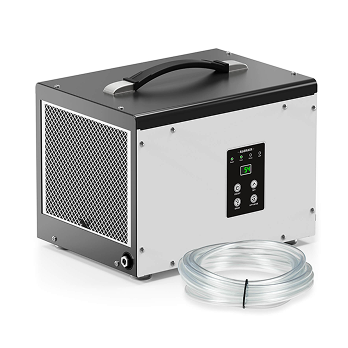
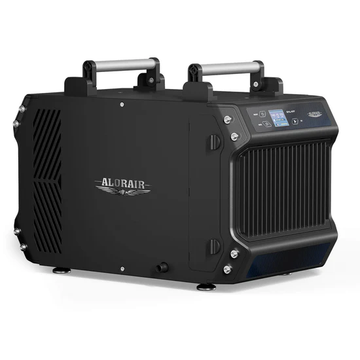
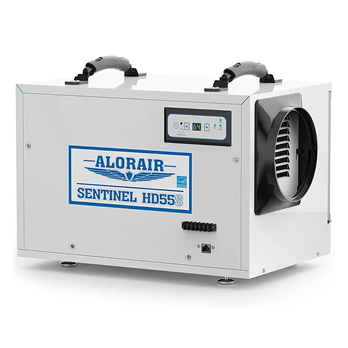
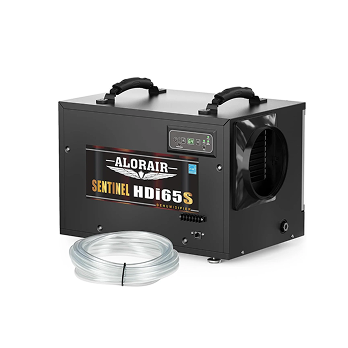
The best way to reduce crawl space moisture over the long term is treating the crawl space as part of your home's building envelope, something that responds to the right fixes in the right order. AlorAir's crawl space dehumidifier line covers 70 PPD to 235 PPD, from the Energy Star-rated Helios D35 at 70 PPD for spaces up to 1,000 sq.ft, to the Sentinel HDi90 at 198 PPD for crawl spaces up to 2,600 sq.ft, all built for unattended operation with auto-defrost and continuous drainage. Find the right crawl space dehumidifier for mold and moisture control based on your space.


