



If you're dealing with a damp, musty crawl space, you've probably wondered whether crawl space ventilation fans actually work. With conflicting advice online and different approaches to moisture control, it's challenging to know which solution is right for your home. The truth is more nuanced than a simple yes or no—crawl space fans can be highly effective in specific situations, but they're not the right choice for every crawl space.
This comprehensive guide explains when crawl space ventilation fans work, when they don't, how to choose the best fan to dry out your crawl space, and how they compare to other moisture control solutions like dehumidifiers.
Understanding Crawl Space Ventilation: Traditional vs. Modern Approaches
The crawl space ventilation debate centers on two fundamentally different philosophies: the traditional vented approach and the modern sealed (encapsulated) approach.
The Traditional Vented Crawl Space
For decades, building codes required crawl spaces to have foundation vents that allowed outdoor air to flow through. The theory was simple: fresh air circulation would prevent moisture buildup and keep crawl spaces dry.
Problems with traditional venting:
- Works only in dry climates with low humidity
- In humid climates, outdoor air brings moisture INTO the crawl space
- Summer humidity (70-80%) creates condensation on cool crawl space surfaces
- Minimal natural airflow through passive vents
- Allows pest entry through open vents
- Creates uncomfortable drafts and cold floors in winter
Building science has conclusively shown that in humid climates (most of the eastern United States, Southeast, Gulf Coast, and Pacific Northwest), vented crawl spaces actually worsen moisture problems rather than solving them.
The Modern Sealed Crawl Space
Current best practices favor sealing crawl spaces completely: installing vapor barriers, closing foundation vents, and controlling humidity mechanically with dehumidifiers. This approach has proven far more effective in humid regions.
Benefits of sealed crawl spaces:
- Prevents humid outdoor air from entering
- Creates controlled environment
- More energy efficient (less load on HVAC)
- Eliminates pest entry points
- Improves indoor air quality throughout home
- Protects structural components more effectively
Where Do Ventilation Fans Fit?
Crawl space ventilation fans serve specific purposes that differ from passive venting. Rather than relying on natural air exchange, these powered fans actively move air, making them useful in particular scenarios we'll explore throughout this article.
When Do Crawl Space Ventilation Fans Work?
Crawl space fans are effective tools—when used correctly in the right situations.
Best Use Case: Drying Out Wet Crawl Spaces
The single most effective use for crawl space ventilation fans is actively drying a wet crawl space after water intrusion. Whether from flooding, plumbing leaks, or severe groundwater intrusion, ventilation fans excel at rapid moisture removal.
How fans dry wet crawl spaces:
- Move large volumes of air (260-780 CFM depending on model)
- Create continuous air circulation that accelerates evaporation
- Remove moisture-laden air and replace with drier air
- Work in conjunction with dehumidifiers for faster drying
For water damage scenarios, AlorAir's VentirMax series provides powerful airflow ranging from 300-780 CFM, specifically designed for crawl space drying applications.
Supplementing Dehumidifiers in Sealed Crawl Spaces
In sealed, encapsulated crawl spaces, ventilation fans complement dehumidifier operation by:
- Circulating dehumidified air throughout the entire space
- Eliminating stagnant air pockets where moisture can concentrate
- Improving dehumidifier efficiency by moving humid air to the unit
- Preventing temperature stratification
- Distributing conditioned air evenly
This combination approach—dehumidifier plus circulation fan—delivers superior moisture control compared to either solution alone.
Specific Climate Conditions Where Fans Help
Ventilation fans work well in certain climate scenarios:
Dry Climates (Desert Regions): When outdoor humidity consistently stays below 40-50%, fans can effectively exchange crawl space air with drier outdoor air. This traditional approach still works in places like Arizona, New Mexico, and parts of Nevada.
Transitional Seasons: During spring and fall when outdoor humidity is moderate (40-55%), ventilation fans can provide adequate moisture control without mechanical dehumidification.
Well-Drained Sites: Properties with excellent drainage, no groundwater issues, and vapor barriers already installed may benefit from supplemental ventilation during appropriate conditions.
When Crawl Space Ventilation Fans Don't Work

Understanding limitations is equally important.
Humid Climates (Most of Eastern U.S.)
In areas where summer outdoor humidity regularly exceeds 60-70%, crawl space ventilation fans often make problems worse by:
- Pulling hot, humid outdoor air into cooler crawl spaces
- Creating condensation on cool surfaces (concrete, pipes, ducts)
- Increasing moisture load rather than reducing it
- Raising energy costs as HVAC works harder
- Accelerating mold growth due to condensation
States where ventilation fans alone typically fail:
- Southeastern states (FL, GA, SC, NC, AL, MS, LA)
- Gulf Coast regions
- Mid-Atlantic (VA, MD, DE)
- Parts of the Midwest (OH, IN, IL, MI)
- Pacific Northwest coastal areas
Without Proper Vapor Barriers
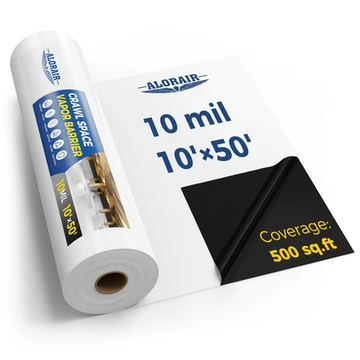
Ventilation fans cannot overcome moisture rising from bare earth. Without a proper vapor barrier (minimum 6-mil polyethylene), ground moisture continuously enters the crawl space faster than fans can remove it.
The numbers don't lie: A 1,000 square foot crawl space with bare dirt can release 10-15 gallons of water per day through evaporation. Even the most powerful ventilation fan cannot remove this much moisture effectively.
As a Standalone Solution for Chronic Moisture
Crawl space ventilation fans alone rarely solve persistent moisture problems. Effective moisture control requires a comprehensive approach:
- Source control (fixing drainage, gutters, grading)
- Vapor barrier installation
- Sealing crawl space vents
- Mechanical dehumidification
- Air circulation (where fans fit in)
Fans are one component, not a complete solution.
How to Choose the Best Fan to Dry Out Your Crawl Space
Selecting the right ventilation fan depends on your specific needs and crawl space conditions.
Key Specifications to Consider
|
Feature |
Why It Matters |
Recommended Range |
|
CFM (Cubic Feet per Minute) |
Determines air movement capacity |
260-780 CFM depending on space size |
|
Coverage Area |
Matches fan to crawl space size |
500-1,300 sq ft per fan |
|
Noise Level |
Important if crawl space is under living areas |
40-55 dBA (quieter is better) |
|
Material Construction |
Durability in harsh crawl space environment |
Stainless steel or aluminized zinc |
|
Temperature Range |
Operation in varying crawl space temps |
35-158°F minimum |
|
Humidity Control |
Automatic operation based on conditions |
Built-in humidistat preferred |
|
Water Resistance |
Protection in damp environments |
IP55 rating or higher |
AlorAir Crawl Space Ventilation Fan Options
AlorAir offers a comprehensive range designed for different crawl space sizes and applications:
For Small Crawl Spaces (up to 500 sq ft):
- VentirPro 260: 260 CFM, 40 dBA, aluminized zinc construction, ideal for compact spaces
- VentirPro 260S: Stainless steel upgrade, same performance with enhanced corrosion resistance
For Medium Crawl Spaces (500-950 sq ft):
- VentirMax 300SD: 300 CFM with smart humidity control
- VentirPro 540: 540 CFM for 900 sq ft, stainless steel
- VentirMax 570SD: 570 CFM with dual protection system
For Large Crawl Spaces (1,000+ sq ft):
- VentirPro 720: 720 CFM, covers 1,200 sq ft
- VentirMax 780SD: 780 CFM maximum capacity, 1,300 sq ft coverage
Essential Features in Quality Crawl Space Fans
Smart Humidity Control: The best crawl space fans include built-in humidistats that automatically activate when humidity rises above your set point (typically 60-70%) and shut off when target levels are reached. This automation prevents over-ventilation and saves energy.
Dual Protection Systems:
- Auto-freeze protection: Shuts down fan when temperatures drop below 35-37°F to prevent damage
- Waterproof motors: Designed to operate safely in damp environments
Pest Prevention: Metal mesh screening prevents rodents, insects, and other pests from entering through fan openings—a critical feature often overlooked in cheaper fans.
Professional Certifications: ETL certification ensures the fan meets North American safety standards, providing peace of mind and often required by building codes.
All AlorAir crawl space ventilation fans include these professional-grade features with 2-year warranties.
Crawl Space Fans vs. Dehumidifiers: Which Is Better?

The choice depends on the local climate, the crawl space design, and the source of the moisture. Comparing ventilation fans versus dehumidifiers for crawl spaces can help you determine whether you need air circulation, active moisture removal, or both.
Why Dehumidifiers Are More Effective
Dehumidifiers actively remove moisture from the air through condensation, actually extracting water and disposing of it. Ventilation fans simply move air around—they don't remove moisture unless they're exchanging indoor air with significantly drier outdoor air.
In humid climates, dehumidifiers are non-negotiable because:
- They work regardless of outdoor humidity conditions
- They create controlled indoor humidity (40-50% RH)
- They prevent condensation on cool surfaces
- They protect against mold, mildew, and wood rot
- They improve whole-home air quality via stack effect
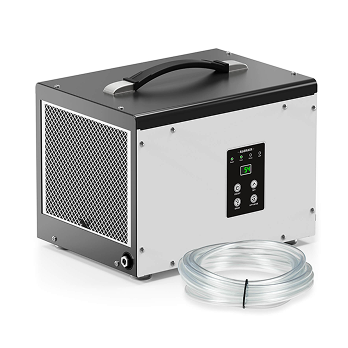
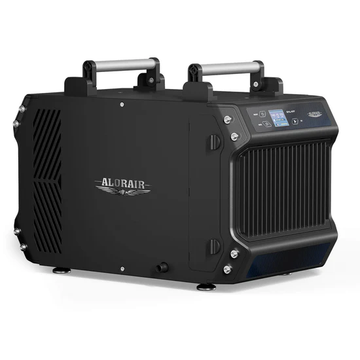
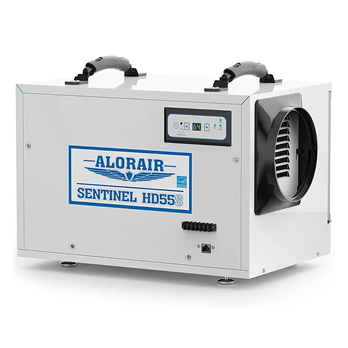
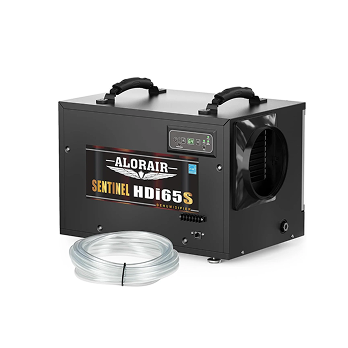
AlorAir crawl space dehumidifiers provide reliable moisture control ranging from 70-235 pints per day capacity, ensuring proper humidity levels year-round.
The Ideal Combination: Dehumidifier + Ventilation Fan
The most effective crawl space moisture control uses both:
Dehumidifier's role:
- Primary moisture removal
- Maintains target humidity (45-50% RH)
- Operates continuously as needed
Ventilation fan's role:
- Circulates dehumidified air throughout space
- Eliminates stagnant pockets
- Improves dehumidifier efficiency
- Accelerates drying after water events
AlorAir offers combo packages combining dehumidifiers with ventilation fans for comprehensive moisture management.
Cost Comparison
|
Solution |
Initial Cost |
Monthly Operating Cost |
Effectiveness |
|
Ventilation fan only |
$70-$170 |
$10-20 |
Limited (climate dependent) |
|
Dehumidifier only |
$350-900 |
$30-60 (Energy Star) |
High (works in all climates) |
|
Combined system |
$450-1,000 |
$35-65 |
Highest (optimal control) |
While dehumidifiers cost more initially and to operate, they deliver reliable moisture control regardless of outdoor conditions. Ventilation fans alone are cheaper but often ineffective in humid climates.
Installation Considerations for Crawl Space Ventilation Fans

Properly installing a crawl space ventilation fan helps create the intended airflow and keeps the equipment operating safely. Placement, power access, mounting, and outdoor air conditions should all be considered before installation.
Optimal Placement
For air circulation in sealed crawl spaces:
- Position fan centrally to move air throughout entire space
- Install away from dehumidifier exhaust to prevent short-cycling
- Mount at level that promotes whole-space circulation
- Ensure clearance for airflow (12 inches minimum from obstructions)
For ventilation/drying applications:
- Place fan to create cross-ventilation if exchanging with outdoor air
- Position near areas that trap moisture (low spots, corners)
- Ensure intake draws from driest available air source
- Direct exhaust toward exterior vents or out foundation wall
Electrical Requirements
Crawl space ventilation fans require:
- Dedicated 110-120V outlet
- GFCI protection recommended for safety in damp environments
- Proper wire gauge for distance from breaker box
- Never use extension cords (safety hazard)
If no outlet exists in your crawl space, hire a licensed electrician to install one before mounting the fan.
DIY vs. Professional Installation
DIY installation is suitable if:
- You're comfortable working in confined spaces
- Electrical outlet already exists
- You have basic tools and mounting hardware
- Crawl space has adequate access and clearance
Professional installation recommended when:
- Electrical work is needed
- Structural mounting modifications required
- Integrating with existing HVAC or dehumidification systems
- Working with spray foam insulation or vapor barriers requiring cuts
Most AlorAir fans include detailed installation guides and mounting hardware for straightforward DIY installation.
Maintenance Requirements for Crawl Space Fans
Regular maintenance ensures long-term performance.
Monthly Tasks
Clean the fan and mesh screen:
- Remove dust, debris, and cobwebs from mesh screening
- Wipe down fan housing with damp cloth
- Check that motor sounds normal (no grinding or rattling)
Verify operation:
- Ensure fan activates based on humidistat settings
- Check that airflow is strong and unobstructed
- Listen for unusual vibrations
Quarterly Tasks
Inspect mounting hardware:
- Verify all screws and bolts remain tight
- Check for corrosion on mounting brackets
- Ensure fan remains level and secure
Test humidity control:
- Verify humidistat triggers fan at proper humidity level
- Adjust settings if needed for seasonal changes
Annual Tasks
Comprehensive inspection:
- Remove fan cover for internal inspection
- Check motor bearings and electrical connections
- Clean internal components
- Replace any worn parts
Performance evaluation:
- Measure crawl space humidity before and during fan operation
- Assess whether fan still meets your moisture control needs
- Consider if additional ventilation or dehumidification is needed
Proper maintenance extends fan lifespan to 10-15+ years, making it a worthwhile investment.
Common Mistakes to Avoid
Using Fans Instead of Fixing Root Causes
Ventilation fans cannot overcome:
- Poor exterior drainage and grading
- Broken or missing gutters
- Foundation cracks allowing water intrusion
- High water tables without proper sump pumps
Always address these issues first before installing ventilation systems.
Undersizing the Fan
A 260 CFM fan cannot adequately ventilate a 1,500 sq ft crawl space. Follow manufacturer coverage recommendations:
- 260-300 CFM: Up to 500-550 sq ft
- 540-570 CFM: Up to 900-950 sq ft
- 720-780 CFM: Up to 1,200-1,300 sq ft
For larger spaces, install multiple fans or choose maximum capacity models.
Ventilating During Humid Weather
Running ventilation fans when outdoor humidity exceeds indoor crawl space humidity introduces moisture rather than removing it. Use fans with built-in humidistats or monitor conditions carefully.
Neglecting Vapor Barriers
Installing even the best ventilation fan over bare dirt is ineffective. Always install a proper 6-mil polyethylene vapor barrier first. This single improvement often provides more moisture control than ventilation alone.
Forgetting About Pest Entry
Fans that exhaust to the exterior create openings that pests can exploit. Ensure:
- All fan openings have metal mesh screening
- Exterior terminations include pest-proof covers
- Regular inspection for damage or gaps
Making the Right Choice for Your Crawl Space
Effective crawl space ventilation planning begins with the climate, moisture source, existing vents, and condition of the crawl space. Ventilation fans do work, but only when they are used under suitable conditions and as part of the right moisture-control strategy.
Choose ventilation fans for:
- Active drying after water intrusion or flooding
- Air circulation in sealed crawl spaces with dehumidifiers
- Supplemental moisture control in dry climates
- Creating air movement in stagnant areas
Choose dehumidifiers instead for:
- Primary moisture control in humid climates
- Consistent year-round humidity management
- Sealed crawl spaces in most of U.S.
- Proven reliability regardless of outdoor conditions
Choose the combination for:
- Optimal moisture control in all conditions
- Fastest drying after water events
- Maximum protection in challenging environments
- Professional-grade results
Conclusion: Strategic Ventilation for Crawl Space Health
Crawl space ventilation fans are valuable tools—not magic solutions. They work exceptionally well for specific applications like emergency drying and air circulation in sealed spaces, but they're not effective as standalone moisture control in humid climates.
Key takeaways:
- In humid regions, dehumidifiers are essential; fans are supplemental
- For water damage, fans accelerate drying significantly
- In sealed crawl spaces, fans improve dehumidifier efficiency
- In dry climates, fans may provide adequate seasonal ventilation
- Always address root causes (drainage, barriers) before adding fans
- Quality matters: Professional-grade fans with humidity controls and durable construction last 10-15+ years
Ready to improve your crawl space moisture control? Explore AlorAir's complete line of crawl space solutions, from high-performance ventilation fans to Energy Star dehumidifiers and convenient combo packages.
With 24/7 U.S.-based support, ETL safety certification, and 2-year warranties, AlorAir provides professional-grade crawl space moisture management solutions you can trust. Take control of your crawl space environment today.


