


If you find yourself dreading every doorknob or getting a "spark" every time you kiss a loved one, you are likely asking: "Why am I so staticy?" While it might seem like a minor annoyance, frequent static shocks are actually a loud distress signal from your home’s environment. They indicate that your indoor air is dangerously dry, which affects not only your comfort but also your health and your home's infrastructure.
At AlorAir, we specialize in "Balanced Air." While our dehumidifiers protect your crawlspace from moisture in the summer, our expertise in air quality explains why you need humidity in the winter to stop the "static zap." This guide explores the science of static and the professional solutions to ground your home.
The Science: What Exactly is Static Electricity?

Static electricity isn't "magic"—it's physics. It is the result of an imbalance between positive and negative charges in or on the surface of a material.
- The Electron Shuffle: When two different materials rub against each other (like your wool socks on a carpet), electrons move from one to the other.
- The Build-Up: In a healthy environment, these electrons find their way back to balance through moisture in the air.
- The "Zap": In dry air, the electrons stay "stuck" on you. When you touch a conductor—like a metal door handle—those electrons jump all at once to find a path to the ground. That sudden "jump" is the spark and the pain you feel.
Why Winter Makes You More "Staticy"
The primary reason you feel more static in the winter is Relative Humidity (RH). Cold air cannot hold as much moisture as warm air. When your furnace heats that cold air up, the RH drops even further—often to below 15%.
Static Electricity vs. Humidity Levels
|
Humidity Level |
Static Probability |
Impact on Comfort |
|
Below 20% RH |
Critical |
Constant shocks, dry skin, "flyaway" hair. |
|
20% - 35% RH |
High |
Frequent shocks when touching metal or fabrics. |
|
40% - 60% RH |
Optimal |
Electrons dissipate naturally; no static build-up. |
|
Above 70% RH |
None |
No static, but high risk for mold and dust mites. |
The Culprits: What is Charging You Up?

While dry air is the environment, several items act as "chargers" in your daily life:
- Synthetic Fabrics: Polyester, nylon, and acrylic are "high-static" materials. They hold onto electrons tightly until they find a metal surface to jump to.
- The Clothes Dryer: The heat and friction of the dryer are a perfect storm for static. Without dryer sheets or balls, your clothes become giant batteries of negative charge.
- Modern Flooring: Synthetic carpets and laminate floors generate significant friction when walked upon.
- Your Hair: Low humidity causes the hair cuticle to lift, allowing static to build up and making your hair stand on end.
Why Static is More Than Just a Nuisance
Beyond the "ouch" factor, high static electricity levels indicate an environment that is unhealthy for other reasons:
- Electronics Damage: A static spark can carry thousands of volts. While low amperage means it won't hurt you, it can fry the sensitive circuit boards in your laptop, TV, or smart home devices.
- Respiratory Irritation: Dry air that causes static also dries out your mucous membranes. This makes you more susceptible to the flu, colds, and "winter itch" (severely dry skin).
- Dust Attraction: Static-charged surfaces actually pull dust and allergens out of the air and hold them against walls and furniture, making your home dirtier.
How to Stop the Static: Professional Solutions

If you are tired of being "the human spark plug," you need to address the root cause: Air Balance.
Humidity Control (The #1 Fix)
The most effective way to stop being staticy is to add moisture back into the air. Water molecules in the air allow electrons to flow freely rather than building up on your body.
- Whole-House Humidifiers: These integrate with your HVAC to ensure every room stays at 45% RH.
- AlorAir PureAiro Scrubbers: While primarily for filtration, maintaining clean air helps reduce the friction caused by dust particles, which contributes to static build-up.
Targeted Lifestyle Tweaks
- Switch to Natural Fibers: Wear cotton, silk, or wool (though some wool can be staticy, it is generally better than pure polyester).
- Moisturize Your Skin: Lotion acts as a barrier and helps dissipate charge.
- The "Metal First" Trick: Before getting out of your car or touching a handle, touch a non-conductive surface or use a key to "bridge" the spark to the metal.
The AlorAir Connection: Keeping the Balance

At AlorAir, we often help homeowners who have the opposite problem in their crawlspaces—too much moisture. However, true air health is about the Goldilocks Zone (40-60% RH).
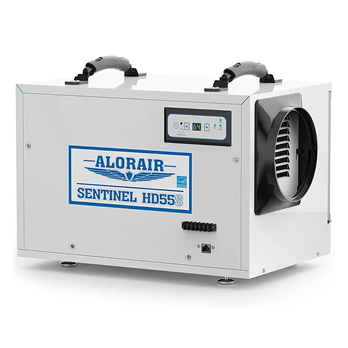
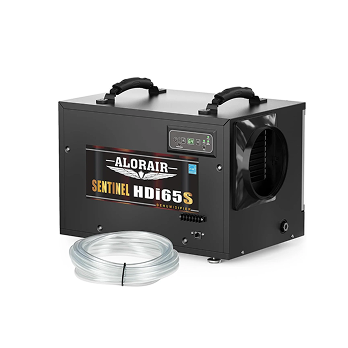
- In the Summer: Use an AlorAir Sentinel Dehumidifier to prevent mold.
- In the Winter: Monitor your indoor air. If your Sentinel (in the basement) shows that the air is becoming excessively dry as the furnace runs, it's time to introduce humidification to protect your home’s electronics and your comfort.
Frequently Asked Questions
Is static electricity dangerous?
For humans, usually no—it's just painful. However, in certain environments like gas stations or oxygen-rich rooms, it can be a fire hazard. It is also very dangerous for sensitive computer hardware.
Why am I more staticy than my spouse?
It often comes down to what you are wearing and your skin type. People with naturally drier skin or those who wear rubber-soled shoes and synthetic fabrics will build up a charge faster than others.
Can house plants help with static?
Yes! Plants release moisture through a process called transpiration. While one plant won't fix a whole house, a "green corner" can help increase the local humidity and reduce static in that area.
Do I need a dehumidifier if I have static?
No, if you have static, your air is too dry. You need a humidifier. However, if you have static in the upstairs but mold in the basement, it means your home has poor air circulation, and you may need an AlorAir solution to balance the airflow.
Why do I get shocked when I get out of my car?
As you slide off the car seat, friction creates a massive charge between your body and the fabric. When you touch the metal door frame, the charge discharges.
Does static electricity affect my pets?
Yes. Cats and dogs can get staticy too, which can make their fur matted and cause them to get a "zap" when they touch their metal food bowls or when you pet them.
What is the best humidity level to stop static?
Most people find that static disappears once the relative humidity reaches 40% or higher.
The Impact on Home Electronics and Smart Systems
In the age of the "Smart Home," static is a silent killer. High-end thermostats, security cameras, and even your refrigerator’s control panel can be sensitive to Electrostatic Discharge (ESD).
- The Invisible Threat: Sometimes a spark doesn't "kill" a device immediately, but it causes "latent defects"—microscopic damage that causes the device to fail months later for no apparent reason.
- Grounding Your Space: Maintaining 45% RH isn't just for your skin; it’s an insurance policy for your home’s technology.
Conclusion
You don't have to live in fear of your doorknobs. "Why am I so staticy?" is a question with a simple answer: your air is thirsty. By balancing your indoor humidity and choosing the right materials for your home, you can ground yourself and enjoy a shock-free winter.
For professional-grade air quality monitoring and the best in humidity management, trust AlorAir to keep your home's air in the perfect zone.


