



Vapor barriers almost never fail because of a bad installation. The problem, surprisingly, usually happens much earlier, with picking a barrier that isn't thick enough. At first, your crawlspace will seem taken care of, feel drier, and look complete. But within months, or perhaps a few years, small rips will appear, the joins will come apart, and dampness will come back. It doesn't all fall apart at once; it slowly deteriorates.
That's because the earth under your house is always giving off moisture. If your plastic isn't robust enough to cope with that endless damp, it won't last. Choosing the correct thickness isn't something to brush over. It’s the one thing that will decide if the system works for the long haul or is only a quick fix.
What “Mil” Thickness Actually Means
What does "mil" thickness actually mean in the real world? A mil is a thousandth of an inch, but in a crawlspace, even a little extra thickness makes a huge difference. 6 mil vapor barrier provides basic protection. A 10 mil is the usual level of strength for a house. A 12 mil is noticeably tougher for a bit more strain, and 14 mil gives you seriously long-lasting, heavy-duty defense.
-
6 mil vapor barrier = 0.006 inches thick
-
10 mil vapor barrier = 0.010 inches thick
-
12 mil vapor barrier = 0.012 inches thick
You can see the difference during installation and over time: thicker plastic resists punctures, handles foot traffic, and creates a stronger seal.
And this isn't just theory! Research shows that materials get much worse, much faster when they’re less than 10 mil thick and exposed to moisture in the ground and being knocked about, and this is especially true in damp climates.
Tips for Choosing The Right Mil Vapor Barriers
Matching Thickness to Moisture Conditions
Don't guess at the thickness you need; base it on how much moisture there is! The most common error is deciding on thickness based on what you think is happening, instead of the actual conditions.
A 6 mil vapor barrier might give you a little bit of cover if your crawlspace isn't humid, doesn't have puddles, and isn't exposed to much moisture. But it won't withstand long-term dampness.
For most houses, 10 mil is where you should start. It’s strong enough to resist rips and keep working as it should under normal circumstances. If your crawlspace often feels damp, gets a lot wetter at certain times of the year, or you live in a humid area, 12 mil or 14 mil is the safer bet. These thicker options are made to handle being constantly wet without falling apart. Simply put, more moisture needs a thicker barrier.
Thinking Beyond Upfront Cost
Think about how long you want it to last, not just the initial price. Cheap, thin plastic seems economical, but it’s rarely in place long enough to make the savings worthwhile. A 6 mil barrier can tear during installation or fall apart in a few years. Then the damp comes back, and you have to do the whole thing all over again.
A 10 or 12-mil vapor barrier offers the durability most crawl spaces actually need. They’re both solid enough not to rip when you’re putting them down and will last a long time in a humid environment. Though 12 mil is even more robust for very uneven ground or if the crawl space gets a lot of traffic.
When you think about the cost, replacing a barrier one or two times in ten years will often be more expensive than using a thicker one to begin with. It's more sensible to look at the cost over the entire period, not just when you buy it.
Considering Movement and Access
Consider that things will move around in the crawlspace, and you might need to go in there. Crawlspaces aren't usually sealed and left. Plumbing needing repair, the heating/cooling system needing servicing, and inspections mean someone will go into the space from time to time.
And this is where thickness is so important. A 6 mil barrier will tear if someone walks on it, and even one tear lets moisture in, ruining the entire system’s effectiveness. A 10 mil (thousandth of an inch) vapor barrier is reasonably tough. But if people will be going into space frequently, 12 mil is much, much more reliable. They’ll hold up to continuous use and continue to block moisture as they should for a long time.
Why Material Strength Matters Too
And remember, thickness isn't everything. How the material is made is hugely important. Reinforced polyethylene barriers are far less likely to get holes poked in them than plain plastic, even if they're the same thickness.
In fact, a really good 10 mil barrier might do a better job than a cheaper 12 mil one in a real situation.
For crawl spaces with bumpy floors, sharp bits of stuff, or places that get a lot of stress, a reinforced barrier is vital. Something strong like AlorAir’s 12 mil crawl space vapor barrier brings together both thickness and strength. It will last a long time, even when things are hard on it. It's not just about being thick, it's about surviving what's actually happening in there.
Planning for Long-Term Moisture Control
Don't think of a vapor barrier as a quick fix for damp - moisture issues don't just disappear! Without it being properly managed, they’ll continue to mess with your air quality, how solid your house is, and how much it costs to heat and cool. A vapor barrier is part of a long-term plan.
If you choose a thickness that's only going to work for a little while, the problem will come back. And when you do get the right thickness installed, the dampness in the crawlspace can go down 20 to 40% (depending on how damp it was to begin with).
This drop in humidity really limits mold, since mold needs a lot of moisture to hang around at or above 60%.
Less dampness also means your heating and cooling work better - dry air is easier to warm or cool, so your HVAC doesn't have to work as hard and your home's temperature stays more consistent. But you only get these benefits if the barrier stays in one piece. That's why how long it lasts is more important than saving a few bucks now.
Choosing Between 6, 10, and 12 Mil
Most of us are deciding between a middle-of-the-road and a really tough option:
-
A 6 mil vapor barrier is the most basic option. It’s suitable for light-duty use but can tear easily and won’t last as long in demanding conditions.
-
A 10 mil works well in most normal situations. It’s a good compromise between price and how well it'll last.
-
A 12 mil adds a little more security and is good for crawlspaces with moderate dampness or that aren't entered very often.
It's not merely the thickness, but also how long the barrier continues to work before it breaks down.
What Happens When You Choose the Right Thickness
It’s not just any plastic sheet when you’re thinking about a vapor barrier for under your house; it’s about finding the proper thickness for what’s going on in your crawl space. A flimsy one won't hold up. Getting the thickness right means you get reliable, long-lasting protection against moisture.
10 or 12 mil is what most houses need for something that will actually last, yet even heavier-duty materials are available for really tough situations. And with good moisture control, you’ll find the air in your home is much better, humidity goes down, you save on energy bills, and your house is less likely to have problems with its structure as the years pass.
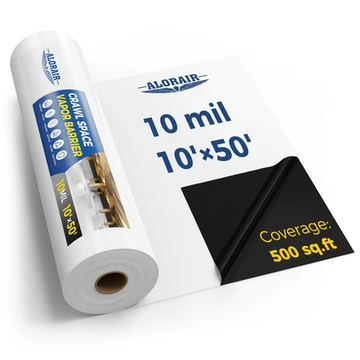
In fact, a good choice like the Alorair 10mil Crawl Space Vapor Barrier, if put down correctly, will give you a moisture solution that truly endures.


