



Silverfish show up in the dampest corners of a house: basements, bathroom baseboards, boxes of old paper. Moisture is what draws them. That connection is why a dehumidifier for silverfish is worth considering. Lowering humidity makes damp areas less suitable for them over time. However, it won't kill the insects already there or fix the leak that started the problem. This guide covers the humidity range that helps prevent silverfish, where to place a unit for the best effect, which equipment features matter in cool, damp spaces, and which prevention steps to use alongside dehumidification.
Can a Dehumidifier Help Get Rid of Silverfish?
Yes, partly. It makes damp areas less suitable for silverfish. It kills none of them.
People ask: do dehumidifiers get rid of silverfish expecting a clean yes or no. The truthful answer sits in between. Drying the air eliminates the conditions a population needs to hold on. Silverfish then crowd into whatever damp pockets survive, behind a leaking trap, under a wet crawl space liner, inside a soggy cardboard box.
That's the benefit. Here's the limit: a dehumidifier does nothing about the paper clutter feeding them or the door gap they travel through. Use it as one tool among several.
Why Silverfish Prefer Damp Environments
Silverfish breed in cool, dark, damp places. Ohio State University Extension puts their preferred range at 75 to 95 percent relative humidity and names basements, bathrooms, and kitchens as common spots. They feed at night, so you rarely catch them in the act.
The rooms they pick share the same traits:
Basements and crawl spaces, cold surfaces, soil moisture below, dead air
Bathrooms and laundry rooms, shower steam, dryer output, plumbing that weeps
Attics, closets, storage, still air plus cardboard, paper, and fabric that soak up damp and double as food
Three building faults create those traits. Leaks add water straight in, and a slow drip behind drywall hides for months. Condensation soaks materials with no leak at all, forming wherever humid air meets a cold pipe, wall, or rim joist.
Weak ventilation traps the moisture instead of clearing it, the reason a bathroom without a working fan stays wet long after the shower ends.
What Humidity Level Helps Discourage Silverfish?
Measure before you buy anything. A hygrometer reads relative humidity (RH), the moisture in the air as a percentage of what that air can hold. Trust the meter, not your hands. A cool basement reads 70% RH and still feels only slightly damp.
Aim for roughly 40%–50% RH. That target falls inside the EPA's advice to keep indoor humidity under 60 percent, ideally 30 to 50 percent, and well under the 75%–95% band silverfish want.
Call it a control target, not a kill threshold. No RH figure kills silverfish. Insects inside a wall void live in their own microclimate, not the air your meter samples. A basement averages 45% while the corner behind stacked boxes stays soaked, because air never moves there. When activity continues despite a good room reading, blame a local wet spot the unit can't reach.
Place the meter at floor level in the dampest corner, away from the dehumidifier's discharge air, and leave it there several days.
Signs You Have a Silverfish Problem
Silverfish hide by day, so the evidence turns up before the insect does.
Shed skins. They molt for life. Pale, empty casings pile up in their hiding spots.
Feeding damage. Extension sources list book bindings, wallpaper paste, paper, photographs, starched clothing, cotton, linen, flour, and cereals among their foods. Look for notched page edges and small holes in stored fabric.
Yellow stains and scale dust. Faint marks on paper and fabric, plus fine residue in drawers.
Droppings. Black specks like ground pepper along baseboards and shelves.
Insects trapped in fixtures. They fall into tubs and sinks and can't climb the smooth sides. Finding one on most mornings points to a larger population nearby.
Any of these plus a reading above 60% RH justifies humidity control. Activity in one room usually traces to one moisture source. Activity that spikes each summer tracks the weather.
Where to Use a Dehumidifier for Silverfish Control
Put the unit where humidity stays high or where you see activity, not where the outlet happens to be. It only dries the air it reaches, so a unit in the den does nothing for the crawl space underneath.
Basements and Crawl Spaces
Below-grade spaces cause most silverfish problems. Three things stack up: cool surfaces sit near dew point and grow condensation, soil pushes moisture through foundation walls, and weak airflow lets damp air pool along the perimeter.
Those conditions demand specific equipment. Continuous drainage matters most, since nobody empties a bucket in a crawl space and a full tank shuts the unit down. Automatic defrost keeps coils clear in cool air instead of icing over. A rugged, corrosion-resistant shell survives the environment.
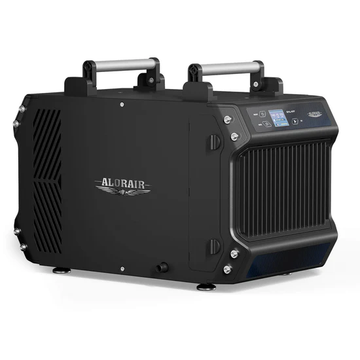
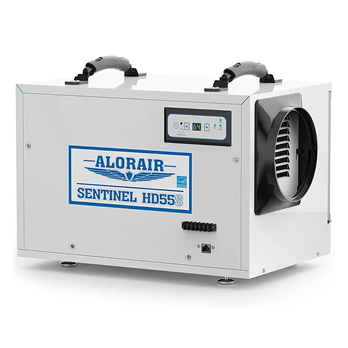
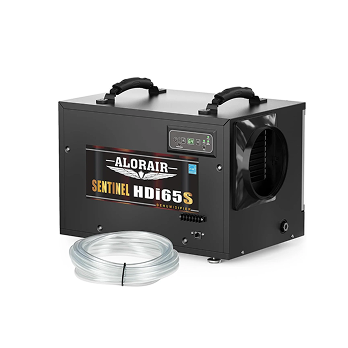
Capacity has to cover the whole footprint. AlorAir builds its basement and crawl space dehumidifiers from 70 to 235 pints per day (PPD, moisture removed in 24 hours at rated conditions), covering roughly 1,000 to 3,300 square feet, all with automatic defrost and continuous drainage. Match the model to your square footage rather than grabbing the cheapest one.
One warning: equipment repairs nothing. Groundwater, foundation cracks, bad grading, and clogged gutters each need their own fix. Run a dehumidifier against active water and it runs nonstop, costs more, and still loses.
Bathrooms and Laundry Areas
These rooms make moisture by design. Showers release steam, poorly vented dryers add more, and both hide plumbing that leaks behind fixtures.
Fix ventilation first. An exhaust fan venting outdoors, never into an attic, pulls humid air out at the source. Run it during the shower and 15 to 20 minutes after. A fan discharging into an attic just moves the problem upstairs.
Add a dehumidifier when the room stays damp anyway. Plug it into a GFCI outlet, keep it clear of splash zones and tub thresholds, and skip extension cords across wet floors. Check under the sink and behind the toilet before blaming shower steam.
Attics and Storage Areas
Attics offer everything silverfish want: still air, cardboard, and moisture from roof leaks or condensation on cold sheathing.
Check the operating temperature range before you install anything up there. Attics swing past most published maximums in July and below the minimums in January. A unit outside its rated range underperforms or quits. Verify that spec on the product page.
Repairs come first here too. A roof leak needs a roofer. Blocked soffit vents and a bathroom fan dumping into the attic are ventilation faults, not humidity faults.
For storage inside conditioned space, the fix costs nothing: lift boxes off the floor, pull them from exterior walls, and swap cardboard for sealed plastic bins.
Kitchens, Pantries, and Garages
Kitchens hide moisture under sinks and behind appliances. Run the range hood and inspect the sink cabinet, dishwasher line, and fridge connection; a slow drip in a dark cabinet is exactly the microclimate silverfish want.
Pantries need sealed containers more than equipment. Garages often run damper than any other room: unconditioned, open to outdoors, full of cardboard on bare concrete. A garage with high humidity and stored paper justifies its own unit, as long as winter temperatures stay inside the rated range.
How to Choose a Dehumidifier for Silverfish Problems
Four specs decide whether a unit holds your space at target.
Capacity
Start with the published square-footage rating, then adjust. High ceilings hold more air than coverage ratings assume. A space at 75% RH needs more removal than one at 62%. Persistent seepage demands more than occasional damp.
Undersizing is the usual mistake; a unit that never reaches setpoint costs more to run than a right-sized one that cycles.
Multi-floor activity or house-wide humidity won't yield to one portable unit. That calls for a whole-house dehumidifier ducted into your HVAC system, sized from about 2,300 to 4,500 square feet, with ±3% RH control and MERV filtration. Treat that as an HVAC contractor's install.
Operating temperature
Refrigerant units pull air over a cold coil so vapor condenses. In cool air, that coil freezes, blocks airflow, and stops removing anything.
Automatic defrost clears the frost and resumes, which is why a crawl space at 45°F in February destroys the performance of a unit without it. Confirm the minimum for cool spaces and the maximum for attics.
Drainage
Pick continuous drainage for long-term control. Gravity drainage sends condensate downhill through a hose to a floor drain or sump; simple, no power, but it needs a drain below the outlet and a steady pitch with no sags.
A condensate pump lifts water up to a sink or standpipe when no low drain exists, common in crawl spaces. Measure your required lift and confirm it clears the pump's rated maximum.
The Sentinel HD35P crawl space dehumidifier shows the pump configuration well: 70 PPD, 1,000 square feet, built-in pump and drain hose, sized for a smaller crawl space with nowhere to gravity-drain.
Controls
An adjustable humidistat holds your 40%–50% target automatically, cycling on above setpoint and idling below. Automatic restart recovers your settings after a storm knocks out power.
Several AlorAir models add Wi-Fi app control, which turns a crawl space you never enter into something you can check from your phone; clogged drain lines and tripped breakers surface fast that way.
Combine Dehumidification With Other Methods
Does a dehumidifier kill silverfish? No, so the rest of this list carries real weight.
Repair the water first. Supply line drips, failed toilet seals, sweating cold pipes, damaged flashing, clogged gutters, foundation cracks, ground sloping toward the house. Equipment loses against active water entry.
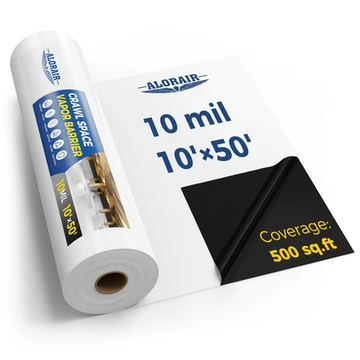
Crawl spaces with bare soil need a ground cover before anything else. Crawl space vapor barriers run 6 mil through 14 mil for full encapsulation, and cutting soil evaporation drops the load on your dehumidifier enough that it holds setpoint instead of chasing it. Damp spaces like these usually breed mold and musty odors alongside the pests, since both problems answer to the same moisture control.
Seal and ventilate. Caulk gaps at pipe penetrations, baseboards, sill plates, and window frames. Confirm exhaust fans vent outdoors and attic vents stay clear.
Cut the food. Cardboard provides food, shelter, and moisture retention in one package. Break down and remove boxes you no longer need. Move books, documents, fabric, flour, and pet food into sealed containers. Vacuum cabinet corners, closet floors, and baseboards, which removes eggs and shed skins too. Raise everything off concrete.
Track it. Set sticky traps along baseboards and behind appliances, silverfish run along edges, not open floor. Date them and check weekly. Rising counts mean the source is still active. Traps catch individuals; they never reach a colony inside a wall.
Skip moisture absorbers except in tiny sealed volumes like a safe or gun cabinet. They can't dry a room.
Call a licensed pest professional when numbers hold steady despite dry air and clean storage, when damage keeps appearing, or when you can't find the source. Treatment works better on a dry, decluttered space, so none of this effort goes to waste.
Maintaining Long-Term Humidity Control
Check RH weekly for the first month after installing, then monthly. Leave the meter at floor level in the problem area.
Adjust with the seasons, humid months need more runtime, cold months less. Clean the filter on schedule, since a clogged one starves airflow and frosts the coil. Flush drain lines and confirm the pump still discharges. Watch for fresh condensation, new water staining, or musty odor returning to a space that had cleared.
Conclusion
A dehumidifier for silverfish takes away the damp they depend on. Size it for your square footage, confirm it runs at your coldest temperatures, set up continuous drainage, and let the humidistat hold 40%–50% while you fix leaks and clear the cardboard. The best dehumidifier for silverfish is the one matched to your space, not the biggest one on the page. For most homeowners that starts below grade, where the moisture originates.
Shop AlorAir basement and crawl space dehumidifiers, 70 to 235 PPD, automatic defrost, gravity or pump drainage, and Energy Star and cETL certified. Compare coverage ratings and pick the model that fits your footprint.
FAQs - Best Dehumidifier for Silverfish
Does a dehumidifier kill silverfish?
No. It's not an insecticide. It removes water vapor and makes the space harder to live in, but the insects survive.
How long until I see less activity?
Humidity drops within hours or days, faster in a mildly damp room than a saturated crawl space where wood and concrete keep releasing moisture. Pest activity follows no fixed timeline; it depends on the infestation size, hidden moisture, available food, and the other control measures you use. hidden moisture, food sources, and your other measures. Weekly trap counts show the real trend.
Can silverfish come back?
Yes. They can return if humidity rises because of a failed unit, clogged drain line, new leak, or seasonal moisture change—especially when food sources, hiding places, and entry gaps remain unaddressed.
When do I call a professional?
When numbers stay high after you've handled moisture, sanitation, and sealing; when damage keeps appearing; or when the source stays hidden.


