



When you step outside on a summer afternoon and the horizon looks blurred, the sky appears a milky gray, and the distant buildings seem to vanish, you are experiencing haze weather. To many, it looks like a thin fog or "heat shimmer," but from a scientific and health perspective, haze is far more complex and potentially dangerous than a simple lack of visibility.
Understanding what is haze weather is critical for homeowners, especially because these outdoor pollutants don't stay outside. They infiltrate our basements, crawlspaces, and living rooms, impacting our indoor air quality (IAQ). At AlorAir, we specialize in the technology required to filter these microscopic hazards. This guide will break down the science of haze, its primary causes, and how to protect your home.
Defining Haze: More Than Just Low Visibility

Scientifically, haze is an atmospheric phenomenon where dust, smoke, and other dry particulates obscure the clarity of the sky. Unlike fog, which is composed of liquid water droplets, haze is made of solid particles and gases.
- The Light Scattering Effect: These tiny particles are the perfect size to scatter sunlight. Instead of light passing through the air clearly, it bounces off the particulates, creating that signature "opalescent" or gray-white appearance.
- Visibility Metrics: Meteorologists measure haze by "visual range." When haze is present, visibility can drop from 50 miles down to less than 5 miles, creating hazards for aviation and shipping.
Common Causes of Hazy Weather
Haze doesn't happen in a vacuum; it is the result of specific environmental and man-made factors converging.
Industrial Pollution and Traffic
The primary driver of haze in urban areas is Particulate Matter (PM2.5). These are particles smaller than 2.5 microns—roughly 30 times thinner than a human hair.
- Sources: Vehicle exhaust, coal-fired power plants, and industrial emissions.
- Chemical Reaction: Sunlight can trigger a reaction between nitrogen oxides and VOCs (Volatile Organic Compounds) to create "Smog," a particularly toxic form of haze.
Wildfires and Agricultural Burning
Wildfire smoke can travel thousands of miles. Even if there isn't a fire in your state, the wind can carry a "gray shroud" of wood smoke into your neighborhood. This type of haze often carries a distinct "burnt" smell and can turn sunsets a vivid, eerie red.
High Humidity and Stagnant Air
Humidity plays a "sticky" role in haze weather. When humidity levels are high, moisture attaches to the dry particulates in the air, causing them to swell. This makes the particles larger, heavier, and more effective at scattering light, which significantly worsens visibility.
Lack of Precipitation
Rain is nature’s air purifier. On "rainy days," water droplets grab airborne particles and pull them to the ground (a process called wet deposition). During long summer droughts, these particles remain suspended for weeks, building up into a thick layer of haze.
The Health Risks of Hazy Days
Haze is not just a visual nuisance; it is a respiratory threat. Because the particles in haze are so small (PM2.5), they can bypass the natural filters in your nose and throat and travel deep into the lungs, even entering the bloodstream.
|
Health Category |
Symptoms of Haze Exposure |
|
Short-Term |
Eye irritation, coughing, sore throat, and shortness of breath. |
|
Long-Term |
Reduced lung function, chronic bronchitis, and aggravated asthma. |
|
Cardiovascular |
Increased risk of heart attacks and arrhythmias in sensitive individuals. |
How Haze Weather Affects Your Home

It is a common misconception that staying indoors protects you from haze. According to the EPA, indoor air can be 2 to 5 times more polluted than outdoor air.
- Infiltration: Haze particles enter through open windows, door gaps, and even your home’s HVAC intake.
- The "Basement Sink": Fine particulates are heavy and often settle in the lower levels of a home, such as basements and crawlspaces.
- The AlorAir Defense: During hazy days, an AlorAir PureAiro HEPA Air Scrubber acts as a professional-grade barrier. By cycling the air through a True HEPA filter, it captures 99.97% of the very particles (PM2.5) that make up haze.
Protecting Your Home During Air Quality Alerts
When your local weather station issues an "Orange" or "Red" air quality alert due to haze, follow these steps:
- Seal the Envelope: Close all windows and doors. Use weatherstripping to seal gaps.
- Recirculate Air: Set your HVAC to "recirculate" so it doesn't pull in the hazy air from outside.
- Active Scrubbing: Place your AlorAir HEPA unit in the most-used room. This creates a "Clean Room" environment where the air is filtered faster than pollutants can enter.
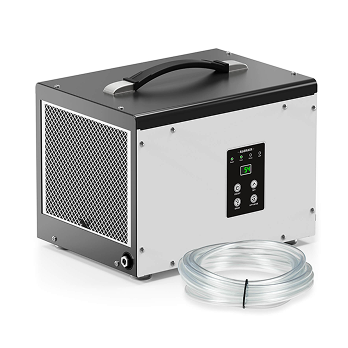
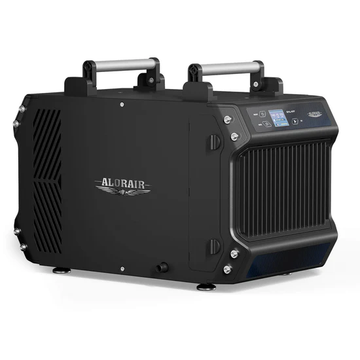
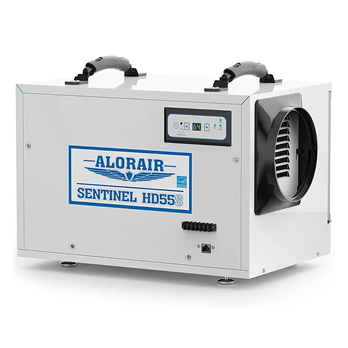
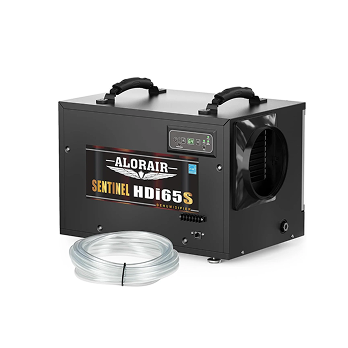
- Control Humidity: Since high humidity keeps haze particles afloat, use an AlorAir Sentinel Dehumidifier to keep indoor humidity below 50%. Dry air helps particles settle so they can be vacuumed or filtered out.
The Chemical Transformation: Why Haze is More Than Just Dust

When discussing what is haze weather, it is important to understand that it is not a "static" pollutant. Haze often undergoes a chemical transformation in the atmosphere known as Secondary Pollutant Formation.
- Photochemical Reactions: Under the intense heat of the summer sun, nitrogen oxides (from car exhaust) and VOCs (from industrial plants) react to create Ground-Level Ozone. This gas is a primary component of toxic haze and is a major trigger for asthma.
- Acid Rain Precursors: Haze often contains sulfur dioxide and nitrogen dioxide. When these particles settle on your home’s exterior or infiltrate your crawlspace, they can react with humidity to create mildly acidic compounds that accelerate the corrosion of metal fixtures and HVAC components.
- The AlorAir Defense: Because haze is a mix of solids and reactive gases, a simple dust filter is insufficient. AlorAir units utilize pelletized activated carbon, which uses a process called adsorption to chemically bind these reactive gases, effectively neutralizing the "chemical cocktail" found in hazy air.
The Economic Impact: Haze and Your HVAC System
Hazy weather doesn't just affect your lungs; it affects your wallet. When the air is thick with particulates, your home’s mechanical systems have to work significantly harder.
- Increased Static Pressure: As fine haze particles clog your home's standard HVAC filters, the system's "static pressure" increases. This forces the blower motor to work harder, consuming more electricity and leading to premature motor failure.
- Reduced Heat Exchange: If haze particles settle on your AC's evaporator coils, they form a "blanket" of grime. This insulates the coils, reducing their ability to cool the air and causing your energy bills to skyrocket during the hottest months.
- The Solution: Running a standalone AlorAir PureAiro Air Scrubber during hazy periods offloads the "filtration burden" from your expensive HVAC system. It’s far cheaper to replace a pre-filter on an air scrubber than it is to replace a burned-out furnace motor or have a technician clean your AC coils.
Professional Monitoring: When to Take Action

In 2026, relying on your eyes to judge haze is no longer enough. To protect your home, you need to monitor the Air Quality Index (AQI) and use localized sensors.
- The AQI Scale: When the AQI for PM2.5 exceeds 100 (Unhealthy for Sensitive Groups), you should immediately seal your crawlspace vents and turn your AlorAir HEPA units to "Medium" speed.
- Indoor Laser Sensors: Many modern homes now use laser particle counters. If your indoor PM2.5 levels rise above $15 \mu g/m^3$, it is a clear sign that outdoor haze is infiltrating your "home envelope."
- Creating a "Clean Room" Protocol: For families with severe respiratory issues, we recommend a "Triple-A" approach during haze alerts:
- Assess: Check local AQI apps.
- Activate: Turn on all AlorAir HEPA scrubbers.
- Adjust: Lower your AlorAir Sentinel Dehumidifier to 45% RH to help airborne particles drop out of the air faster.
Frequently Asked Questions
Is haze the same thing as fog?
No. Fog is composed of water droplets (liquid), while haze is composed of dry particulates like dust and smoke (solid). Haze is usually associated with drier, warmer air, whereas fog occurs when the air is nearly 100% saturated with moisture.
Why does the sky look orange or red during haze?
This is due to Rayleigh scattering. The particles in the haze scatter the shorter blue wavelengths of light, allowing only the longer red and orange wavelengths to reach your eyes.
Can I smell haze?
Sometimes. If the haze is caused by wildfires or industrial pollution, you may notice a smoky or chemical odor. However, "urban haze" caused by traffic can often be odorless but still dangerous.
Will a standard furnace filter stop haze particles?
Most standard "1-inch" furnace filters are not fine enough to catch PM2.5 haze particles. You need a filter rated MERV 13 or higher, or a dedicated HEPA Air Scrubber, to effectively remove haze from your indoor air.
Does haze affect pets?
Yes. Dogs and cats have smaller lungs and can suffer from the same respiratory irritation as humans. During hazy days, it is best to limit your pet’s time outdoors.
Can haze weather happen in the winter?
Yes, though it is more common in summer. In winter, "temperature inversions" can trap cold, hazy air near the ground, especially in valley regions, leading to prolonged periods of poor air quality.
Does AlorAir equipment help with haze smells?
Yes. By using the Activated Carbon Filter stage in our PureAiro scrubbers, you can neutralize the VOCs and smoke odors that often accompany hazy weather.
Conclusion
Understanding what is haze weather is the first step in recognizing a hidden threat to your family’s respiratory health. While we cannot control the air outside, we have total control over the air inside our homes. By utilizing high-capacity dehumidification to drop the "stickiness" of the air and HEPA filtration to capture PM2.5 particulates, AlorAir ensures that your home remains a sanctuary of clear, healthy air, no matter how blurred the horizon looks.


