



When you think of the most humid states in the US, your mind likely drifts to the palm trees of Florida or the bayous of Louisiana. You might imagine "sticky" heat that makes a short walk feel like a marathon.
However, humidity is one of the most misunderstood concepts in meteorology. While southern states certainly feel the most oppressive, scientific rankings based on Relative Humidity (RH) often tell a surprising story—one that includes the frozen landscapes of Alaska and the mist-covered mountains of New England.
At AlorAir, we specialize in managing these diverse climates. Whether you are dealing with "liquid air" in the South or "damp cold" in the North, your home’s structural integrity depends on moisture control. This guide ranks the most humid states and explains why the "type" of humidity you live in dictates how you should protect your crawlspace and basement.
The Humidity Paradox: Why Alaska is #1
The biggest surprise for most homeowners is that Alaska consistently ranks as the #1 most humid state in the country by average Relative Humidity.
- The Scientific Reason: Relative Humidity measures how much water vapor is in the air compared to the maximum amount that air could hold at that specific temperature. Cold air has a very low "holding capacity." Because Alaska is cold and surrounded by water, it only takes a tiny amount of moisture to reach 100% saturation.
- The "Damp Cold" Effect: While Alaska’s air doesn’t feel "sticky" like Florida's, it is incredibly damp. This leads to persistent fog, frost, and high moisture levels in building materials, which can cause unique mold issues during the spring thaw.
Ranked: The 10 Most Humid States (2026 Data)

Based on annual average Relative Humidity, here are the top ten states where moisture is a constant factor in daily life.
|
Rank |
State |
Avg. Relative Humidity |
Primary Humidity Driver |
|
1 |
Alaska |
77.1% |
Cold air saturation & coastal proximity |
|
2 |
Florida |
74.5% |
Tropical maritime air & high temps |
|
3 |
Louisiana |
74.0% |
Gulf of Mexico & extensive wetlands |
|
4 |
Mississippi |
73.6% |
High precipitation & southern heat |
|
5 |
Hawaii |
73.3% |
Pacific Ocean trade winds |
|
6 |
Iowa |
72.4% |
Humid continental climate & "corn sweat" |
|
7 |
Michigan |
72.1% |
The Great Lakes "lake effect" |
|
8 |
Indiana |
72.0% |
Gulf moisture migration & river valleys |
|
9 |
Vermont |
71.7% |
Mountain mist & high precipitation |
|
10 |
Maine |
71.7% |
Rugged coastline & forested dampness |
Relative vs. Absolute Humidity: What Homeowners Need to Know
To protect your home, you must understand the difference between what the weather app says (Relative Humidity) and what the air actually "contains" (Absolute Humidity/Dew Point).
- Relative Humidity (RH): Tells you how close the air is to being "full." If the RH in your crawlspace is 70%, mold can start to grow, regardless of whether it’s 40°F or 90°F.
- Dew Point (Absolute): This tells you the actual mass of water in the air. Florida has a much higher Dew Point than Alaska. This means when Florida air enters your cool crawlspace, it "dumps" massive amounts of water through condensation.
The AlorAir Rule: Regardless of which state you live in, your crawlspace RH should never exceed 50-55%. Once you cross the 60% threshold, your floor joists become a buffet for mold and wood-destroying fungi.
Regional Challenges: How Your State Impacts Your Home

The way humidity attacks your home depends on your geography.
The "Deep South" (FL, LA, MS)
In these states, the air is Warm and Wet. The high energy in the air allows it to hold vast amounts of water. When this air hits the cool soil of your crawlspace, it creates "sweating" on pipes and ducts.
- Risk: Rapid mold growth, termite infestations, and wood rot.
- Solution: High-capacity Sentinel Dehumidifiers with heavy-duty moisture removal (pints per day).
The "Damp North" (AK, ME, VT)
In these states, the air is Cool and Saturated. Moisture lingers in the air as fog or mist and slowly seeps into wooden structures.
- Risk: Efflorescence (white salt deposits) on basement walls and slow-moving "hidden" mold.
- Solution: Low-temperature compatible dehumidifiers that can operate efficiently without frosting up.
The "Corn Sweat" Factor: Why the Midwest Ranks So High

You might be surprised to see Iowa and Indiana on the list. During the summer, the massive cornfields of the Midwest undergo a process called transpiration. A single acre of corn can release up to 4,000 gallons of water into the air every day.
- This localized "corn sweat" can push Midwestern humidity levels to tropical heights in July and August, requiring homeowners to run dehumidifiers at professional-grade settings even in the middle of the country.
The "Stack Effect": Why Your State’s Humidity Doesn't Stay Downstairs
Whether you live in a "Damp North" state like Maine or a "Sultry South" state like Mississippi, the humidity in your crawlspace or basement eventually becomes the air you breathe in your bedroom. This is due to the Stack Effect.
- How it Works: Your house acts like a giant chimney. Warm air rises and escapes through the attic, creating a vacuum in the lower levels. This vacuum "sucks" the humid, outdoor air into your crawlspace.
- The Infiltration: In states with 70%+ average RH, this air is saturated. As it moves upward through floorboards and wire penetrations, it brings mold spores, musty odors, and dust mite allergens into your living space.
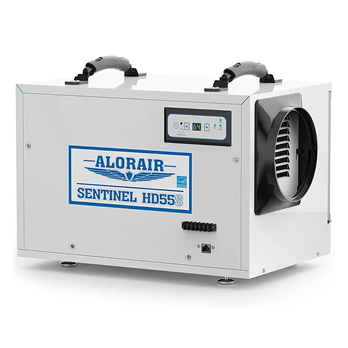
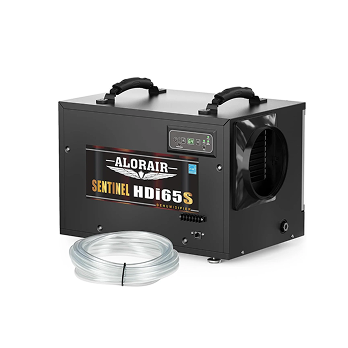
- The Solution: You cannot stop the physics of air movement, but you can change the quality of the air being pulled in. An AlorAir Sentinel Dehumidifier treats the air at the entry point, ensuring that the air migrating upward is dry and filtered.
The Hidden Cost: How Humidity Impacts Property Value

In the most humid states, "deferred maintenance" on moisture control can lead to catastrophic financial losses when it comes time to sell your home.
- Structural Red Flags: Home inspectors in states like Florida and Louisiana are trained to look for "soft" floor joists and high moisture readings in wood (anything over 19% is a failure).
- The "Musty" Stigma: Even if no mold is visible, the "old house smell" caused by high RH can lower a home's perceived value by 10% to 15%.
- The ROI of Dehumidification: Homes with documented crawlspace encapsulation and AlorAir systems often sell faster and for higher prices because they offer "Peace of Mind" to the buyer, proving the foundation is dry and the air is healthy.
Cold-Climate Engineering: Why AlorAir Thrives in the North
Many dehumidifiers stop working when the temperature drops below 60°F, which is a major problem for states like Alaska, Michigan, and Vermont.
- The "Frost-Up" Problem: In cold, humid states, the coils of a standard dehumidifier turn into a block of ice.
- Hot Gas Valve (HGV) Technology: AlorAir Sentinel units feature advanced HGV defrost systems. This allows the unit to quickly melt frost off the coils and get back to work in temperatures as low as 33°F.
- Efficiency in Saturation: Because northern humidity is often "saturated" (near 100% RH), our units are tuned to extract maximum pints-per-day even when the air doesn't "feel" hot, protecting northern homes from the "damp chill" that leads to rot.
Frequently Asked Questions
Which state has the lowest humidity?
Nevada and Arizona are the least humid states, with average relative humidity levels often dropping below 38%. While this is great for preventing mold, it can lead to other issues like wood shrinking and dry skin.
Is Alaska really more humid than Florida?
In terms of Relative Humidity, yes. In terms of Comfort (Dew Point), no. Florida air contains far more actual water vapor, which is why it feels much "stickier."
Does living in a humid state affect my energy bills?
Yes. Humid air holds more heat. Your air conditioner has to work twice as hard because it must first "dehumidify" the air before it can effectively "cool" the air. Running a dedicated AlorAir Dehumidifier can actually lower your AC costs.
What is the most humid city in the US?
Cities like New Orleans, LA and Jacksonville, FL frequently trade titles for the most humid city. However, coastal cities in Alaska like Juneau often have the highest year-round saturation levels.
Why is my crawlspace humid even if I don't live in a humid state?
Humidity in crawlspaces often comes from the soil. Even in a dry climate, moisture from the earth can evaporate into the crawlspace, getting trapped and causing mold. This is why a vapor barrier and dehumidifier are necessary in almost every state.
Can I just open my crawlspace vents to let the humidity out?
In humid states, this is the worst thing you can do. Opening vents allows the "wet" outside air into the "cool" crawlspace, leading to massive condensation. Modern building science recommends encapsulation (sealing vents) in humid regions.
Does high humidity cause structural damage?
Over time, yes. Sustained humidity above 70% softens wood fibers, allowing gravity to sag your floors and providing the perfect environment for wood-eating fungi.
Conclusion
Whether you live in the misty forests of Maine or the humid bayous of Louisiana, moisture is an invisible enemy to your home’s foundation. Understanding that Relative Humidity is a constant threat in nearly 20% of US states is the first step toward proper home maintenance.
At AlorAir, we build equipment designed to handle the 77% RH of Alaska and the 90°F "corn sweat" of Iowa. Don't wait for your floors to sag or the musty smell to take over. Control your environment today.


