



If you have ever woken up with red, itchy welts on your skin, your first instinct might be to search for "dust mite bites." It is a common concern for homeowners, especially those living in humid climates or older homes. However, there is a significant scientific clarification you need to know: Dust mites do not actually bite.
While the physical symptoms are very real, the cause is far more complex than a simple insect bite. At AlorAir, we specialize in the environmental control required to eliminate these microscopic pests. This guide will dive into the science of dust mite "bites," how to distinguish them from other pests, and the professional-grade solutions needed to clear your air and bedding for good.
The Big Myth: Do Dust Mites Bite?
The short answer is no. Unlike bed bugs, fleas, or mosquitoes, dust mites do not possess mouthparts designed to pierce human skin. They do not feed on blood. Instead, they feed on dander—the microscopic scales of dead skin that humans and pets shed every day.
If they don't bite, why do I have a rash?
The "bites" people report are actually an allergic reaction to a protein found in the dust mite's waste (feces) and decaying body parts. When these microscopic particles come into contact with your skin or are inhaled, your immune system overreacts, releasing histamines that cause:
- Red, itchy skin rashes (Atopic dermatitis).
- Hives or small raised bumps.
- Eczema flare-ups.
- Respiratory distress (sneezing, watery eyes, or wheezing).
Dust Mite "Bites" vs. Bed Bug Bites
Because the symptoms look similar, many homeowners misdiagnose their problem. Use the table below to identify your "uninvited guests".
Comparison Table: Dust Mites vs. Bed Bugs
|
Feature |
Dust Mites |
Bed Bugs |
|
Do they bite? |
No (Allergic reaction only) |
Yes (Feed on blood) |
|
Visibility |
Microscopic (Invisible to the eye) |
Visible (Size of an apple seed) |
|
Rash Pattern |
Generalized rash or "patches" |
Distinct "lines" or clusters of 3-4 bites |
|
Primary Food |
Dead skin cells |
Human/Animal blood |
|
Evidence |
Musty smell, allergy symptoms |
Blood spots on sheets, dark fecal spots |
|
Control Method |
Humidity control (Dehumidifiers) |
Professional Heat/Chemical Treatment |
The Lifecycle of a Dust Mite

To defeat dust mites, you must understand their biology. They are not insects; they are arachnids, related to spiders and ticks.
- Humidity Dependence: Dust mites do not drink water. They absorb moisture from the air through their skin. If the relative humidity (RH) drops below 50%, they dry out and die. The goal, however, is to maintain healthy indoor humidity levels, not to make the air as dry as possible.
- Optimal Temperature: They thrive in temperatures between 68°F and 77°F (20°C to 25°C).
- Reproduction: A female dust mite can lay up to 100 eggs in her lifetime, and the population can explode in a damp mattress or carpet within weeks.
Why Your Crawlspace is Breeding Dust Mites
Many homeowners treat their bedrooms but forget the source. Due to the Stack Effect, air from your crawlspace or basement rises into your living areas. If your crawlspace is damp, it sends humid air up into your carpets and mattresses.
Dust mites are not the only concern. The same conditions show how indoor humidity can support household pests in damp areas of the home.
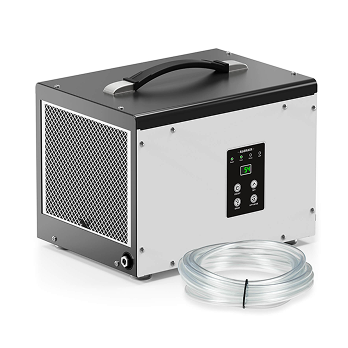
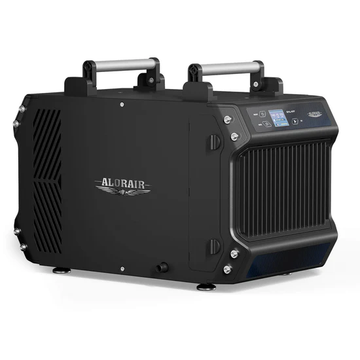
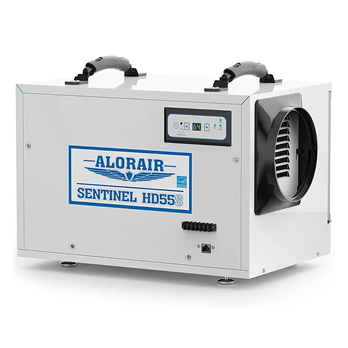
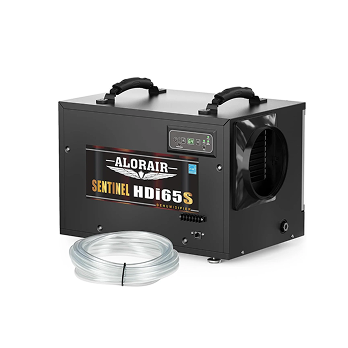
AlorAir Solution: By installing a Sentinel Series Dehumidifier in your crawlspace, you drop the humidity levels throughout the entire structure. When the humidity stays consistently below 50%, the dust mite population collapses naturally without the need for harsh chemicals.
5 Steps to "Evict" Dust Mites Permanently

While you can never completely eliminate every single mite, you can reduce the population below the "allergic threshold."
- Lower the Humidity: Use an AlorAir Sentinel Dehumidifier to maintain a home RH of 45–50%. This is the #1 most effective way to kill mites.
- High-Heat Washing: Wash all bedding, curtains, and rugs in water that is at least 130°F (54°C) once a week.
- HEPA Filtration: Standard vacuums often blow dust mite allergens back into the air. Use an AlorAir PureAiro Air Scrubber to capture airborne allergens during cleaning.
- Impermeable Covers: Encase your mattress and pillows in "dust-mite-proof" zippered covers. This starves the mites of their food source (your skin cells).
- Remove the "Sinks": Replace wall-to-wall carpeting with hard flooring. Carpets are the primary breeding ground for mites because they are difficult to deep-clean and hold moisture.
The "Stack Effect": How Your Crawlspace Feeds Bedroom Allergies

Many homeowners are puzzled as to why their dust mite allergies persist even after buying new mattresses. The answer often lies beneath the floorboards. Due to a building science phenomenon known as the Stack Effect, air moves upward through a house like a chimney.
- Moisture Migration: Warm air rises and escapes through the attic, creating a vacuum that pulls cold, damp air from the crawlspace or basement into the living quarters.
- The Spore and Mite Highway: This rising air carries more than just moisture; it brings mold spores and humid air that "charges" the carpets and bedding on the first floor.
- The AlorAir Solution: By encapsulating your crawlspace and installing an AlorAir Sentinel Dehumidifier, you cut off the supply of humidity. This creates a "Dry Buffer" that protects the entire home’s envelope, making it impossible for dust mites to find the moisture they need to survive in your bedroom.
Economic Impact: Why "Cheap" Fixes Cost More
Attempting to manage a dust mite infestation with retail-grade equipment or chemical sprays is often a cycle of wasted money. Professional-grade environmental control is a one-time investment that pays for itself.
Cost-Benefit Analysis: Professional vs. DIY
|
Expense Category |
DIY / Retail Method |
AlorAir Professional Method |
|
Initial Unit Cost |
$250 (Retail Dehumidifier) |
$800 - $1,200 (Sentinel Series) |
|
Lifespan |
1–2 Years (Corrodes in dampness) |
8–12 Years (Epoxy-coated coils) |
|
Chemical Costs |
$40/month (Acaricide sprays) |
$0 (Physical humidity control) |
|
Health Costs |
Recurring pharmacy/doctor visits |
Significant reduction in allergy triggers |
|
Energy Efficiency |
High (Runs 24/7 with low extraction) |
Low (Energy Star certified, high COP) |
The Takeaway: While the upfront cost of an AlorAir unit is higher, the Total Cost of Ownership (TCO) is significantly lower because the unit actually solves the root cause—humidity—rather than just masking the symptoms.
Professional Remediation Protocol: The 48-Hour Flush

If you have a severe "dust mite bite" outbreak, you need to perform a "system flush" of your indoor environment. This protocol is used by restoration professionals to rapidly drop allergen counts.
- Stage 1: The Humidity Drop (Hour 0–24): Set your AlorAir Sentinel to 40% RH. This rapid drop shocks the mite population and begins the desiccation (drying out) process.
- Stage 2: The Air Scrub (Hour 24–48): Place an AlorAir PureAiro 870 in the center of the affected room. Run it on the "Turbo" setting to cycle the air through the HEPA filter 6–8 times per hour. This captures the "fecal "particles that are now drying out and becoming airborne.
- Stage 3: Thermal Extraction: Wash all linens at 130°F. The combination of dry air, HEPA scrubbing, and high-heat washing creates a "Triple Threat" that mites cannot survive.
- Stage 4: Stabilization: Return the dehumidifier to 50% RH for long-term maintenance.
Frequently Asked Questions
How do I know if I have dust mites?
Since they are microscopic, you can't "see" them. However, if you experience "morning allergies" (sneezing or itchy skin that improves once you leave the house), or if your home has a musty odor and high humidity, you almost certainly have a dust mite infestation.
Can I use a spray to kill dust mites?
There are "acaricides" (sprays) available, but they are often temporary. Unless you fix the humidity levels in the home, the mites will return as soon as the spray wears off. Physical removal (washing) and humidity control are the only long-term solutions.
Are dust mites the same as bed bugs?
No. Bed bugs are much larger, visible to the eye, and actively bite humans to feed on blood. Dust mites are invisible and only cause reactions through their waste products.
Do air purifiers help with dust mites?
Yes, but only if they have a True HEPA filter. Dust mite waste is extremely light and becomes airborne when you sit on a couch or make the bed. An air scrubber like the AlorAir PureAiro can pull these particles out of the air before you breathe them in.
Why are my symptoms worse in the summer?
Humidity is higher in the summer. When the air is moist, dust mites breed faster and produce more allergens. This is why a dehumidifier is essential during the humid months.
Can my dog or cat have dust mite allergies?
Absolutely. Pets shed a lot of dander, which attracts mites. Dogs with dust mite allergies often chew their paws or have red, inflamed ears.
Does UV light kill dust mites?
UV-C light can kill dust mites, but it usually requires long exposure times that are difficult to achieve with a handheld wand. It is much more efficient to focus on humidity control.
Conclusion
If you’re suffering from what feels like "dust mite bites," it is time to stop the itch at the source. By controlling the moisture in your home and scrubbing the air of microscopic allergens, you can transform your bedroom back into a sanctuary.
AlorAir provides the industrial-strength dehumidifiers and HEPA air scrubbers you need to create a "zero-growth" environment for dust mites. Don't just treat the symptoms—fix the air.


