
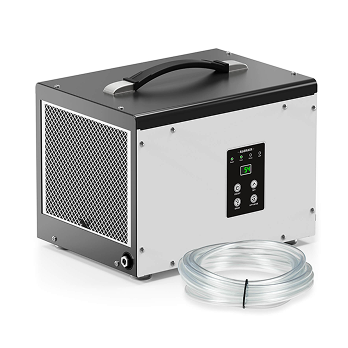
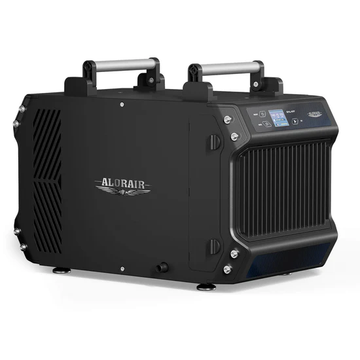
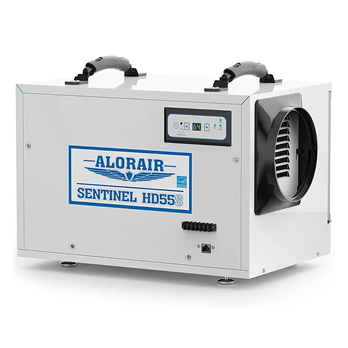
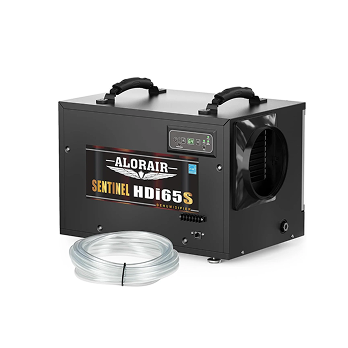



Quick Answer: A straightforward whole-house dehumidifier installation can start at around $1,700, while many professionally installed projects fall between approximately $2,000 and $3,800. A higher-capacity unit or a project involving duct modifications, a condensate pump, electrical work, or difficult access may cost about $3,800 to $4,200, while a complex installation can exceed $5,000. At the time of publication, AlorAir whole-house dehumidifiers are listed at approximately $1,200 to $2,850 before installation.
The equipment price is only one part of the budget. Ductwork, drainage, electrical connections, controls, labor, permits, electricity, and maintenance can all affect the total cost of ownership. This article separates those costs so you can compare quotes based on the complete project rather than the unit price alone.
Whole-House Dehumidifier Cost Breakdown
The equipment price is only one part of the project. A complete budget may also include professional labor, ductwork, drainage, electrical connections, controls, permits, and enough access for future filter replacement and maintenance.
| Cost component | General budgeting range | Main variables |
|---|---|---|
| AlorAir equipment | Approximately $1,200–$2,850 | Model, capacity and current promotion |
| Professional installation labor | Approximately $400–$1,200 | Local labor rates, installation time and access |
| New duct run or modest duct modification | Approximately $270–$500 | Length, material, connection points and accessibility |
| External condensate pump | Approximately $50–$300 | Drain location, lift height and pump type |
| New outlet or basic electrical work | Approximately $150–$350 | Existing power, circuit requirements and local rates |
| Permit | Approximately $50–$200 when required | Municipality and project scope |
| Typical completed project | Approximately $2,000–$3,800 | Equipment, labor and limited modifications |
| Higher-cost project | Approximately $3,800–$4,200 | Higher-capacity equipment and several add-ons |
| Complex project | $5,000+ | Extensive ductwork, difficult access or multiple upgrades |
Published cost estimates do not always include the same items. Some sources combine the equipment and professional installation, while others list the unit, labor, drainage, electrical work, controls, and duct modifications separately. For that reason, the ranges in this article should be used for initial budgeting rather than as a guaranteed national price. Compare the scope of each estimate before comparing the final total.
Current AlorAir Equipment Prices
At the time of publication, the AlorAirCrawlspace whole-house dehumidifier collection includes the following listed equipment prices:
| Model | Current listed equipment price |
|---|---|
| Sentinel WHD 100 | $1,199 |
| Sentinel WHD 120 | $1,699 |
| Sentinel WHD 150 | $2,249 |
| Sentinel WHD 200 | $2,849 |
These equipment prices were checked on September 23, 2026. They do not include ductwork, drainage, electrical work, controls, permits, labor, or other installation expenses. Product prices and promotions may change, so confirm the current listing before preparing a final project budget.
Example Whole-House Dehumidifier Budgets
The following examples show how equipment and installation requirements can change the completed-project price. They are budgeting examples rather than contractor quotes.
Example 1: Basic Installation — About $1,700
A homeowner selects an AlorAir Sentinel WHD 100 currently listed at $1,199. The installation location is easy to access, suitable duct connections and electrical service already exist, and the unit can drain by gravity.
- Equipment: $1,199
- Professional labor: approximately $500
- Additional ductwork, pump, or electrical upgrades: not required
- Estimated total: approximately $1,699
This example supports the lower end of the opening range. It assumes that the home already has suitable infrastructure and that no major modifications are required.
Example 2: Standard Installation — About $3,000
A homeowner selects an AlorAir Sentinel WHD 120 currently listed at $1,699. The project requires professional labor, a modest duct modification, and an external condensate pump because gravity drainage is not practical.
- Equipment: $1,699
- Professional labor: approximately $700
- Modest duct modification: approximately $400
- External condensate pump: approximately $200
- Estimated total: approximately $2,999
This represents a more typical project in which the contractor needs to make limited changes to the existing system.
Example 3: Higher-Cost Installation — About $4,200
A homeowner selects an AlorAir Sentinel WHD 150 currently listed at $2,249. The installation requires additional labor, a new duct run, a condensate pump, and basic electrical work.
- Equipment: $2,249
- Professional labor: approximately $900
- New duct run or modification: approximately $500
- Condensate pump: approximately $250
- Electrical work: approximately $300
- Estimated total: approximately $4,199
This example supports the upper end of the $1,700 to $4,200 range. The total can exceed $5,000 when the project uses a higher-capacity model and also requires extensive ductwork, difficult attic or crawl-space access, electrical upgrades, permits, or longer drainage runs.

Factors That Affect the Cost
Two homes of the same size can receive very different installation quotes. Capacity matters, but so do the existing ductwork, drainage route, electrical supply, equipment location, local labor rates, and the amount of work needed to integrate the system safely.
1. Size and Capacity
Capacity is measured by how many pints of moisture a dehumidifier can remove per day under specified test conditions. Higher-capacity equipment generally costs more, but square footage alone does not determine the correct size. Climate, air leakage, ceiling height, occupancy, ventilation, basement or crawl-space conditions, current humidity, and the amount of moisture entering the home can all affect the required capacity.
Choosing the smallest unit based only on price may lead to long runtimes without reaching the target humidity. Paying for substantially more capacity than the home needs can also increase the upfront cost unnecessarily. Ask the installer to explain the moisture-load assumptions and test conditions used in the recommendation.
2. Installation Complexity
Installation usually costs less when the equipment location is easy to reach, suitable duct connections already exist, a compliant electrical supply is nearby, and condensate can drain by gravity. Costs increase when the contractor must add or modify ductwork, install a condensate pump, run a longer drain line, add electrical service or controls, build a mounting platform, or work in a confined attic or crawl space.
Possible additional work includes HVAC duct modifications, new return or supply runs, electrical connections that meet the unit’s requirements, condensate-pump installation, control wiring, equipment supports, permits, and access improvements. Not every project needs these additions, so ask for an itemized quote rather than assuming they are included.
3. Brand and Features
Features such as remote monitoring, external controls, automatic defrost, advanced filtration, built-in pumps, and HVAC integration can increase the equipment price. These features may improve convenience or make a difficult installation more practical, but they do not eliminate filter cleaning, drain inspections, or other routine maintenance. Pay for features that solve a real installation or control need rather than assuming every upgrade will reduce long-term costs.
4. Local Labor Rates
Installation costs vary by region. Labor generally costs more in areas with higher wages, permit fees, travel charges, or strong demand for qualified HVAC contractors. The most reliable way to estimate this part of the project is to compare itemized quotes from local installers.
5. System Type and Technology
Different system designs come with different equipment and installation requirements.
- HVAC-integrated systems connect to suitable existing ductwork and controls. They may require duct modifications and professional airflow evaluation.
- Standalone ducted systems operate independently of the central air conditioner but require their own return and supply paths.
- Ventilating dehumidifiers can introduce controlled outdoor air while removing moisture. They may require additional capacity, controls, ductwork, and commissioning because outdoor air can add to the home’s moisture load.
How Much Does a Whole-House Dehumidifier Cost to Run?
Electricity is the ongoing cost that adds up over the years you own the unit.
Average Monthly and Annual Electricity Cost
There is no single monthly or annual running cost that applies to every whole-house dehumidifier. Electricity use depends on the unit’s wattage, actual compressor runtime, local electricity rate, humidity setting, climate, air leakage, moisture load, and how the dehumidifier operates with the HVAC system.
When comparing models, look at the Integrated Energy Factor, or IEF, as well as capacity under the same test conditions. IEF describes how much moisture the unit removes for the electricity it uses. A more efficient unit can remove more water per unit of energy, but actual operating cost still depends on runtime.
What Affects Dehumidifier Energy Use?
- Power draw: Check the rated input for the specific model rather than assuming one range applies to every system.
- Runtime: Units generally run longer in humid climates, leaky homes, and spaces with a continuing moisture load.
- Efficiency: Compare Integrated Energy Factor and capacity under the same test conditions. ENERGY STAR certification can help identify models that meet current efficiency criteria.
- Humidity setpoint: Lower targets generally increase runtime and electricity use. Choose a setting based on measured conditions rather than automatically selecting the lowest option.
-
Air leakage and moisture sources: Humid outdoor air, plumbing leaks, wet materials, and uncontrolled ventilation can increase the amount of moisture the system must remove.
How to Calculate Your Own Running Cost
Wattage (kW) × Daily Runtime (hours) = Daily kWh
Daily kWh × Days of Operation per Year = Annual kWh
Annual kWh × Your Electricity Rate ($/kWh) = Annual Cost
For example, if a 900-watt unit averages six hours of operation per day for 200 days:
0.9 kW × 6 hours × 200 days = 1,080 kWh per year
At an electricity rate of $0.20 per kWh, this hypothetical example would equal $216 per year. This is a calculation example, not a promise of actual runtime or annual cost. Use the wattage listed for the specific model and your local electricity rate.

Additional Costs to Consider
The equipment and basic labor are usually the largest parts of the budget, but ductwork, drainage, electrical service, permits, and maintenance can also affect the completed-project cost. Not every installation requires every item, and some contractors include basic materials in the labor price.
1. Professional Installation Labor
Professional installation labor commonly ranges from about $400 to $1,200, depending on the project and location. A straightforward installation with accessible ductwork and a nearby drain may stay near the lower end. Confined attics, crawl spaces, difficult duct connections, control wiring, or longer installation times can move the labor charge toward the upper end.
2. Ductwork
A modest new duct run or connection may add approximately $270 to $500. The cost can be considerably higher if the project requires a dedicated return, extensive trunk modifications, new supply paths, wall or ceiling access, or replacement of existing ductwork. Confirm whether basic duct connections are already included in the installation quote.
3. Electrical Work
A new outlet or basic electrical work may cost approximately $150 to $350, depending on the existing electrical system and local labor rates. More extensive circuit work can cost more. The required voltage, current, circuit protection, and connection method must be based on the specific model and applicable electrical codes.
4. Condensate Drainage
An external condensate pump may add approximately $50 to $300 when gravity drainage is not practical. The total drainage cost may also increase when the line must travel a long distance, pass through walls or floors, or lift water to a higher discharge point. Some models include a pump, so check the equipment specifications before adding this cost separately.
5. Permits and Removal
Some municipalities require a mechanical or electrical permit, which may add approximately $50 to $200. Removing an old unit, disposing of equipment, or temporarily disconnecting HVAC components may also appear as separate line items. These charges vary and should be confirmed in the written quote.
6. Maintenance and Electricity
Long-term ownership costs include electricity, filter replacement, drain inspection, cleaning, and possible repairs. These expenses vary too much to combine into one universal annual figure. Estimate electricity from the specific unit’s rated input, expected runtime, and local electricity rate, and follow the manufacturer’s maintenance schedule rather than assuming one fixed service cost.
7. Compare the Full Project Scope
One contractor may include basic duct connections, controls, drainage materials, startup, and testing in the labor price, while another may list each item separately. Compare equipment, labor, ductwork, drainage, electrical work, permits, controls, warranty terms, and maintenance requirements before deciding which quote offers better value.
 How to Save on Costs Without Compromising Quality
You do not need to choose the cheapest equipment to keep the project within budget. Proper sizing, practical drainage, comparable contractor quotes, verified rebates, and routine maintenance can help control costs without cutting essential installation work.
1. Choose the Right Size—Not the Biggest
Larger models are not automatically the better value. The goal is to choose enough capacity for the home’s actual moisture load without paying for substantially more equipment than the project requires. Ask the contractor to explain how climate, square footage, air leakage, ventilation, and measured humidity influenced the recommendation.
2. Avoid Costly Installation Mistakes
Do not treat ducted whole-house installation as a simple DIY project. Improper duct connections, drainage, electrical work, or controls can reduce performance, cause leaks, create safety problems, or affect warranty coverage. Homeowners can still control costs by preparing an accessible installation area and comparing itemized quotes, while leaving HVAC, electrical, and drainage connections to qualified professionals.
3. Use Gravity Drainage
Gravity drainage can reduce equipment and maintenance costs when an approved discharge point is located below the dehumidifier and the drain line can maintain a continuous downward slope. Do not choose the installation location solely to avoid a pump; airflow, duct routing, electrical access, service clearance, and local drainage requirements still need to be considered.
4. Maintain Your System Regularly
Follow the manufacturer’s maintenance schedule for filter cleaning or replacement, drain inspection, coil access, and system checks. Maintenance intervals vary by model, runtime, dust exposure, and installation location, so one schedule does not fit every system. Keeping filters and drainage components in good condition can support reliable operation and reduce avoidable service calls.
5. Look for Rebates or Discounts
Some utilities, state programs, or local agencies may offer rebates for qualifying high-efficiency equipment. Availability, eligibility, and approved models vary by location, so verify the program requirements before including a rebate in your budget. Do not assume that every ENERGY STAR-certified unit automatically qualifies for a local incentive.
Is a Whole-House Dehumidifier Worth the Cost?
A whole-house system may justify its higher upfront cost when elevated humidity affects several living areas, the moisture source has been addressed, and multiple portable units would otherwise be needed. Centralized controls and continuous drainage can also reduce the day-to-day work of managing several separate machines.
It may not provide good value when the moisture problem is limited to one room, basement, or crawl space, or when the real problem is an active plumbing leak, foundation seepage, standing water, or inadequate drainage. A dehumidifier controls water vapor in the air; it does not repair the source of liquid water entering the home.
For a more complete decision process, evaluate when a whole-house dehumidifier is worth the investment based on how many rooms are affected, the alternatives available, and the total ownership cost.
Final Thoughts
A whole-house dehumidifier commonly represents a larger upfront investment than a portable unit, but the equipment price is only one part of the budget. Capacity, ductwork, drainage, electrical work, controls, installation location, labor, electricity, and maintenance can all affect the final cost.
Before buying, measure humidity in several rooms, correct active water sources, and request itemized installation quotes based on the same project scope. If centralized humidity control is appropriate for your home, you can compare current whole-house dehumidifier models and prices before discussing installation requirements with a qualified HVAC contractor.


