



Quick Answer: A whole-house dehumidifier is usually worth it when relative humidity remains high across multiple living areas after leaks, ventilation problems, and drainage issues have been addressed. It may not be worth the cost when humidity is already within a reasonable range or the moisture problem is confined to one isolated space.
The decision comes down to the size and persistence of the humidity problem, the limits of the existing air-conditioning system, installation requirements, and total ownership cost. This article examines both the benefits and drawbacks so you can decide whether centralized dehumidification makes sense for your home.

Why Air Conditioning May Not Be Enough
An air conditioner removes some moisture while it cools, but dehumidification stops or slows when the cooling cycle ends. During mild but humid weather, sometimes called the shoulder season, the home may not need enough cooling for the AC to run long enough to control humidity.
The same problem can occur when an oversized air conditioner cools the home quickly and shuts off before enough moisture condenses and drains from the coil. A whole-house dehumidifier separates moisture control from temperature control, allowing it to operate when the house is already cool but the indoor air is still humid.
A dehumidifier should not be used to hide an HVAC fault. Restricted airflow, a blocked condensate drain, incorrect controls, or other system problems should be inspected before additional equipment is installed.
What Is a Whole House Dehumidifier?
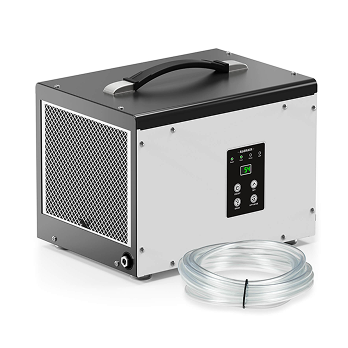
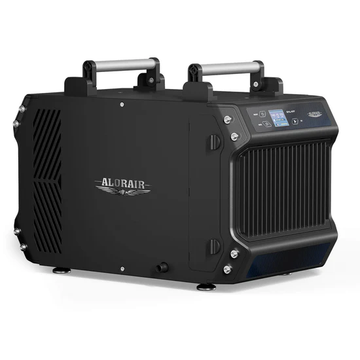
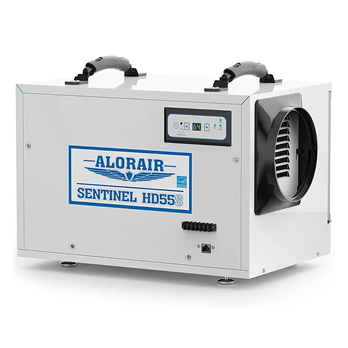
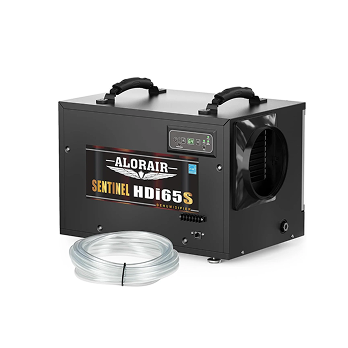
A whole-house dehumidifier is a ducted system designed to control humidity across multiple living areas. Depending on the installation, it may connect to the home’s HVAC ductwork or use dedicated return and supply ducts. The unit draws in humid air, condenses and drains the moisture, and distributes drier air to the areas served by the duct system.
Its actual coverage depends on capacity, duct layout, airflow, installation design, and the home’s moisture load. A whole-house label does not guarantee equal humidity control in every closed room or separate zone.
Benefits and Drawbacks of a Whole-House Dehumidifier
Potential benefits include more consistent humidity control across connected rooms, continuous drainage, less reliance on portable units, and automatic operation through a humidistat. Because the equipment is commonly installed in a mechanical room, basement, attic, or another service area, it may also be less visible and quieter in occupied rooms than several portable units. Lower humidity may reduce condensation and help protect wood, furnishings, and other moisture-sensitive materials.
The drawbacks are higher equipment and installation costs, additional electricity use, and the need for suitable ductwork, electrical service, drainage, installation space, and future service access. Unlike a portable unit, a whole-house system is fixed in place and normally requires professional installation. Filters and drainage components must still be inspected and maintained according to the manufacturer’s instructions.
A whole-house dehumidifier also has clear limits. It does not repair leaks, remove standing water, correct exterior drainage, or clean up existing mold. If the underlying water source remains, the system may run for long periods without maintaining the selected humidity.
Is It Energy Efficient?
A whole-house dehumidifier adds to household electricity use, so energy efficiency should be evaluated by how much moisture the unit removes for the energy it consumes. Actual operating cost depends on capacity, efficiency, humidity setting, climate, air leakage, moisture load, and daily runtime.
A properly sized whole-house unit may be more practical than operating several portable units, and in some homes it may reduce the need to overcool the air simply to control humidity. However, lower total energy bills are not guaranteed. Before buying, compare the unit’s efficiency rating, wattage, expected runtime, and whether correcting leaks, air infiltration, or ventilation problems could reduce the moisture load first.
What Costs Should You Consider?
The total ownership cost of a whole-house dehumidifier includes more than the equipment price. Installation may require duct modifications, a drain line or condensate pump, electrical work, controls, labor, and enough space for future filter and service access. Operating electricity and routine maintenance should also be included in the long-term budget.
Installation prices vary with capacity, duct layout, drainage, electrical requirements, local labor rates, and the condition of the existing HVAC system. For that reason, a national average should be treated only as a starting point rather than a guaranteed project price. Request an itemized quote showing the equipment, ductwork, drainage, electrical work, controls, and labor separately.
Whether that cost is justified depends on the size of the humidity problem. A centralized system may provide better value when several portable units would otherwise be needed throughout the home. It may be poor value when only one isolated room requires dehumidification or when an unresolved leak is causing the moisture problem. Do not assume that energy savings alone will repay the installation cost.

Whole-House or Portable: Which Offers Better Value?
A portable dehumidifier is usually the more economical choice for one damp room, a temporary moisture problem, a rental property, or a home where flexibility matters. It can be moved as conditions change, but it may require manual bucket emptying, occupy living space, and create noticeable noise in the room.
A whole-house system becomes more attractive when several rooms require continuous humidity control or when homeowners are already operating multiple portable units. Centralized drainage and controls reduce day-to-day work, but the higher installation cost only makes sense when the moisture problem is genuinely widespread.
For a detailed comparison of coverage and installation, you can compare whole-house and single-space dehumidifiers.
When Is a Whole-House Dehumidifier Worth It?
A whole-house dehumidifier is more likely to be worth the investment when hygrometer readings show elevated humidity across several rooms or floors rather than in one isolated space. Other strong signals include operating two or more portable units, frequent condensation in different parts of the home, or indoor humidity that remains high after the air conditioner reaches the desired temperature.
It may be especially useful when the home remains humid during mild spring or fall weather, when the air conditioner does not run long enough to remove much moisture. The case is strongest when the problem is recurring and house-wide after plumbing leaks, drainage problems, inadequate exhaust ventilation, and other moisture sources have been corrected.
When Is It Probably Not Worth It?
A whole-house dehumidifier may not be worth the cost when the moisture problem is limited to one bathroom, basement, crawl space, laundry area, or another isolated zone. In those situations, better ventilation, source control, or a dedicated local dehumidifier may solve the problem more economically. A fixed system may also be a poor fit for renters, short-term occupants, limited budgets, or homes without practical space for ductwork, drainage, and service access.
It is also not the first solution for standing water, foundation seepage, plumbing or roof leaks, wet building materials, or extensive existing mold. Repair and drying work should come first. If humidity readings are already within an acceptable range, adding more dehumidification may only increase energy use without providing a meaningful benefit.
How to Decide Whether It Is Worth It for Your Home
Before requesting an installation quote, monitor the home for 7–14 days, including humid weather and periods when the air conditioner is running less frequently. Record relative humidity in several rooms, outdoor conditions, condensation, musty odors, and any recent water events.
Then answer these questions:
- Does relative humidity remain elevated in several rooms or only one area?
- Does the problem continue during mild weather when the air conditioner runs less often?
- Have plumbing leaks, roof leaks, drainage problems, and standing water been ruled out?
- Is the air conditioner cooling the home but leaving it clammy?
- Would you otherwise need several portable dehumidifiers?
- Is there a suitable installation location with enough service clearance?
- Is gravity drainage available, or will the system need a condensate pump?
- Can the existing ductwork and electrical system support the installation?
- Have equipment, installation, electricity, filters, and maintenance all been included in the cost comparison?
If the problem affects the entire living area and the source has already been controlled, a whole-house system is more likely to provide meaningful value. If only one zone is damp, start with a targeted solution.
Conclusion
A whole-house dehumidifier can be worth the investment when humidity remains elevated across several living areas, the underlying moisture sources have been corrected, and centralized control would replace multiple portable units. It is less likely to provide good value when the problem is isolated or caused by an active leak, standing water, or poor drainage.
Measure humidity in several rooms, assess installation feasibility, and compare equipment, installation, electricity, and maintenance before deciding. If centralized control is appropriate, compare whole-house dehumidifiers designed for ducted humidity control by capacity, efficiency, drainage requirements, dimensions, and HVAC compatibility.
Frequently Asked Questions
Does a whole-house dehumidifier need a drain?
Yes. Whole-house systems normally use continuous drainage rather than a removable bucket. Depending on the installation, water may drain by gravity or through a condensate pump. The drain route, slope, discharge point, and pump requirements should be confirmed before installation.
Will a whole-house dehumidifier lower my energy bill?
Not necessarily. It uses electricity, although it may reduce the need to overcool the home and may be more practical than operating several portable units. The effect on total energy cost depends on efficiency, runtime, climate, humidity setting, and HVAC performance.
Can a whole-house dehumidifier replace air conditioning?
No. A dehumidifier controls moisture but does not provide the same sensible cooling as an air conditioner. The two systems solve different parts of indoor comfort and may operate together.
Is a portable dehumidifier a better choice?
A portable unit is often the better choice when humidity is limited to one room, the problem is temporary, or a fixed installation is impractical. A whole-house system is more appropriate when several living areas require ongoing control.


