


Few things are as frustrating as relaxing in your own home only to be hit by the pungent, skunky odor of a neighbor’s marijuana smoke. Whether you live in a multi-unit apartment, a condo, or a suburban house, odors can travel through shared walls, ventilation shafts, and even electrical outlets.
If you are dealing with drifting smoke, this guide provides actionable steps—from DIY quick fixes to professional-grade air filtration—to help you eliminate the smell for good.
Why Does Weed Smell Travel So Easily?
Marijuana smoke contains heavy oils and volatile organic compounds (VOCs) that cling to surfaces and permeate porous materials. Unlike cigarette smoke, cannabis odor is often more "skunky" and persistent. It moves through a building via Air Leaks and Pressure Differentials.
- Stack Effect: Warm air rises, creating a vacuum that pulls air (and smoke) from lower floors into upper units.
- Shared Ventilation: Many older buildings share HVAC ducts or bathroom exhaust vents.
- Small Gaps: Smoke particles are microscopic and can pass through cracks as thin as a credit card.
Seal the Entry Points (The "Hardening" Phase)

Before you can clean the air, you must stop the "leak." Treat your home like a sealed envelope.
Identify the "Leaky" Spots
- Electrical Outlets: Surprisingly, air moves freely between wall cavities through outlet boxes.
- Plumbing Cutouts: Check under sinks where pipes enter the walls.
- Baseboards: Gaps between the floor and the wall can act as a highway for odors.
Solutions Table: Sealing Your Space
|
Location |
Recommended Fix |
Impact Level |
|
Front Door |
Install a heavy-duty door sweep and weatherstripping. |
High |
|
Outlets |
Use foam outlet gaskets (insulators) behind the cover plate. |
Medium |
|
Windows |
Apply silicone caulk or removable weatherstripping tape. |
Medium |
|
Shared Vents |
Install a magnetic vent cover when not in use. |
High |
Deploy Professional Air Filtration
Standard HEPA filters are designed for dust and pollen; they do not stop odors. To neutralize weed smell, you need Activated Carbon.
The AlorAir Difference
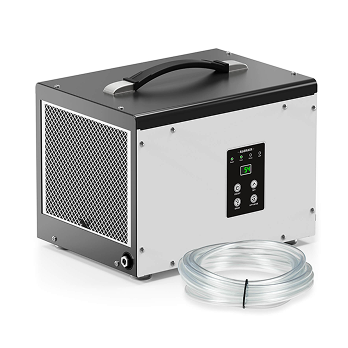
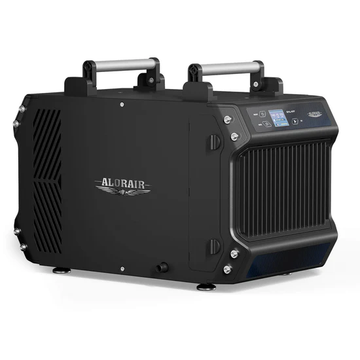
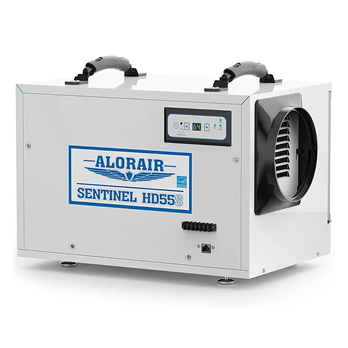
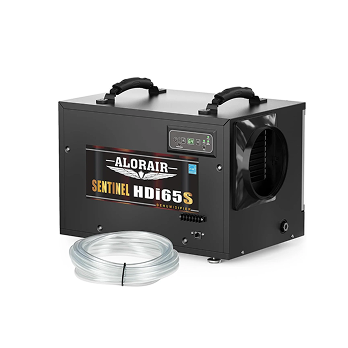
For heavy-duty odor removal, an air scrubber or a high-capacity air purifier is essential. Unlike small "desktop" units, professional-grade scrubbers use pounds of activated carbon to chemically bond with smoke molecules.
Why Carbon Matters:
- Adsorption: The carbon traps VOCs and odors in its microscopic pores.
- HEPA Combo: While the carbon handles the smell, the HEPA filter captures the physical smoke particles that cause irritation.
Create Positive Air Pressure

If your home has "negative pressure," it acts like a vacuum, sucking air in from your neighbor’s unit. You want Positive Pressure.
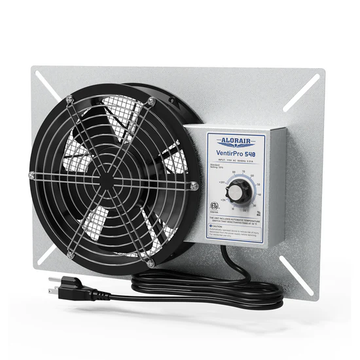
- The Window Fan Trick: Place a fan in a window on the clean side of your house (away from the neighbor) blowing inward.
- The Result: This slightly increases the air pressure inside your home, pushing air out of the cracks and preventing the neighbor's smoke from entering.
Neutralize, Don't Mask
Grocery store sprays usually just add a "floral" scent to the weed smell, making it worse. Use science-based neutralizers.
- Activated Charcoal Bags: Place these in closets and near shared walls.
- Odor Neutralizing Gels: Look for products containing essential oils like eucalyptus or citrus, which break down odor molecules rather than covering them.
- Vinegar Bowls: Leaving a bowl of white vinegar out overnight can help "strip" the air of lingering smells.
Address Shared Ventilation
If the smell is coming through your bathroom or kitchen fan, you likely share a duct.
Pro Tip: Keep your bathroom fan running. While it seems counterintuitive, the outgoing airflow can prevent the neighbor's smoke from back-drafting into your bathroom. If the issue is severe, consider a backdraft damper installation.
Communication and Legal Steps

Sometimes the solution isn't mechanical—it's social.
- The Friendly Approach: Most neighbors don't realize their habit is affecting you. Suggest they use a "Sploof" (a handheld carbon filter) or smoke near a different window.
- The Landlord/HOA: If you live in a non-smoking building, document the times and dates of the occurrences. Most leases have a "covenant of quiet enjoyment" which includes freedom from noxious odors.
- Legal Nuance: Even in states where marijuana is legal, "nuisance" laws often still apply to drifting smoke that interferes with another person's property.
Checklist: How to Deep Clean a "Skunked" Room
If the smell has already settled into your furniture, follow these steps:
- Wash Walls: Use a mixture of warm water and vinegar.
- Steam Clean: Carpets and upholstery hold 80% of indoor odors.
- Change Filters: If you have a central HVAC, upgrade to a filter with a MERV 13 rating or higher with carbon layers.
- Clean Windows: Smoke film sticks to glass and attracts more dust/odor.
The Chemistry of Cannabis Odor: Why It’s Harder to Kill
To effectively stop a smell, you have to understand its molecular makeup. Marijuana smoke isn't just "scent"; it is a complex cocktail of over 200 compounds.
- Terpenes: These are the organic compounds responsible for the pungent aroma (like Myrcene or Limonene). They are oily in nature, meaning they stick to walls and fabrics.
- Volatile Organic Compounds (VOCs): When cannabis is combusted, it releases VOCs that can cause headaches or respiratory irritation for sensitive neighbors.
- Thirdhand Smoke: Even if the neighbor stops smoking, the "sticky" residue left on shared surfaces can continue to off-gas for weeks.
Technical Tip: Simple ionization or "ozone" generators are often marketed for this, but for residential settings, Source Capture via high-volume airflow is much safer and more effective at removing the physical oils from the air.
VAC Hacks: Preventing Cross-Contamination
In many modern condos, the HVAC system is the "smoking gun" for odor transfer. If your neighbor’s return air vent is close to your intake, you are essentially breathing their filtered exhaust.
Maintenance Checklist for Shared Systems
|
Task |
Frequency |
Why it Works |
|
Duct Cleaning |
Every 2-3 Years |
Removes oily resin buildup inside the vents. |
|
Filter Upgrading |
Every 3 Months |
Moving from a MERV 8 to a MERV 13 with Carbon captures smaller particulates. |
|
UV-C Light Install |
Permanent |
UV lights inside the HVAC coil can help break down organic odors. |
|
Sealing Register Boots |
Once |
Prevents air from the "interstitial space" (inside walls) from leaking into your vents. |
Creating a "Buffer Zone" in Entryways

If the smell is coming from a shared hallway (common in high-rise apartments), your entryway becomes the "battleground." Creating a buffer zone prevents the odor from reaching your bedroom or kitchen.
- The Double-Seal Method: Use a door sweep on the exterior door and an additional draft stopper on any interior doors leading to the main living space.
- The Negative Pressure Isolation: If you have an AlorAir air scrubber, place it in the hallway or entryway. By running it on a lower setting, you create a "scrubbing station" that cleans the air the moment it enters through the door gaps.
- Scented Deterrents: In this specific zone, using high-intensity natural deterrents like Peppermint oil can interfere with the olfactory receptors, making the underlying skunk smell less perceptible as it moves through the home.
Long-Term Mitigation: For Landlords and Property Managers
If you own the property and the smell is a recurring tenant issue, you need permanent solutions that go beyond temporary fixes.
- Acoustic/Fire Caulking: Smoke follows the same paths as sound and fire. Using fire-rated caulk to seal the gaps around plumbing stacks and electrical chases between floors serves a dual purpose: safety and odor control.
- Encapsulating Paint: If a unit has been "smoked out" by a previous tenant, standard latex paint won't work. You must use an odor-blocking primer (often shellac-based) to "lock in" the molecules so they don't seep through the new coat of paint.
- Balanced Ventilation Systems (ERV/HRV): For new builds, installing an Energy Recovery Ventilator (ERV) ensures that the incoming fresh air is filtered and pressurized, making it nearly impossible for stagnant neighbor air to infiltrate the unit.
Conclusion
Stopping weed smell from neighbors requires a multi-layered defense. Start by sealing the gaps in your "envelope," then move to active filtration with a high-quality carbon-based air purifier. By managing your home’s air pressure and neutralizing existing particles, you can enjoy a fresh, scent-free environment regardless of what is happening next door.
Ready to reclaim your air? Explore AlorAir Crawl Space range of high-performance air scrubbers designed to tackle the toughest smoke and VOC challenges.
Frequently Asked Questions
Can weed smell actually travel through solid walls?
While it seems like the smell is coming "through" the wall, it is more likely traveling through pores and bypasses. Smoke particles are incredibly small (roughly 0.3 to 0.5 microns). They move through microscopic cracks in plaster, gaps around electrical outlets, recessed lighting, and baseboards. In older buildings, the porous nature of unpainted brick or wood can also allow odors to seep through over time.
Will a standard HEPA filter get rid of the skunk smell?
No, a standard HEPA filter alone is not enough. HEPA filters are designed to capture particulates (the physical smoke you see). However, the odor is a gas (VOC). To eliminate the smell, you must use an air purifier or scrubber equipped with a thick layer of Activated Carbon. The carbon acts like a sponge, soaking up the gas molecules that HEPA filters miss.
Is it legal to complain about a neighbor’s weed smell?
This depends on your local laws and your housing agreement. Even in states where recreational marijuana is legal, most apartment leases have a "Nuisance Clause." This prohibits tenants from engaging in activities that interfere with a neighbor’s "quiet enjoyment" of their home. If the smell is constant and affecting your health or comfort, you generally have grounds to report it to a landlord or HOA.
How long does weed smell linger in a room?
In a well-ventilated room, the smell can dissipate in 2 to 4 hours. However, if the smoke has settled into carpets, curtains, or upholstery, the scent can linger for days or even weeks. Using a professional air scrubber like the AlorAir PureAiro series can reduce this time to minutes by rapidly cycling the air through high-grade carbon filters.
Can I use an ozone generator to remove the smell?
Ozone generators are highly effective at killing odors, but they should never be used in occupied spaces. Ozone is a lung irritant and can be harmful to humans, pets, and plants. For residential neighbor issues, it is much safer to use an Air Scrubber, which cleans the air continuously without releasing harmful gases.
Does charcoal really work for marijuana odors?
Yes, specifically activated charcoal. Regular charcoal briquettes for grilling will not work. Activated charcoal has been treated with oxygen to open up millions of tiny pores between carbon atoms. These pores trap the volatile organic compounds (VOCs) found in cannabis smoke through a process called adsorption.
What is the fastest way to clear a room of a sudden smell?
The fastest method is to create cross-ventilation. Open two windows on opposite sides of your home and place a box fan in one window blowing outward. This creates a vacuum that pulls the fresh air in from the other window, flushing the room. Simultaneously, running an air purifier on its highest setting will capture any heavy particles that stick to furniture.


