


Quick Summary
- The Metric: We ranked locations based on annual PM2.5 concentration (µg/m³), which refers to fine particulate matter that can penetrate deep into the lungs.
- The Worst State: Georgia ranks as the state with the worst air quality (8.9 µg/m³), followed by Idaho and Arkansas.
- The Worst City: Shafter, California, has the highest PM2.5 levels of any town (16.1 µg/m³), driven by agricultural dust.
- The "Cleanest" States: Hawaii, Alaska, and Rhode Island have the lowest particulate pollution.
- The Trend: While industrial pollution has dropped over decades, wildfire smoke is reversing progress in the West and South.
- WHO Guideline: The World Health Organization recommends an annual average of no more than 5 µg/m³.
Understanding the Data: PM2.5 vs. AQI
Before looking at the rankings, it is vital to understand what is being measured. You will often see different "winners" and "losers" depending on whether a report looks at AQI (Air Quality Index) or PM2.5.
What is PM2.5?
PM2.5 refers to microscopic particles less than 2.5 micrometers in diameter—about 1/30th the width of a human hair. Because they are so small, they can enter the bloodstream and cause serious health issues, including asthma and heart disease. This report focuses on annual average PM2.5 concentrations, which reveals long-term exposure risks.
What is AQI?
The Air Quality Index is the color-coded scale (Green to Maroon) you see on weather apps. It combines ozone, particle pollution, and other gases into a daily score.
- 0–50: Good
- 51–100: Moderate
- 101–150: Unhealthy for Sensitive Groups
Note: While Arizona often ranks worst for AQI (due to ozone and heat), Georgia and California often rank worst for PM2.5 (due to smoke and agriculture).
The Worst and Best States for Air Quality

Based on weighted annual PM2.5 concentrations, the Southern United States dominates the list of poor air quality, with the Pacific Northwest (Idaho) also appearing due to wildfire smoke corridors.
Georgia currently holds the spot for the worst air quality in the nation. This is attributed to a combination of prescribed agricultural burns, wildfires, and high traffic emissions exacerbated by heat.
|
Rank |
State |
Avg PM2.5 (µg/m³) |
Status vs. WHO Guideline |
|
1 |
Georgia |
8.9 |
Exceeds |
|
2 |
Arkansas |
8.8 |
Exceeds |
|
3 |
Idaho |
8.7 |
Exceeds |
|
4 |
Mississippi |
8.3 |
Exceeds |
|
4 |
Oklahoma |
8.3 |
Exceeds |
|
4 |
Texas |
8.3 |
Exceeds |
|
7 |
Illinois |
7.8 |
Exceeds |
|
7 |
Kansas |
7.8 |
Exceeds |
|
7 |
Louisiana |
7.8 |
Exceeds |
|
10 |
Ohio |
7.7 |
Exceeds |
|
11 |
Alabama |
7.6 |
Exceeds |
|
11 |
Tennessee |
7.6 |
Exceeds |
|
11 |
West Virginia |
7.6 |
Exceeds |
|
14 |
Michigan |
7.5 |
Exceeds |
|
14 |
North Carolina |
7.5 |
Exceeds |
|
16 |
Indiana |
7.4 |
Exceeds |
|
16 |
Missouri |
7.4 |
Exceeds |
|
16 |
Montana |
7.4 |
Exceeds |
|
16 |
Nebraska |
7.4 |
Exceeds |
|
20 |
California |
7.3 |
Exceeds |
|
20 |
Pennsylvania |
7.3 |
Exceeds |
|
22 |
Kentucky |
7.2 |
Exceeds |
|
23 |
Delaware |
7.0 |
Exceeds |
|
23 |
Iowa |
7.0 |
Exceeds |
|
23 |
Maryland |
7.0 |
Exceeds |
|
23 |
New York |
7.0 |
Exceeds |
|
27 |
New Jersey |
6.9 |
Exceeds |
|
27 |
South Carolina |
6.9 |
Exceeds |
|
29 |
North Dakota |
6.8 |
Exceeds |
|
30 |
Minnesota |
6.6 |
Exceeds |
|
31 |
Florida |
6.4 |
Exceeds |
|
31 |
Virginia |
6.4 |
Exceeds |
|
31 |
Wisconsin |
6.4 |
Exceeds |
|
34 |
Connecticut |
6.2 |
Exceeds |
|
35 |
Utah |
6.1 |
Exceeds |
|
36 |
Arizona |
6.0 |
Exceeds |
|
36 |
New Hampshire |
6.0 |
Exceeds |
|
36 |
Wyoming |
6.0 |
Exceeds |
|
39 |
South Dakota |
5.9 |
Exceeds |
|
40 |
Massachusetts |
5.8 |
Exceeds |
|
41 |
Nevada |
5.7 |
Exceeds |
|
42 |
Colorado |
5.6 |
Exceeds |
|
43 |
Oregon |
5.4 |
Exceeds |
|
44 |
New Mexico |
5.3 |
Exceeds |
|
45 |
Maine |
5.0 |
Meets Guideline |
|
45 |
Vermont |
5.0 |
Meets Guideline |
|
47 |
Washington |
4.8 |
Meets Guideline |
|
48 |
Alaska |
3.6 |
Meets Guideline |
|
48 |
Rhode Island |
3.6 |
Meets Guideline |
|
50 |
Hawaii |
3.4 |
Meets Guideline |
Why is Hawaii the best?
Despite volcanic smog ("vog"), Hawaii’s trade winds and isolation keep its average PM2.5 levels significantly lower than the mainland.
The Worst and Best Large Cities (>100k Population)

When we zoom in on large population centers, California presents a stark contrast. The geography of the state (valleys that trap air) combined with dense transportation corridors and wildfire seasons means California is home to 9 out of the 10 worst large cities for particulate matter.
The 5 Worst Large Cities for Air Quality
- Ontario, CA (14.3 µg/m³)
- Orange, CA (13.6 µg/m³)
- San Bernardino, CA (12.9 µg/m³)
- Fontana, CA (12.7 µg/m³)
- Visalia, CA (12.5 µg/m³)
The Best Large City
- Anchorage, AK (3.1 µg/m³): Despite cold weather often trapping pollution near the ground (inversion), Anchorage maintains the cleanest air among major U.S. cities.
The Most Polluted Place in Every State

Sometimes, small towns have worse air than big cities due to local industry or agriculture. When looking at all towns with a population over 10,000, Shafter, California, ranks as the most polluted location in the entire country.
- Shafter, CA (16.1 µg/m³): The high pollution here is largely driven by agricultural dust, specifically from almond harvesting.
- Mission, TX (12.4 µg/m³): Situated near the border, this area suffers from cross-border traffic emissions and industrial activity.
- Nampa, ID (11.7 µg/m³): Trapped smoke from regional wildfires frequently spikes the annual average here.
On the flip side, Waimea, Hawaii, records the cleanest air in the country with an average of just 1.7 µg/m³.
Why Air Quality Is Getting Worse (And Who Is at Risk)
According to the American Lung Association's State of the Air report, while ozone pollution has improved thanks to the Clean Air Act, particle pollution (PM2.5) is spiking in the West and South.
Wildfires and Smoke Transport
Climate change has led to longer, hotter wildfire seasons. Smoke doesn't stay local; it travels thousands of miles. A fire in Canada can ruin the air quality in Georgia or New York. This smoke enters homes through tiny cracks, vents, and crawl spaces.
The "Stack Effect" and Indoor Air
When outdoor air quality is poor, your indoor air suffers. This is often due to the "Stack Effect," where air is pulled in from the bottom of your home (the crawl space) and rises to the top. If your crawl space is unsealed, you are breathing whatever is outside—plus mold spores and humidity from the ground.
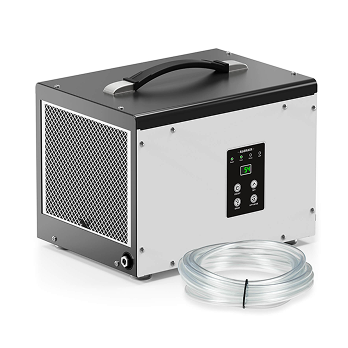
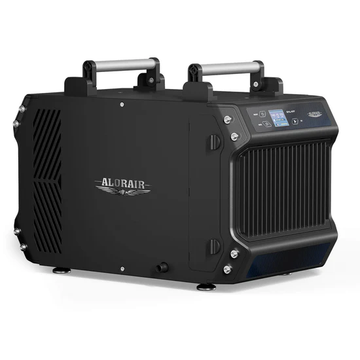
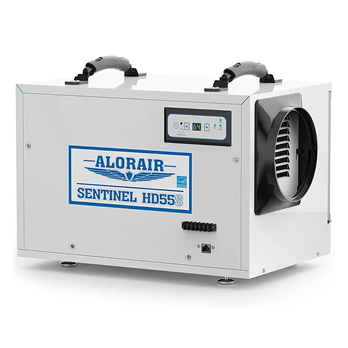
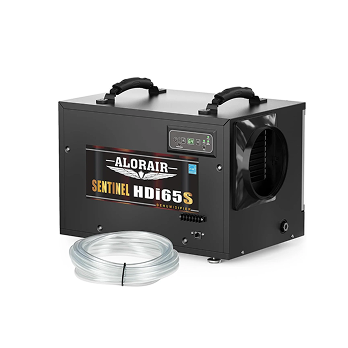
Installing a crawl space dehumidifier alongside proper sealing can help stabilize air pressure and reduce the infiltration of untreated outdoor air.
Health Risks
Long-term exposure to PM2.5 is linked to:
- Asthma attacks and bronchitis.
- Reduced lung function in children.
- Increased risk of heart attack and stroke
What You Can Do: Protecting Your Indoor Air

You cannot control the weather or wildfires, but you can control your home environment.
Monitor Daily Levels
Check AirNow.gov daily. If the AQI is Orange or Red, keep windows and doors closed.
Seal Your Home Envelope
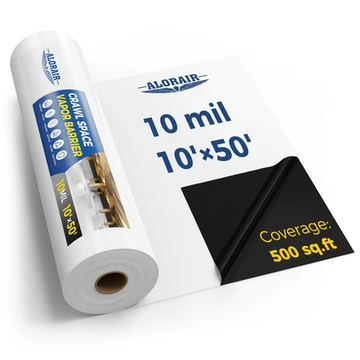
Drafty windows and unsealed crawl spaces allow particulate matter to enter freely. Encapsulating your crawl space with a high-quality vapor barrier not only stops moisture but also creates a physical shield against outdoor pollutants entering your home's airflow.
Filter and Control Humidity
High humidity often accompanies poor air quality, especially in the South. Moist air creates heavier particles and encourages mold growth, which compounds respiratory issues.
Upgrade Filtration: Standard HVAC filters often miss fine particulates. Installing a specialized air filtration system can actively scrub PM2.5 and smoke particles from the air, providing a much higher level of protection than standard filters alone.
Control Moisture: Run a crawl space dehumidifier to keep humidity stable. Dry air prevents your furniture from absorbing smoke odors during wildfire season and inhibits mold growth.
Recirculate Air
On bad air days, set your AC to "recirculate" to stop pulling in fresh (polluted) air from outside.
Frequently Asked Questions
What is PM2.5, and why is it considered so harmful?
PM2.5 refers to fine particulate matter less than 2.5 microns in width. It is harmful because it is small enough to bypass the body’s natural defenses (nose hair and mucus), entering deep into the lungs and bloodstream.
What AQI level is considered unhealthy?
According to the EPA, an AQI value of 101–150 is "Unhealthy for Sensitive Groups," and anything above 150 is considered "Unhealthy" for everyone.
Which U.S. state has the worst air quality right now?
Based on 2025 annual PM2.5 data, Georgia has the worst air quality, followed closely by Idaho and Arkansas.
Which large U.S. cities have the worst PM2.5 levels?
California cities dominate the list due to geography and pollution sources. Ontario, Orange, and San Bernardino typically rank as the worst large cities for particulate matter.
Why do wildfires make air quality worse far from the fire itself?
Wildfire smoke rises into the atmosphere and is carried by jet streams. As it cools, it descends, bringing PM2.5 pollution to states thousands of miles away from the actual flames.
Is PM2.5 the same thing as AQI?
No. PM2.5 is a measurement of the actual weight of particles in the air (micrograms). AQI is a color-coded index derived from calculating multiple pollutants (including ozone and PM2.5) to give the public a simple health score.
How can I protect my home’s indoor air during wildfire smoke days?
Keep windows closed, seal gaps in your crawl space or attic, upgrade your HVAC filters to MERV 13 or higher, and run air purifiers and dehumidifiers to keep the indoor environment stable.
Does a dehumidifier improve air quality?
While a dehumidifier does not filter smoke particles, it improves air quality by stopping mold and dust mites. High humidity makes air feel "heavier" and can trap pollutants; keeping air dry makes it easier to breathe and prevents secondary pollutants like mold spores.


