




Wood dust does not stay beside the saw or sander. Fine particles can remain suspended in the air long after the tool has stopped, while heavier chips and dust settle on floors, benches, tools, and unfinished projects.
The most effective woodshop dust-control plan uses several layers. Capture dust at the tool whenever possible, filter the fine particles that escape into the room, clean settled dust safely, and use appropriate respiratory protection when exposure cannot be adequately controlled.
This guide explains how woodshop air filtration works, how it differs from source dust collection, and how to choose, place, and maintain an air filtration system for a woodworking shop.
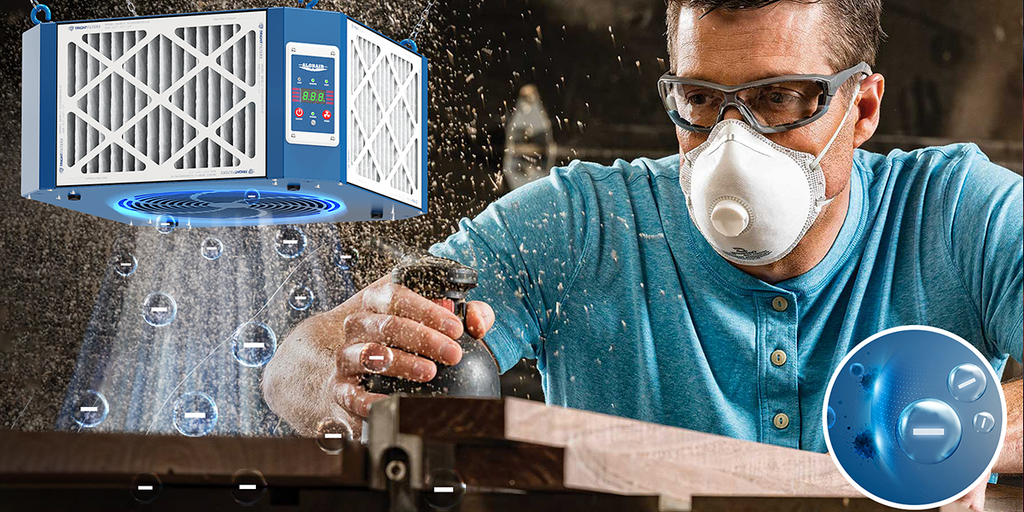
How Does Woodshop Air Filtration Work?
An ambient air filtration system draws room air through one or more filters and returns filtered air to the shop. It is intended to capture airborne particles that escaped the tool’s dust hood, shop vacuum, or central dust collector.
Source capture works differently. A hood, shroud, or extraction port collects dust close to the saw blade, sander, router, or other machine before the particles spread through the room. OSHA identifies local exhaust ventilation at woodworking equipment as an important engineering control for wood dust exposure. Review its guidance on controlling wood dust in woodworking operations.
A woodshop air filtration system should supplement source capture rather than replace it. Ambient filtration cannot collect every chip at the tool, and a dust collector may not capture all the fine particles that escape into the surrounding air.
Types of Woodshop Dust-Control Equipment
Tool-Connected Dust Collection
A shop vacuum or central dust collector connects directly to a tool through a hose, duct, hood, or shroud. Its job is to collect chips and dust as close to the source as possible. The airflow and static-pressure requirements depend on the tool and duct design.
Ambient Air Filtration
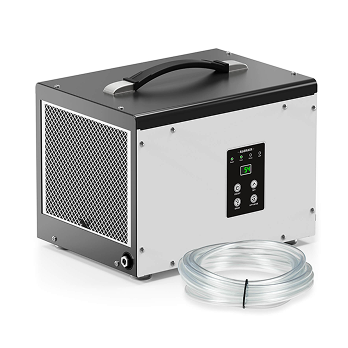
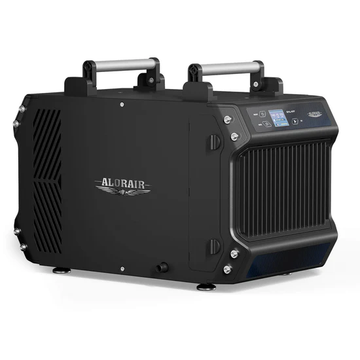
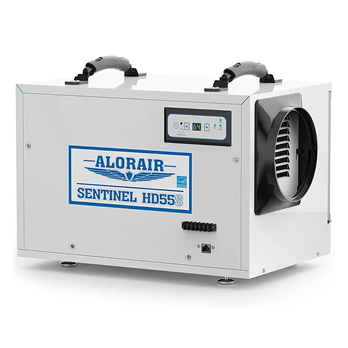
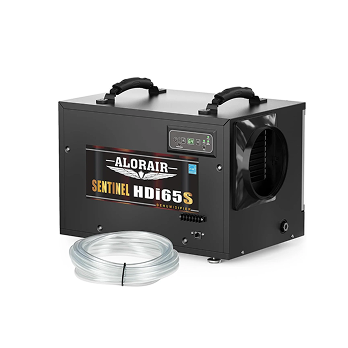
An ambient filtration system recirculates room air through filters to capture fine dust that escaped source collection. These units may be mounted on the ceiling, placed on a wall, or used as portable equipment, depending on the shop layout.
Portable Air Cleaners
A portable unit can be moved closer to sanding, cleanup, or another temporary dust-producing task. It offers flexible placement but may not circulate air evenly through a large shop.
Personal Protective Equipment
Respiratory protection may still be necessary during high-dust work, filter replacement, cleaning, or tasks where engineering controls cannot adequately limit exposure. Select and use respiratory protection according to workplace requirements and the material being handled.
Air Filtration and Dust Collection Systems
Dust collection systems, in contrast to air filtration systems, are meant to collect dust before it can become airborne. Air filtration solutions are designed to remove particles that are already in the air. They function by collecting dust as it is produced through the utilization of a network of hoses and points of collection. After that, the dust is placed in a bag or a container before being disposed of.
In order to achieve the highest possible level of air quality in a woodworking shop, it is common practise to install dust collection systems in conjunction with ac filtering systems. They collaborate in order to clear the workspace of as much dust as is reasonably possible, so preserving the woodworkers' ability to breathe clean air and maintain good health.
Factors to Consider When Choosing an Air Filtration System
There are a variety of aspects to think about before making a final decision on air filtration solutions for your woodworking shop. They include the size and capacity of the system, the efficacy of the filtration and the type of filter, the noise level, the maintenance and upkeep, the price and your budget, and so on.
Airflow and Shop Volume
Do not choose a woodshop air filtration system by floor area alone. Calculate the shop’s air volume by multiplying its length, width, and ceiling height. Then compare that volume with the unit’s delivered airflow and the number of room-air changes required for the application.
A simple planning formula is:
Required CFM = Room volume × Target air changes per hour ÷ 60
The advertised free-air CFM may be higher than the airflow delivered after filters are installed and begin collecting dust. Consider the manufacturer’s tested airflow, filter resistance, shop layout, dust-producing processes, and how often the equipment will operate.
Commercial woodworking operations may require an industrial hygiene assessment and an engineered local exhaust system rather than relying on a general room-air-change calculation.
Filter Efficiency and Airflow
Filter efficiency matters, but a denser filter is not automatically better for every machine. The filter must capture the intended particle sizes without creating more airflow resistance than the fan can handle.
MERV describes how filters perform across specified particle-size ranges. HEPA is a different efficiency classification and should not be used interchangeably with MERV. Choose only filters approved for the air filtration system, and do not install a higher-resistance replacement unless the manufacturer confirms that the fan and motor can support it.
Also consider whether the system uses a washable or replaceable pre-filter. A pre-filter can capture larger dust before it reaches the finer secondary filter, helping maintain airflow and making routine service easier.
Noise Level
Another important aspect of the air filtration system that must be taken into consideration is the level of noise it produces. You need a system that is not only powerful enough to efficiently filter out the dust but also quiet enough that it will not interfere with your job in any way. Air filtration machines that are attached to the ceiling are typically less noisy than portable units.
Maintenance and Preventive Measures
There are a number of crucial aspects to think about, one of which is the upkeep and maintenance of the air filtration system. It is recommended that you go with a system that is simple to clean and maintain. You ought to also take into consideration the expense of replacement filters in addition to the frequency of filter replacements. It is essential to select a system that is suitable for your requirements because different systems have varying degrees of upkeep requirements.
Cost and Budget Plan
When it comes to selecting an air filtration solution for woodworking business, the final considerations that are absolutely necessary are the cost and the budget. Because the price of an air filtration system can range anywhere from a few hundred to several thousand dollars, it is imperative that you select a model that is suitable for your financial constraints. Although if a more expensive system may have more features and operate more effectively, this does not necessarily mean that you require it to meet your requirements.
Where Should a Woodshop Air Filtration System Be Placed?
Place the unit where it can create circulation through the occupied shop rather than drawing filtered air straight back into its own intake. Keep both the intake and outlet clear of walls, shelves, stored lumber, and other obstructions.
A ceiling-mounted unit can keep floor space clear, but it still needs accessible filters and controls. Avoid positioning it where the discharged air blows fine dust directly from one workstation toward another person.
Run the system while dust-producing work is taking place and allow it to continue operating afterward according to the manufacturer’s instructions. Ambient filtration only captures particles while they remain airborne and pass through the filter.
If the shop has several rooms, unusually high ceilings, or areas blocked by machinery and storage, one unit may not provide even circulation. Smoke testing or particle monitoring can help identify poor airflow and persistent dust zones.
What Can Ambient Air Filtration Do?
A properly selected ambient air filtration system can reduce airborne dust that escaped source collection. This may help keep the shop cleaner, reduce dust settling on tools and unfinished surfaces, and improve visibility during dusty work.
However, it cannot guarantee safe exposure levels, eliminate the need for tool-connected dust collection, or replace appropriate respiratory protection. Wood dust exposure should be managed through source control, ventilation, housekeeping, work practices, and personal protective equipment as required.
Installation and Maintenance of Air Filtration Systems
It is absolutely necessary to set up an air filtration system and perform routine maintenance on it if you want it to work successfully and efficiently.
Steps for Installation
The processes necessary to install an air filtration system are going to vary according to the sort of system that you choose with. Portable devices are typically simple to set up and require only a little amount of initial preparation. It is crucial to have a consultation with a professional before installing ceiling-mounted units or ambient air filtration systems because installation of these types of systems may require the assistance of a trained professional.
Maintenance and cleaning on a regular basis
It is vital to do routine maintenance and cleaning on your air filtration system in order to keep it operating effectively. Regular cleaning and, if necessary, replacement of the filters should be performed. Also, you should clean the device itself to prevent the accumulation of dust and to ensure that it continues to function effectively.
Replacement of Filters
The type of filter you have and the amount of dust that accumulates in your shop will determine how often you need to replace the filter. You need to make sure that the system is operating correctly by carefully monitoring its efficiency and replacing the filters in accordance with the instructions given to you by the manufacturer.
The Bottom Line
Effective woodshop air filtration begins at the source. Connect saws, sanders, routers, and other dust-producing equipment to suitable extraction whenever possible. Then use an ambient air filtration system to capture some of the fine dust that escapes into the room.
Choose the system according to shop volume, delivered airflow, filter efficiency, noise, placement, and maintenance requirements. Keep the filters accessible, monitor airflow as they load with dust, and follow the manufacturer’s replacement instructions.
If you prefer a lower-cost project and understand the electrical, airflow, mounting, and fire-safety requirements, review the differences between commercial equipment and a DIY woodshop air filtration system before deciding which approach fits your shop.
Frequently Asked Questions
Does an air filtration system replace a dust collector?
No. A dust collector captures chips and dust close to the tool, while an ambient air filtration system captures some of the particles that escape into the room. Most woodworking shops benefit from using both.
How do I size an air filtration system for a woodshop?
Calculate the shop’s air volume and compare it with the system’s delivered CFM. Also consider the desired air-change rate, filter resistance, ceiling height, shop layout, and amount of dust produced.
Where should I place a woodshop air filtration system?
Place it where the intake and outlet can establish circulation through the shop without being blocked. Avoid directing the outlet toward dusty surfaces or creating a short path that sends filtered air directly back to the intake.
How often should woodshop air filters be replaced?
There is no universal replacement schedule. Check the manufacturer’s instructions and monitor filter loading and airflow. Shops with frequent sanding or heavy production may require more frequent filter service.
Should an air filtration system run after woodworking stops?
Continuing to operate the system may help capture particles that remain suspended after the tools stop. Follow the manufacturer’s timer and operating recommendations rather than relying on one fixed runtime for every shop.


