




Table of Contents
Most homeowners think about ventilation only after something goes wrong—a musty smell that won't go away, condensation forming on basement walls, or a mold patch that keeps coming back. By then, the problem has usually been building for months.
Basement ventilation is not a single product. It's a system—one that, when properly designed, continuously exchanges stale air, removes trapped pollutants, and reduces the conditions that allow moisture to accumulate. The challenge is that basements are naturally resistant to airflow. They sit below grade, often with limited windows and few natural air exchange pathways, making them one of the most ventilation-deprived spaces in any home.
This guide covers everything you need to understand about basement ventilation systems: what they are, how they differ from dehumidifiers, which system suits your specific basement type, installation considerations, and how to combine ventilation with dehumidification and air purification for the best results. Whether you're dealing with basement moisture control, stale air, or simply want to improve basement air quality, this guide will help you make informed decisions.
Why Does Your Basement Need Ventilation?
Basement Air Often Becomes Stagnant
Basements are enclosed, below-ground spaces with limited connection to the airflow patterns that naturally circulate through the rest of a home. The result is fewer air exchanges per hour compared to above-grade rooms—and that has consequences.
Without regular air exchange, odors accumulate. Volatile organic compounds (VOCs) from paint, adhesives, and stored materials linger. Carbon dioxide builds up in finished spaces. The air starts to feel heavy and stale, which is often the first sign that ventilation is insufficient.
High Humidity Creates Long-Term Problems
Poor airflow and high humidity are closely linked. When air movement is limited, moisture released through concrete, soil, and everyday activities has nowhere to go. It accumulates on walls, windows, and cold surfaces as condensation. Over time, that moisture creates the conditions mold and mildew need to grow—and once established, mold can cause structural damage to wood framing and reduce the usability of the space.
The logic is straightforward: poor airflow → moisture remains trapped → condensation increases → mold risk rises. Addressing ventilation early breaks this chain before damage occurs.
Basement Air Quality Affects Comfort and Health
Musty smells, airborne dust, mold spores, and allergens are common in poorly ventilated basements. While we are not making medical claims here, it's reasonable to note that the American Society of Heating, Refrigerating and Air-Conditioning Engineers (ASHRAE) recommends minimum ventilation rates for occupied spaces to support comfort and acceptable indoor air quality. Basements used as living areas, home offices, or bedrooms should meet the same ventilation standards as any other occupied room.
What Is a Basement Ventilation System?
A basement ventilation system is a mechanical or natural setup designed to exchange stale indoor air with fresh outdoor air on a consistent basis. Its main functions are to improve air exchange rates, remove odors and trapped pollutants, and create conditions less favorable to moisture buildup.
It's important to clarify what ventilation is not: a ventilation system improves airflow, while a dehumidifier removes moisture from the air. These are different processes, and confusing them leads to the wrong solution being applied to the wrong problem.
A ventilation system brings in fresh air and pushes out stale air. A dehumidifier pulls moisture out of existing air. In many basements, both are needed.
Basement Ventilation vs. Dehumidifier: What's the Difference?
Choosing between a ventilation system and a dehumidifier—or understanding how to use both—starts with knowing what each one actually does.
| Feature | Ventilation System | Dehumidifier |
|---|---|---|
| Main purpose | Air exchange | Moisture removal |
| Removes stale air | Yes | No |
| Lowers humidity | Sometimes | Yes |
| Best for | Odors, pollutants, fresh air | High relative humidity, condensation |
| Outdoor air impact | Depends on climate | No outdoor air needed |
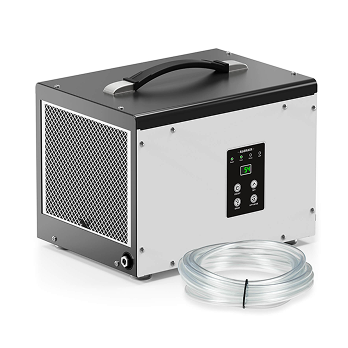
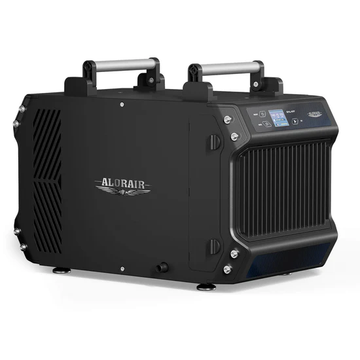
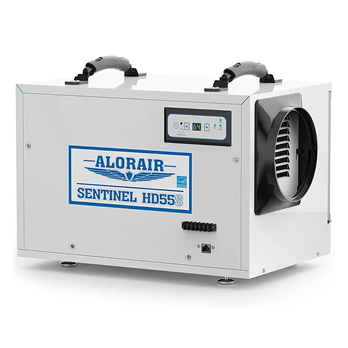
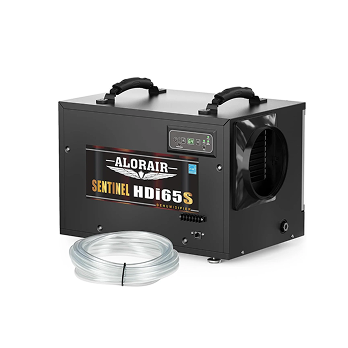
If you're managing a high-humidity basement, explore Alorair's range of basement dehumidifiers designed to work alongside ventilation for complete moisture management.
Types of Basement Ventilation Systems
There is no single "best" ventilation system for all basements. The right choice depends on climate, basement use, and existing infrastructure.
Natural Ventilation
Natural ventilation relies on windows, foundation vents, and passive airflow driven by wind pressure and temperature differences. It carries the lowest upfront cost and requires no mechanical components—but it is entirely dependent on weather conditions. In humid climates, opening windows can introduce more moisture than it removes. Natural ventilation works best in dry climates and for basements that don't require consistent air exchange.
Exhaust Fan Ventilation
An exhaust fan pulls stale air out of the basement and expels it outside. This is a straightforward, cost-effective solution that works well for removing odors and improving baseline airflow. The critical design requirement: there must be a clear path for replacement air to enter, or the fan will create negative pressure without meaningful air exchange.
HRV – Heat Recovery Ventilator
A Heat Recovery Ventilator (HRV) is designed for cold climates. It simultaneously brings fresh outdoor air in and exhausts stale indoor air out, passing both airstreams through a heat exchanger core. The outgoing warm air preheats the incoming cold air, recovering a significant portion of the energy that would otherwise be lost. HRVs are widely used in tightly sealed, energy-efficient homes where controlled ventilation is essential.
ERV – Energy Recovery Ventilator
An Energy Recovery Ventilator (ERV) functions similarly to an HRV but also transfers moisture between the two airstreams. In humid climates, an ERV helps prevent outdoor humidity from being directly introduced into the basement. In dry climates, it helps retain indoor humidity during winter. ERVs are particularly well-suited to mixed-humidity environments where both temperature and moisture management are priorities.
| System | Best For |
|---|---|
| Natural ventilation | Dry climates, low-traffic storage areas |
| Exhaust fan | Odor removal, moderate airflow needs |
| HRV | Cold climates, finished basements, energy efficiency |
| ERV | Humid climates, year-round moisture management |
Choosing the Right Basement Ventilation Solution
Finished Basements (Living Areas, Home Offices, Bedrooms)
Finished basements used as occupied living spaces require the highest level of ventilation performance. An HRV or ERV is typically the right choice here, as both systems provide controlled, continuous fresh air exchange without depending on weather conditions. Integration with an existing HVAC system is another option, using supply and return ducts to include the basement in the home's central air distribution.
Storage Basements
Storage areas with low or no regular occupancy don't require the same air exchange rates as lived-in spaces. An exhaust fan paired with a dehumidifier is usually sufficient to prevent stagnation and moisture accumulation. This combination is cost-effective and well-matched to the intermittent nature of storage basement use.
Basement Laundry Areas
Laundry areas are among the most moisture-intensive spaces in any home. Dryers generate heat and humidity; wet clothes release moisture; and frequent washing means consistent water vapor exposure. Exhaust ventilation is essential here—ideally a dedicated exhaust fan that vents directly outside. Pair this with dehumidification for complete moisture management.
Crawl Space–Connected Basements
When a basement connects to a crawl space, ground moisture becomes an additional variable. Crawl spaces allow soil moisture to migrate upward, and standard basement ventilation may not be sufficient to counteract it. A dedicated crawl space ventilation fan addresses moisture at the source, before it migrates into the basement. In severe cases, encapsulation combined with a crawl space dehumidifier is the most reliable long-term solution.
Installation Considerations
DIY vs. Professional Installation: When to Choose Each
Many exhaust fans and basic natural ventilation setups are within reach for confident DIYers. Cutting through a rim joist, installing a wall vent, and wiring a standard exhaust fan are manageable tasks with the right tools and preparation.
HRVs and ERVs, however, are more complex. They require balanced duct design, proper positioning of intake and exhaust ports, and integration with existing HVAC systems in some cases. If your basement is finished, ductwork routing adds another layer of complexity. For HRV/ERV installations, or any situation involving existing ductwork or electrical panel work, hiring a licensed HVAC contractor is the safer and more reliable path.
Airflow Direction
Fresh air should enter the basement and stale air should exit. The system should be designed to avoid short cycling—a condition where fresh air is immediately drawn back out through the exhaust before it circulates through the space. Place supply and exhaust points at opposite ends of the basement for the best air distribution.
Intake and Exhaust Location
Keeping intake and exhaust openings well separated prevents fresh incoming air from being immediately captured by the exhaust. Separation of at least 10 feet is a common guideline, though local building codes may specify minimum distances.
Outdoor Vent Installation
Wall penetrations for ventilation require a proper vent hood, weather sealing around the opening, and an insect screen to prevent pests from entering. In cold climates, the duct between the outdoor vent and the ventilation unit should be insulated to prevent condensation from forming on cold duct surfaces.
Noise and Maintenance Access
Fan noise is often overlooked during planning. For finished basements used as living spaces, select fans or units rated at low sone levels. All mechanical ventilation equipment—particularly HRVs and ERVs—requires periodic filter cleaning and core inspection. Ensure the unit is installed in a location with adequate clearance for service access.
Ventilation + Dehumidification + Air Purification: The Complete System
For basements with multiple air quality challenges, a single solution is rarely enough. Here's how the three main interventions work together:
- Ventilation handles air exchange—bringing fresh air in, pushing stale air out.
- Dehumidification handles moisture removal—reducing relative humidity to prevent condensation and mold.
- Air purification handles particulate matter—capturing dust, mold spores, allergens, and airborne particles.
Recommended combinations based on basement conditions:
- Low humidity + stale air → ventilation system alone is sufficient
- High humidity → dehumidifier as the primary solution
- High humidity + poor air quality → ventilation + dehumidifier + air filtration system
Alorair Basement Ventilation Fans are built to integrate with this kind of layered approach, and all units are backed by a comprehensive warranty so you can invest with confidence.
Basement Ventilation System Maintenance
A ventilation system only performs as designed when it's properly maintained. Here's a practical maintenance schedule:
Monthly
- Clean or inspect air filters
- Check that supply and exhaust airflows are unobstructed
Seasonal
- Inspect outdoor vent hoods for debris, pest nests, or damage
- Check for condensation on ducts or unit surfaces
- Adjust settings for seasonal humidity and temperature changes
Annual
- Inspect fan motors and blades for wear
- Clean HRV or ERV heat exchanger cores according to manufacturer instructions
- Test controls and timers to confirm proper operation
- Have a technician service complex systems like HRVs and ERVs
Cost and Energy Considerations
| Solution | Upfront Cost | Energy Use |
|---|---|---|
| Natural ventilation | Low | Minimal |
| Exhaust fan | Low–Medium | Low |
| HRV | Higher | Efficient (heat recovery) |
| ERV | Higher | Efficient (energy recovery) |
| Dehumidifier | Medium | Moderate (moisture-focused) |
HRVs and ERVs carry a higher upfront cost but recover a significant portion of energy through heat or moisture exchange, making them more efficient over time than simple exhaust ventilation. For basements in cold climates where heating costs are high, the long-term energy savings of an HRV can offset the initial investment.
Frequently Asked Questions About Basement Ventilation Systems
What is the best ventilation system for a finished basement?
For finished basements used as living spaces, an HRV or ERV is typically the best option. These systems provide continuous, controlled fresh air exchange and can be integrated with existing HVAC systems. The right choice between HRV and ERV depends on climate: HRVs are better suited to cold climates, while ERVs perform well in humid climates.
Can a basement ventilation system replace a dehumidifier?
No. A ventilation system and a dehumidifier serve different functions. Ventilation improves air exchange; a dehumidifier removes moisture from the air. In basements with elevated relative humidity—above 60% RH—a dehumidifier is necessary. Ventilation alone, particularly with humid outdoor air, may not reliably lower indoor humidity levels.
How many air changes per hour does a basement need?
ASHRAE Standard 62.2 recommends a minimum of 0.35 air changes per hour for occupied residential spaces. Basements used as living areas should meet this standard. Storage basements with no regular occupancy have lower requirements.
Should I ventilate my basement in winter?
Yes, but carefully. In cold climates, introducing untempered outdoor air can cause condensation on basement surfaces. An HRV is the preferred solution for winter ventilation because it preheats incoming cold air using the warmth of outgoing stale air, avoiding the condensation risk associated with direct outdoor air introduction.
How do I know if my basement has enough ventilation?
Signs of inadequate ventilation include persistent musty odors, condensation on walls or windows, visible mold growth, high indoor humidity readings (above 60% RH), or air that feels stale and stagnant. A hygrometer can measure relative humidity, and a CO₂ monitor can indicate whether air exchange rates are sufficient in occupied spaces.
Is basement ventilation required by building code?
Building code requirements vary by jurisdiction. In the United States, the International Residential Code (IRC) includes provisions for crawl space ventilation, and local codes may specify ventilation requirements for finished basement living spaces. Check with your local building department before installing any ventilation system.
What's the difference between a crawl space ventilation fan and a basement exhaust fan?
A crawl space ventilation fan is specifically designed to manage ground moisture and humidity in low-clearance crawl spaces. A basement exhaust fan is designed for full-height basement spaces. While both move air, crawl space fans are typically rated for higher moisture environments and positioned to address moisture migrating up from soil.
Building the Right Basement Ventilation Strategy
A basement ventilation system improves air exchange, reduces stale air, and helps create conditions less favorable to moisture accumulation. However, effective basement moisture control often requires more than ventilation alone—especially in humid climates or basements with high moisture loads from soil, laundry, or limited natural airflow.
The most effective approach combines ventilation for air exchange, dehumidification for humidity control, and air filtration for particulate management. The right combination depends on your basement type, climate, and how the space is used.


